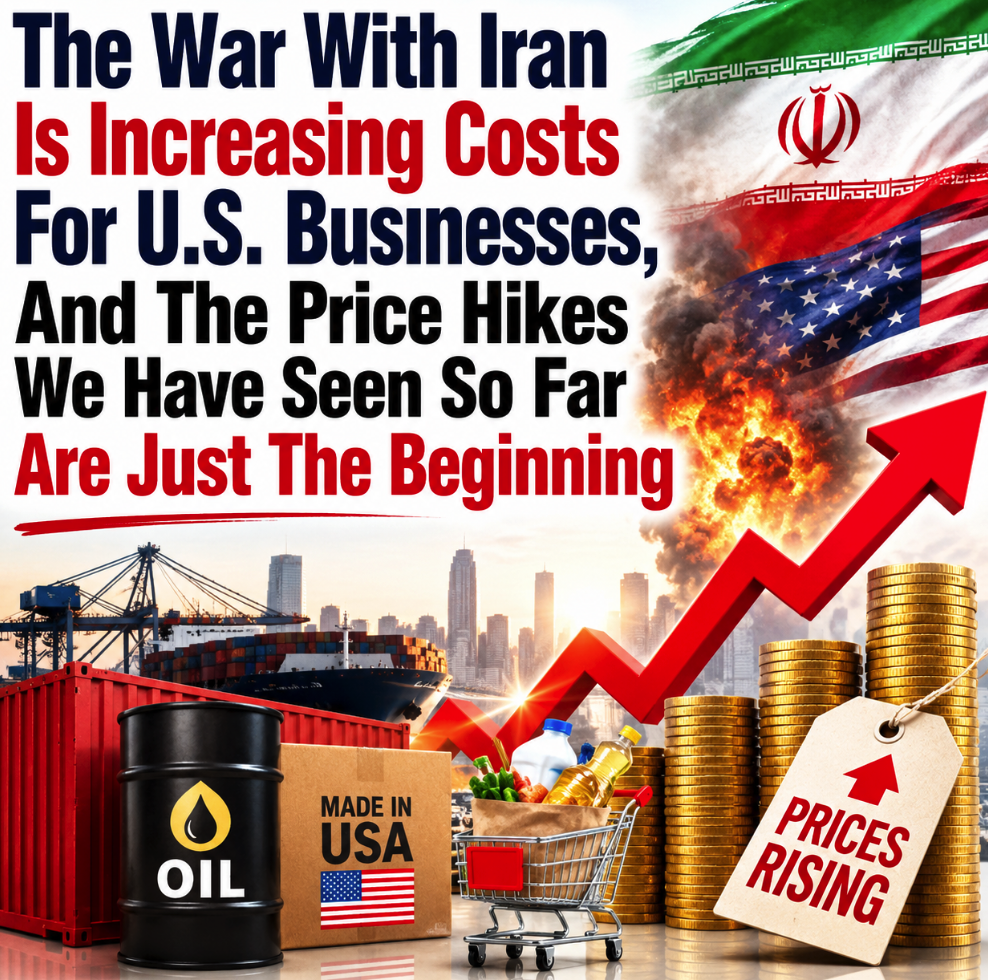
 Many have argued that energy is the central pillar of our economy, because it requires energy for just about anything to get done in our modern world. It takes energy to make stuff, it takes energy to move stuff, and it even takes energy to entertain ourselves. The war with Iran has dramatically increased energy costs for businesses of all types, and those costs are starting to get passed along to consumers. As a result, our standard of living is going down. If the Strait of Hormuz is not reopened soon, the change in our standard of living will be the largest that any of us have ever experienced.
We live at a time when economic dissatisfaction is already at very alarming levels.
In fact, a recent YouGov/Economist survey discovered that the number of Americans that believe that economic conditions are getting worse is nearly four times higher than the number of Americans that believe that economic conditions are improving…
- A new YouGov/Economist poll found that 59% say the economy is getting worse, while just 15% say it’s improving. More than two-thirds of Americans say the country feels “out of control.”
These depressing numbers are the result of many years of economic deterioration.
At first, a lot of people out there wanted to deny that the U.S. economy was in decline, but now the truth is becoming apparent to everyone.
Unfortunately, the crisis in the Middle East is threatening to make our economic problems a whole lot worse.
We are being told that the shocking inflation numbers that we just got are a result of “the war with Iran”…
Wednesday’s Producer Price Index report showed the war with Iran is raising costs for US businesses at a rate not seen in nearly four years, increasing the likelihood that companies will pass on those higher costs to consumers.
PPI, a measure of wholesale inflation, increased in April to 6% on an annual basis from 4% in March, well exceeding economists’ expectations. On a monthly basis, the index increased 1.4%, according to data released Wednesday by the Bureau of Labor Statistics. That’s twice the pace that economists expected. It’s also the second-largest monthly gain dating back to the index’s inception in 2010.
A 15.6% increase in gas prices accounted for 40% of the increase in prices businesses paid last month. That only looks to be getting worse with oil prices yet to reach their peak levels and global inventories falling at a record pace, according to a report released Wednesday by the International Energy Agency.
Without a doubt, we could certainly survive a few months of this.
But if the crisis in the Middle East drags on for many more months, we truly will be in unprecedented territory, because at some point there simply won’t be enough oil for everyone.
Over the past couple of months, the global economy has been functioning fairly normally because we have been running through existing inventory levels and strategic reserves.
However, it we continue going down this road we could be facing “operational stress levels” by early next month…
If the Middle East war doesn’t end quickly, the world — including the Group of 7 developed nations that have relied on their ample oil reserves — “will start facing scarcity,” warned Ipek Ozkardeskaya, an analyst at Swissquote. And analysts at J.P. Morgan recently said that developed countries’ commercial crude stocks could be close to operational stress levels by early June.
You see, the truth is that we are running an “oil deficit” right now.
We are consuming far more than we are producing, and existing inventory levels and strategic reserves are being depleted.
At this stage, total OPEC production is down over 30 percent from pre-war levels…
OPEC production fell by 1.7 million bpd in April after output plunged by 7.9 million bpd in March. In total, production among OPEC members has dropped more than 30%, or 9.7 million bpd, during the war.
The update Wednesday from OPEC will likely be the last one to include data from the United Arab Emirates, which left the cartel on May 1.
The total supply loss from the Gulf oil producers now exceeds a billion barrels with more than 14 million bpd shut down due to the Hormuz closure, according to the International Energy Agency’s latest update published Wednesday
Okay, so let’s assume for a moment that the Strait of Hormuz reopens tomorrow.
OPEC production cannot fully return to pre-war levels because a lot of infrastructure has either been damaged or destroyed.
It will literally take years for all of that infrastructure to be repaired or rebuilt.
Of course there is quite a bit of infrastructure that remains intact, but even if the Strait of Hormuz reopens tomorrow it would still take weeks for commercial traffic in the Persian Gulf to return to normal…
Analysts at Morgan Stanley on Monday said that oil markets are in a “race against time,” as the combination of factors that have been in place to curb crude-price jolts will fray if the Strait of Hormuz stays closed through June.
And once the conflict ends and tanker transit through the Strait of Hormuz resumes, it would still take weeks for flows to resume, and markets likely will still price in risk of potential additional disruptions.
Saudi Arabia’s state-controlled oil giant Saudi Aramco cautioned Monday that if the strait remains closed for weeks further, a market rebalance likely will extend into 2027 and “oil supply challenges” will continue.
Of course the Strait of Hormuz is not going to reopen tomorrow.
Or the next day.
Or the day after that.
In fact, the Strait of Hormuz may remain closed for a very long time.
The reason why global markets have not crashed yet is because most investors are anticipating that there will be a quick end to the war.
But what if they are wrong?
When people start realizing that there isn’t going to be a quick fix, global markets will be shaken.
And just like we witnessed during the early days of the last pandemic, there will be panic buying. Many Americans don’t realize this, but we have already seen this happen in some parts of the world…
In scenes reminiscent of pandemic-era panic buying, South Koreans rushed to buy plastic rubbish bags after the Iran war led to the closure of the strait, disrupting global supply chains.
Australians cleared the shelves of jerry cans as drivers and farmers vied to stock up on fuel in rural areas. Social media posts on possible shortages of condoms went viral in China last month.
In just a matter of weeks, shortages will start to become quite noticeable.
Asia will be hit the hardest, because they are more dependent on commodities from the Middle East than anyone else.
For example, a shortage of naphtha has already forced the largest snack producer in Japan to switch to black-and-white packaging…
Japan’s biggest snack maker has been forced to use black-and-white packaging for some flagship products because of ink ingredient shortages caused by the strait of Hormuz blockade.
Calbee, whose potato chip brands in particular are known for brightly coloured bag designs, said 14 of its products would switch to monochrome branding by the end of May.
Thousands upon thousands of supply chains are being threatened by this crisis.
Most people in the western world have absolutely no idea what is really going on out there, and for the moment ignorance is bliss.
But if the Strait of Hormuz stays closed for several more months, the entire world will clearly be feeling the pain of shortages and rapidly rising prices.
Michael’s new book entitled “10 Prophetic Events That Are Coming Next” is available in paperback and for the Kindle on Amazon.com, and you can subscribe to his Substack newsletter at michaeltsnyder.substack.com.

About the Author: Michael Snyder’s new book entitled “10 Prophetic Events That Are Coming Next” is available in paperback and for the Kindle on Amazon.com. He has also written nine other books that are available on Amazon.com including “Chaos”, “End Times”, “7 Year Apocalypse”, “Lost Prophecies Of The Future Of America”, “The Beginning Of The End”, and “Living A Life That Really Matters”. When you purchase any of Michael’s books you help to support the work that he is doing. You can also get his articles by email as soon as he publishes them by subscribing to his Substack newsletter. Michael has published thousands of articles on The Economic Collapse Blog, End Of The American Dream and The Most Important News, and he always freely and happily allows others to republish those articles on their own websites. These are such troubled times, and people need hope. John 3:16 tells us about the hope that God has given us through Jesus Christ: “For God so loved the world, that he gave his only begotten Son, that whosoever believeth in him should not perish, but have everlasting life.” If you have not already done so, we strongly urge you to invite Jesus Christ to be your Lord and Savior today.