Help Us Spread The News By Sharing These Articles With Others:
|
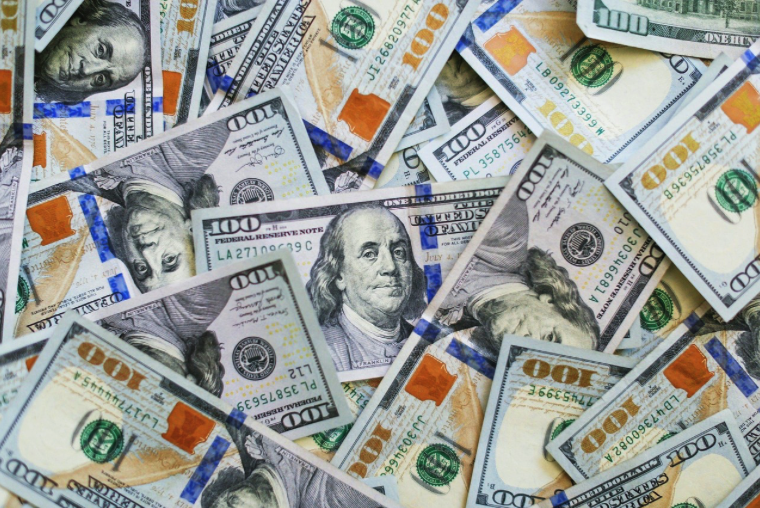
By recklessly printing, borrowing and spending money, our authorities are absolutely shredding confidence in the U.S. dollar. The rest of the world is watching this nonsense, and at some point they are going to give up on the U.S. dollar and throw their hands up in the air. When that happens, it is going to be absolutely catastrophic for the U.S. economy. Right now, we export a lot of our inflation. Each year, we buy far more from the rest of the world than they buy from us, and so the rest of the world ends up with giant piles of U.S. dollars. This works out pretty well for them, because the U.S. dollar is the primary reserve currency of the world and is used in international trade far more than any other currency is. Back in 1999, the percentage of foreign exchange reserves in U.S. dollars peaked at 71 percent, and since then it has slid back to 62.2 percent. But that is still an overwhelming amount. We can print, borrow and spend like crazy because the rest of the world is there to soak up our excess dollars because they need them to trade with one another. But what will happen someday if the rest of the world decides to reject the U.S. dollar? At that point we would see a tsunami of U.S. dollars come flooding back to this country. Just take a moment and think of the worst superstorm that you can possibly imagine, and then replace every drop of rain with a dollar bill. The giant currency superstorm that will eventually hit this nation will be far worse than that. (Read More....)
[...]
The mainstream media in the United States is almost totally ignoring one of the most important trends in global economics. This trend is going to cause the value of the U.S. dollar to fall dramatically and it is going to cause the cost of living in the United States to go way up. Right now, the U.S. dollar is the primary reserve currency of the world. Even though that status has been chipped away at in recent years, U.S. dollars still make up more than 60 percent of all foreign currency reserves in the world. Most international trade (including the buying and selling of oil) is conducted in U.S. dollars, and this gives the United States a tremendous economic advantage. Since so much trade is done in dollars, there is a constant demand for more dollars all over the globe from countries that need them for trading purposes. So the Federal Reserve is able to flood our financial system with dollars without it causing a tremendous amount of inflation because the rest of the world ends up soaking up a lot of those dollars. But now that is changing. China and Russia have been spearheading a movement to shift away from using the U.S. dollar in international trade. At the moment, the shift is happening gradually, but at some point a tipping point will come (for example if Saudi Arabia were to declare that it will no longer take U.S. dollars for oil) and the entire global financial system is going to change. When that tipping point comes the global demand for U.S. dollars is going to absolutely plummet and nightmarish inflation will come to the United States. If such a scenario sounds far out to you, then you have not been paying attention. In fact, China and Russia have been working very hard to move us toward exactly such a scenario. (Read More....)
[...]
The U.S. dollar has probably been the closest thing to a true global currency that the world has ever seen. For decades, the use of the U.S. dollar has been absolutely dominant in international trade. This has had tremendous benefits for the U.S. financial system and for U.S. consumers, and it has given the U.S. government tremendous power and influence around the globe. Today, more than 60 percent of all foreign currency reserves in the world are in U.S. dollars. But there are big changes on the horizon. The mainstream media in the United States has been strangely silent about this, but some of the biggest economies on earth have been making agreements with each other to move away from using the U.S. dollar in international trade. There are also some oil producing nations which have begun selling oil in currencies other than the U.S. dollar, which is a major threat to the petrodollar system which has been in place for nearly four decades. And big international institutions such as the UN and the IMF have even been issuing official reports about the need to move away form the U.S. dollar and toward a new global reserve currency. So the reign of the U.S. dollar as the world reserve currency is definitely being threatened, and the coming shift in international trade is going to have massive implications for the U.S. economy. (Read More....)
[...]
For decades, the U.S. dollar has been the reserve currency of the world. This has given the United States an extraordinary amount of economic power, but as the U.S. economy has started to come apart over the past decade, other nations have increasingly sought to move away from the U.S. dollar and find other alternatives. For a long time it was thought that the Euro would become the next great reserve currency of the world. However, the recent Greek debt crisis, along with massive financial instability in nations such as Portugal, Spain and Italy, has caused investors to rapidly lose confidence in the Euro. In fact there are even some whispers that the Euro may not even survive the sovereign debt crisis as it sweeps across Europe. With both the U.S. dollar and the Euro looking shaky, investors have been searching somewhere safe to put their money. Increasingly, they have been turning to gold. So has gold now become a new reserve currency? Will all of this new demand drive the price of gold into unprecedented territory? (Read More....)
[...]
|
|
|