“Everything Is Fine”: The Skeptics Mock As Plagues And Disasters Erupt All Around Us

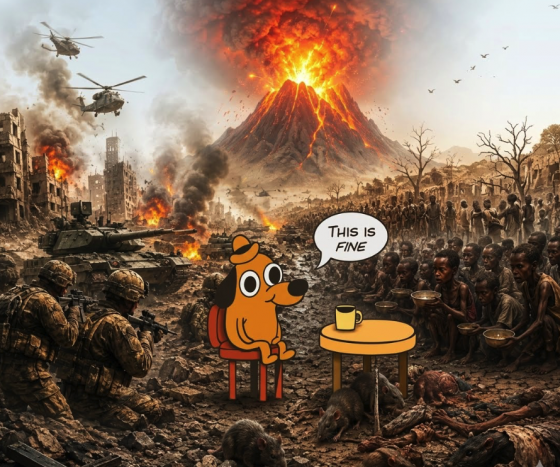
No matter how bad things get, some skeptics will simply never admit that what we are experiencing is unusual. We live at a time of seemingly endless wars, growing global hunger, alarming outbreaks of disease and constant natural disasters, but they just keep telling us that everything is fine. Russia and Ukraine are absolutely pummeling one another, Iran and Israel are firing ballistic missiles at each other, and we are facing severe shortages of oil and natural gas in the months ahead. Meanwhile, global food production will be way down this year thanks to a historic fertilizer crisis, unprecedented drought and a “Godzilla El Niño” that is on the way. I just don’t understand how some people can be so cavalier about all of this.

Everything is being shaken, and that includes the ground underneath our feet.

Less than 24 hours ago, a magnitude 7.8 earthquake absolutely rocked the Philippines…

At least 32 people have died after a powerful earthquake struck an island in the Philippines, causing landslides and buildings to collapse into rubble.

Eyewitnesses on Mindanao in the south of the country said people rushed out their houses into the streets for safety as the ground shook, while footage of a school in Digos showed young children screaming as the earthquake causes an outdoor structure to collapse.

The magnitude 7.8 earthquake also triggered tsunami waves exceeding a metre that impacted nearby coastlines.

This was an immensely destructive quake, and there was a tremendous amount of panic as numerous large buildings suddenly collapsed

Of course most of us will have totally forgotten about this disaster by tomorrow because the news cycle will be feeding us lots of new things to focus on.

But one of these days “the Big One” will hit the west coast of the United States.

In fact, scientists have determined that the amount of tectonic stress that has built up in Southern California is at the highest level ever recorded

Since the last major earthquake to affect the wider Los Angeles region, the Fort Tejon earthquake of 1857, with a magnitude of 7.9, tectonic stress along the fault segments has built up continuously during a prolonged quiet period that has long concerned researchers, given the potential for a large future rupture.

In a new study led by Dr. Liliane Burkhard of the Division of Space Research and Planetary Sciences (WP) at the Physics Institute of the University of Bern, an international research team modeled 1,000 years of earthquake history along the southern San Andreas and San Jacinto fault systems to estimate the present-day stress loading at Cajon Pass. Researchers from the University of Hawaiʻi at Mānoa, the U.S. Geological Survey Earthquake Science Center in Pasadena, and the Scripps Institution of Oceanography at UC San Diego were involved.

The results show that tectonic stresses in the region have reached and, in some cases, exceeded the highest levels of the last millennium.

I am convinced that earthquakes will be a major theme over the next 12 months, and I am also convinced that volcanic eruptions will be a major theme as well.

Right now, 41 volcanoes are currently erupting around the world.

But the skeptics insist that there is nothing to be concerned about.

They are also telling us that we will get through the global energy crisis just fine too even though the “absolute operational minimum floor for the global oil system” will be hit just a few short months from now…

The absolute operational minimum floor for the global oil system is estimated to be about 6.8 billion barrels. Below that, the system will simply not function. On our current trajectory, the world will reach that point in September, if not before. It turns out there really weren’t 8.5 billion barrels of available oil inventories across the world at the beginning of the war, only 8.5 billion minus 6.8 billion, or 1.7 billion. Big difference!

The moment we reach “tank bottoms” actually comes before we reach operational minimum. Technically, “tank bottoms” refers to the sludge that builds up on the bottoms of storage tanks, which must be periodically cleaned out and disposed of or processed to extract valuable products. In this context, this moment is when practical commercial storage runs very low, so as not to be a reliable buffer between current supply and demand. That’s when a bidding war will begin, and oil prices are likely to spike to $150 a barrel or higher, oil industry executives say. That moment is not far away, even as the world sleepwalks through the greatest oil crisis in history.

The only way we avoid a nightmare scenario is if the Strait of Hormuz opens immediately.

And that is not going to happen.

Meanwhile, the New World screwworm continues to pop up in even more locations in the Southwest…

The U.S. Department of Agriculture on Monday confirmed three additional cases of New World screwworm, including two in Texas, according to the agency’s animal health arm.

The Animal and Plant Health Inspection Service said the two Texas cases affected a calf in La Salle County and a goat in Gillespie County.

APHIS clarified that a fifth case reported earlier on Monday in a dog in Andrews County would be reclassified as the first case detected in New Mexico. The veterinarian who reported the case is located in Texas, the agency said, but the dog resides at a household in Lea County, New Mexico, which borders Texas.

The size of the U.S. cattle herd is already the smallest that it has been since 1951.

So what is going to happen if the New World screwworm starts spreading like wildfire?

Another plague that is deeply alarming authorities is playing out in central Africa

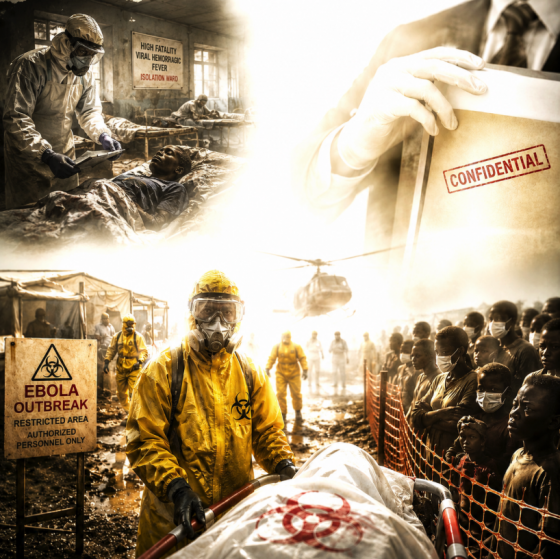
The number of confirmed Ebola cases in the Democratic Republic of the Congo (DRC) has risen to 544, in the wake of the US’s health protection agency warned the outbreak could become the largest on record.

The epicentre is in DRC’s Ituri province, where Africa’s top public health agency, Africa Centres for Disease Control and Prevention (Africa CDC), have said there have been 515 confirmed cases out of Congo’s total of 544. At least 91 are confirmed dead, with a further 19 cases and 2 deaths in neighbouring Uganda, according to the two countries’ health ministries.

The number of confirmed cases is much higher than we were being told a few days ago.

But that isn’t the real story.

The real story is that hundreds of people have been dropping dead, and it appears that Ebola is the culprit.

But they won’t be added to the total that are “confirmed dead” until testing is complete, and that could take a while.

At the same time, hunger is rapidly growing in impoverished nations in Africa and elsewhere, and many major food exporting countries are experiencing severe drought.

Here in the United States, we have been experiencing our worst spring drought ever

The United States experienced its worst spring drought on record last month, with more than 60% of land in the lower 48 states experiencing moderate drought or worse.

The drought has sparked alarm among farmers and environmentalists across the country, who warn that food supplies may be impacted and wildfires may blight areas where they are not usually seen.

The dry conditions are concentrated in the southeast, where moderate to exceptional drought covered 99.81% of the region at its peak in April, according to the U.S. Drought Monitor. Severe to exceptional drought covered more than 80% of the region, the highest level in April since the monitor began collecting data in 2000.

The latest U.S. Drought Monitor map shows that drought conditions stretch from coast to coast.

In fact, you could literally drive all the way across the nation without ever leaving areas that are being stricken by drought.

That is crazy.

And as if all that wasn’t enough, now a “Super El Niño” will make drought conditions in much of the country even worse.

According to the Daily Mail, it is now being projected that the “Super El Niño” that is coming “will likely be the strongest ever recorded”…

The brewing super El Niño will likely be the strongest ever recorded, new predictions suggest.

The latest modelling from the European Centre for Medium–Range Weather Forecasts (ECMWF) shows that sea temperatures will be well above average later this year.

Scientists measure the intensity of El Niño using the Niño 3.4 index, which records sea surface temperature anomalies between 5 degrees north and 5 degrees south latitude, and 120 degrees west and 170 degrees west longitude.

We have never experienced anything quite like this.

Meteorologist Ben Noll is warning that equatorial waters in the Pacific are likely to be much warmer than during any previous El Niño in all of history…

In almost every scenario, temperatures in the equatorial Pacific Ocean will climb 3°C (5.4°F) above average by December.

However, some worrying simulations show that the sea surface will be more than 4°C (7.2°F) warmer in this critical region.

Ben Noll, a meteorologist and global weather writer at the Washington Post, wrote on X: ‘Almost every scenario now reaches past +3˚C, with a cluster of high–end scenarios in excess of +4˚C. This outlook now depicts the strongest El Niño on record.’

There will be monster droughts, unprecedented heatwaves, widespread crop failures and horrifying levels of global hunger.

Tens of millions died during the Super El Niño of 1877 and 1878.

How many will die this time around?

Of course the skeptics are not moved by any of this.

They insist that we have faced tough times before and have always come through them.

So they believe that everything will be just fine somehow.

Meanwhile, tech billionaires have been constructing giant underground bunkers in anticipation of the chaos that is ahead…

American tech billionaires have taken it a step further, with Meta’s Mark Zuckerberg installing a 5,000-sq-ft underground shelter at his compound in Hawaii with its own energy and food supplies and blast-resistant doors.

OpenAI’s Sam Altman has a reinforced concrete basement under his home, while Peter Thiel, the billionaire chairman of Palantir, previously filed plans for a bunker-style compound in New Zealand.

We really are living during one of the most apocalyptic eras in human history.

Sadly, what we have experienced so far is not even worth comparing to what is eventually coming.

The chaotic years that are ahead of us are going to be absolutely insane.

But many of the skeptics will just keep on mocking until disaster suddenly overtakes them and they are no longer able to mock anything at all.

Michael’s new book entitled “10 Prophetic Events That Are Coming Next” is available in paperback and for the Kindle on Amazon.com, and you can subscribe to his Substack newsletter at michaeltsnyder.substack.com.

About the Author: Michael Snyder’s new book entitled “10 Prophetic Events That Are Coming Next” is available in paperback and for the Kindle on Amazon.com.  He has also written nine other books that are available on Amazon.com including “Chaos”“End Times”“7 Year Apocalypse”“Lost Prophecies Of The Future Of America”“The Beginning Of The End”, and “Living A Life That Really Matters”.  When you purchase any of Michael’s books you help to support the work that he is doing.  You can also get his articles by email as soon as he publishes them by subscribing to his Substack newsletter.  Michael has published thousands of articles on The Economic Collapse BlogEnd Of The American Dream and The Most Important News, and he always freely and happily allows others to republish those articles on their own websites.  These are such troubled times, and people need hope.  John 3:16 tells us about the hope that God has given us through Jesus Christ: “For God so loved the world, that he gave his only begotten Son, that whosoever believeth in him should not perish, but have everlasting life.”  If you have not already done so, we strongly urge you to invite Jesus Christ to be your Lord and Savior today.
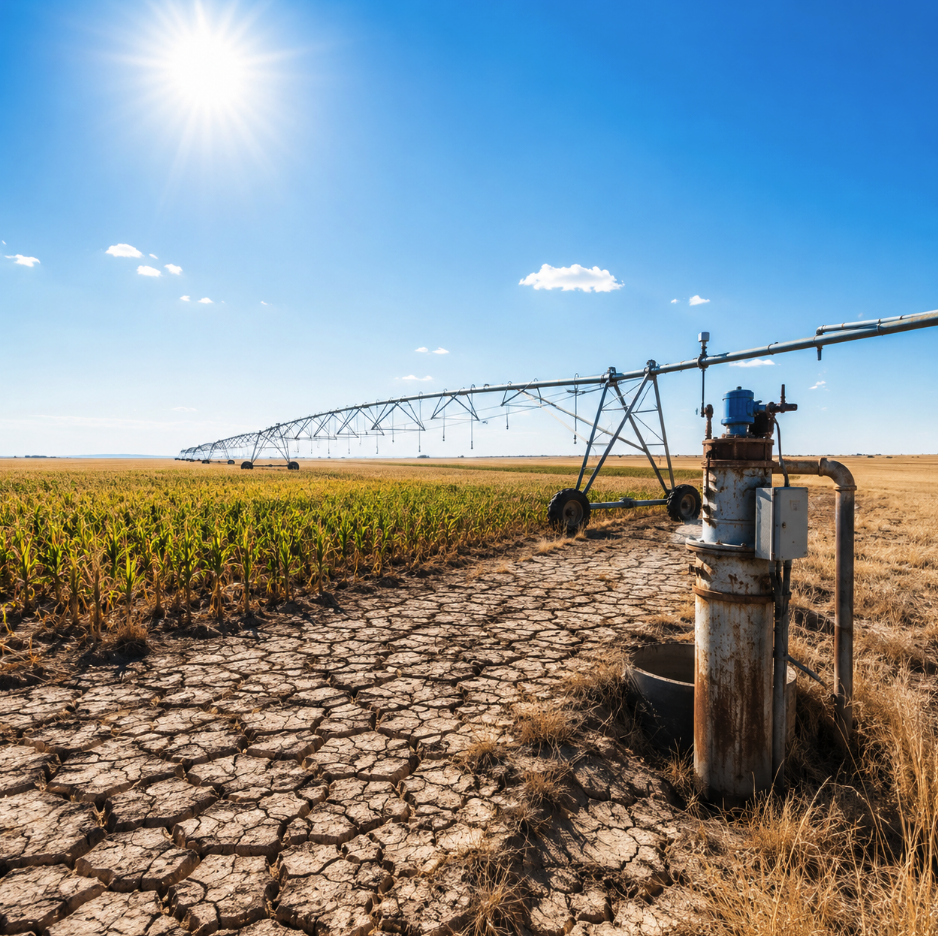
The Ogallala Aquifer Is Dying – As The Largest Supply Of Groundwater In The United States Vanishes, Farmers Are Deeply Concerned About What Is Next

Gigantic underground aquifers are being rapidly depleted all over the world, and once that water is gone it will take a very long time for it to come back. In fact, in some areas of the United States the recharge rate is less than an inch per year. That is a major problem, because more than half of the water that U.S. farmers use for irrigation comes from underground aquifers. What in the world are our farmers going to do once that water is gone?

The largest underground aquifer in the United States is known as the Ogallala Aquifer. It covers a vast area under portions of eight different states, and it accounts for approximately 30 percent of all groundwater that is used for irrigation in our nation…

The Ogallala Aquifer (oh-gə-LAH-lə) is a shallow water table aquifer surrounded by sand, silt, clay, and gravel located beneath the Great Plains in the United States.

As one of the world’s largest aquifers, it underlies an area of approximately 174,000 sq mi (450,000 km2) in portions of eight states (South Dakota, Nebraska, Wyoming, Colorado, Kansas, Oklahoma, New Mexico, and Texas).[1] It was named in 1898 by geologist N. H. Darton from its type locality near the town of Ogallala, Nebraska. The aquifer is part of the High Plains Aquifer System, and resides in the Ogallala Formation, which is the principal geologic unit underlying 80% of the High Plains.[2][3]

Large-scale extraction for agricultural purposes started after World War II due partially to center pivot irrigation and to the adaptation of automotive engines to power groundwater wells.[4] Today about 27% of the irrigated land in the entire United States lies over the aquifer, which yields about 30% of the ground water used for irrigation in the United States.[5]

The Ogallala Aquifer is one of our most important natural resources.

Unfortunately, it is steadily drying up.

In fact, the amount of water that it has lost since the 1940s is roughly equivalent to the entire volume of Lake Erie

The Ogallala Aquifer sits under eight states and 111.8 million acres of US farmland. A windmill can lift only a few gallons per minute, useful for drinking water but useless for agricultural purposes. In the 1940s, electrification reached the Great Plains and a Colorado farmer invented center pivot irrigation, a sprinkler line on wheels that rotated around a central wellhead. The 1949 version could lift thousands of gallons per minute and irrigate 40 acres.

Since then the aquifer has lost 286.4 million acre-feet of water, comparable to draining Lake Erie entirely. The parts of it beneath arid states have seen much bigger drops. Large parts of Western Kansas have lost 50 percent of their aquifer depth. Texan wells are down as much as 265 feet. On current trajectories, the water there will be gone in 20–30 years.

If we stay on our current path, farmers that depend on the Ogallala Aquifer will be faced with some very tough choices

If large areas become effectively dry, farmers could be forced to switch from irrigated crops to less water intensive farming—or abandon production altogether.

Something must be done.

In Kansas, a plan to restrict water use has sparked a tremendous amount of controversy

Southwest Kansas might take a big step toward water conservation in ways previously thought to be impossible.

Groundwater Management District 3, headquartered in Garden City, is looking for feedback from local farmers on its plan to use less water for crop irrigation in the region. A discussion on proposed water cuts recently attracted farmers from counties across the southwest part of the state, who filled a small community building.

Trevor Ahring, civil engineer for the district, told the sea of Kansas State University baseball caps and flannel shirts the details of the plan — all with the objective of easing the strain on the Ogallala Aquifer, which stretches from South Dakota to Texas.

Conserving water would make the Ogallala Aquifer last longer, but it would hurt agricultural production now.

One Kansas farmer is warning that even a small reduction in the amount of water used will make a huge difference in the number of bushels of corn that are produced at harvest time…

Roger Holmes, a long-time farmer in the area, said water cuts based on previous use won’t be fair to farmers who have been using water cautiously for years. And it puts those farmers at a disadvantage financially, he said.

“One inch of water produces about 15 bushel of corn. If you have three inches less than your neighbor, your average is going to be 50 bushel less per acre than that farmer across the road,” Holmes said.

Irrigated corn pays big. The loss of just 50 bushels could cost farmers up to $200 per acre. Most farmers in the room echoed Holmes’ concerns.

He is right.

Any short-term sacrifices will really hurt our farmers.

That is particularly true this year, because the first three months of 2026 were the driest first three months of a year in U.S. history, and now a “Godzilla El Niño” is coming.

During the months ahead, farmers in the heartland will need to irrigate their crops more than ever before.

But if we keep draining the water from our underground aquifers, eventually there will be nothing left.

Meanwhile, ranchers in the middle of the country are facing a new crisis that could potentially have a dramatic impact on beef prices.

On Friday, I wrote about the fact that a New World screwworm case had been confirmed in the state of Texas.

Now a second case has been confirmed, and USDA officials are starting to become extremely concerned…

The U.S. Department of Agriculture (USDA) confirmed a second New World screwworm (NWS) case in a one-month-old calf in Zavala County, Texas, roughly 5.6 miles from the first confirmed detection.

For now, both cases remain inside what the USDA calls an “established movement control zone and enhanced sterile insect dispersal area.” This suggests the outbreak is still contained within the USDA’s active response perimeter. Nearby suspect cattle tests have been negative so far, limiting signs of broader spread at this point.

USDA confirmed the second NWS case late Friday. The agency reported the first case on Thursday (read the report)

Our food supply is being hit by threats from so many directions right now.

And this is happening at a time when global supplies of food are just getting tighter and tighter.

All of the long-term trends are taking us in one direction, and it doesn’t take a genius to see where all of this is eventually heading.

Michael’s new book entitled “10 Prophetic Events That Are Coming Next” is available in paperback and for the Kindle on Amazon.com, and you can subscribe to his Substack newsletter at michaeltsnyder.substack.com.

About the Author: Michael Snyder’s new book entitled “10 Prophetic Events That Are Coming Next” is available in paperback and for the Kindle on Amazon.com.  He has also written nine other books that are available on Amazon.com including “Chaos”“End Times”“7 Year Apocalypse”“Lost Prophecies Of The Future Of America”“The Beginning Of The End”, and “Living A Life That Really Matters”.  When you purchase any of Michael’s books you help to support the work that he is doing.  You can also get his articles by email as soon as he publishes them by subscribing to his Substack newsletter.  Michael has published thousands of articles on The Economic Collapse BlogEnd Of The American Dream and The Most Important News, and he always freely and happily allows others to republish those articles on their own websites.  These are such troubled times, and people need hope.  John 3:16 tells us about the hope that God has given us through Jesus Christ: “For God so loved the world, that he gave his only begotten Son, that whosoever believeth in him should not perish, but have everlasting life.”  If you have not already done so, we strongly urge you to invite Jesus Christ to be your Lord and Savior today.
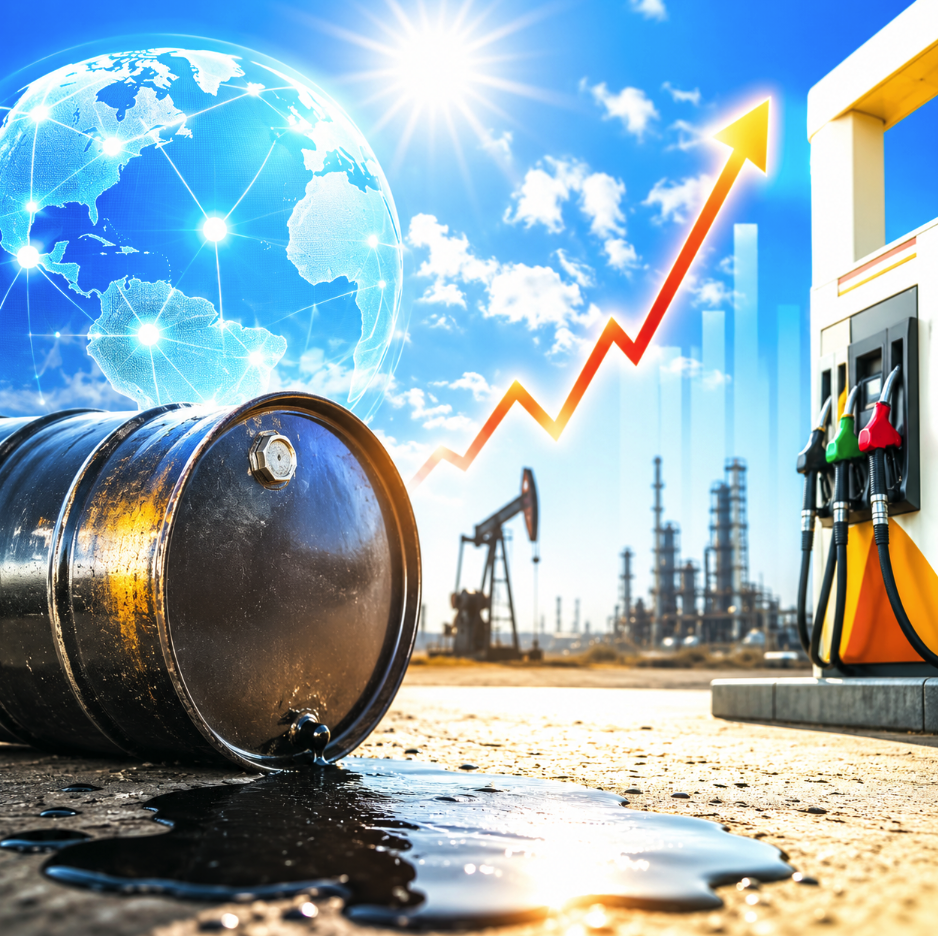
The World Is Approaching “Tank Bottoms” As Experts Warn That Very Painful Oil Shortages Are Ahead This Summer

Without sufficient quantities of oil, the global economy will not be able to operate normally. So the fact that the global economy is running a massive “oil deficit” right now should deeply alarm all of us. Even since the war with Iran began, the world has been consuming far more oil than it has been producing. We have been running down commercial oil inventories and strategic oil reserves all over the planet, and now those supplies are starting to run dry. In the not too distant future, global demand for oil will substantially exceed what is available, and that will mean much higher prices and very painful shortages. Asia will be hit the hardest because they are more dependent on oil from the Middle East than anyone else, but we will certainly feel this crisis very keenly as well.

According to the International Energy Agency, global oil stocks are being depleted at a record pace and they could reach “critical levels” by the middle of the summer…

Global oil inventories could hit critically low levels ahead of the peak July-August fuel demand period if drawdowns continue at their current pace, the International Energy Agency said ​Tuesday.

Global oil stocks fell by more than 250M barrels between March and May, with on-land commercial and strategic stockpiles draining at a record pace, the IEA reported.

“We’re seeing ​stock draws continuing into the summer, and with the possibility or the likelihood that we ⁠reach critical levels or historical low levels just ahead of the peak summer demand,” said Toril Bosoni, the head of the IEA’s oil industry and markets division.

This isn’t a crisis that may or may not happen someday.

This is a crisis that is very real and that is rapidly approaching.

One expert is warning that we are headed for a “disaster” and that rationing could start to happen in some areas of the globe during the months ahead…

The supply situation is manageable for now, but higher summer demand in July and August likely would lead to rationing, Baron Lamarre, former head of trading at Petronas, told Dow Jones.

“The cry is that they want a deal right now because if they don’t have it three months from now, there will be a disaster,” Lamarre said.

A lot of people out there seem to think that the U.S. will be immune because we produce so much of the oil that we use.

But the truth is that U.S. oil stocks just fell “to their lowest level in two decades”

Donald Trump’s Iran war has driven US oil stocks to their lowest level in two decades as his administration drains stockpiles to contain surging prices and exporters capitalise on the drop in Middle Eastern supply.

US government data published on Wednesday showed total stocks of crude and petroleum products such as petrol fell by 10.6mn barrels last week to 1.57bn barrels — the lowest level since 2004.

The sharp fall triggered new warnings from industry analysts that oil prices are poised to move sharply higher again within weeks.

We are running an “oil deficit” too.

It isn’t as severe as what we are witnessing in other industrialized nations, but it is significant.

Withdrawals from the Strategic Petroleum Reserve have helped keep things running fairly smoothly, but the fact that in recent weeks we have seen “the largest weekly withdrawals in history” is not a good sign at all…

The Strategic Petroleum Reserve is also part of the backdrop. The EIA reported that SPR inventories fell by 9.1 million barrels during the week and were 36.2 million barrels below year-ago levels. The recent drawdowns in the SPR have been the largest weekly withdrawals in history.

Gasoline inventories in the U.S. are falling too.

In fact, we just witnessed the largest February to May gasoline drawdown ever recorded

In early February, U.S. gasoline inventories reached 259.1 million barrels. By late May, they had fallen by 47.5 million barrels in roughly 15 weeks.

In weekly EIA data going back to 1990, there is not another February-to-May gasoline drawdown that comes close. The next-largest drawdowns were clustered around 30 million barrels, and that was 15 years ago. This year’s decline is far larger.

That does not mean gasoline shortages are imminent. It does mean the market has burned through a remarkable amount of inventory before the summer driving season has even fully arrived.

If the Strait of Hormuz is not reopened, shortages are inevitable.

The only debate is about when they will hit.

One industry insider just told Politico that his company has warned “the highest levels of government about what’s coming in mid-to-late June”

“We’re at dangerously low levels already,” said one industry executive who was granted anonymity to discuss private conversations with the administration. “We have shared those concerns at the highest levels of government about what’s coming in mid-to-late June. … I hope they are paying attention to inventories right now. You’re hitting tank bottom.”

He isn’t talking about June 2027.

He is talking about this month.

Another expert is warning that we could be “looking at industrial shortages” if the situation in the Strait of Hormuz does not change by September or October…

Drained storage tanks are an “iceberg under the water,” Helima Croft, global head of commodity strategy at RBC Capital Markets, said during a Council on Foreign Relations event Wednesday.

“You may not see immediately on the horizon the actual economic challenges that will be coming, because you look at the flat price and you say, ‘OK, we can muddle through this and Iran will come to terms eventually,’” Croft said. “But if we get in a situation where we have this strait effectively closed, or the strait status quo, and we’re sitting in September or October, then you’re going to be looking at industrial shortages.”

Needless to say, an agreement to reopen the Strait of Hormuz is not going to happen right away.

If the U.S. and Iran are able to eventually reach an agreement, we are being told that it could take six to eight months to fully restore traffic to pre-war levels…

A full reopening of the Strait of Hormuz could take 6-8 months in the best-case scenario if an agreement was reached today, Bosoni ​said at the S&P Global Energy Middle East Petroleum and Gas Conference in London.

What this means is that global energy supplies are going to get tighter every single day for an extended period of time no matter what occurs now.

Gasoline prices will continue to rise, and shortages and rationing are looming.

We desperately need the war to end and the Strait of Hormuz to be reopened as soon as possible.

But I don’t think that is going to happen.

Instead, I think that the Great Middle East War will soon go to an entirely new level, and that won’t be good for the global economy at all.

Michael’s new book entitled “10 Prophetic Events That Are Coming Next” is available in paperback and for the Kindle on Amazon.com, and you can subscribe to his Substack newsletter at michaeltsnyder.substack.com.

About the Author: Michael Snyder’s new book entitled “10 Prophetic Events That Are Coming Next” is available in paperback and for the Kindle on Amazon.com.  He has also written nine other books that are available on Amazon.com including “Chaos”“End Times”“7 Year Apocalypse”“Lost Prophecies Of The Future Of America”“The Beginning Of The End”, and “Living A Life That Really Matters”.  When you purchase any of Michael’s books you help to support the work that he is doing.  You can also get his articles by email as soon as he publishes them by subscribing to his Substack newsletter.  Michael has published thousands of articles on The Economic Collapse BlogEnd Of The American Dream and The Most Important News, and he always freely and happily allows others to republish those articles on their own websites.  These are such troubled times, and people need hope.  John 3:16 tells us about the hope that God has given us through Jesus Christ: “For God so loved the world, that he gave his only begotten Son, that whosoever believeth in him should not perish, but have everlasting life.”  If you have not already done so, we strongly urge you to invite Jesus Christ to be your Lord and Savior today.
Are They Covering Up The True Magnitude Of The New Ebola Outbreak?

Hundreds of people have been dropping dead from a horrifying hemorrhagic disease in central Africa. We are being told that this isn’t the Zaire strain, which is the most common form of Ebola. Instead, authorities are telling us that this outbreak is being caused by the very rare Bundibugyo virus. Unlike the Zaire strain, there is no cure for the Bundibugyo virus. If you get infected, your odds of dying are somewhere between 25 and 50 percent. This is an extremely high death rate, but so far global health authorities have been able to keep everyone calm. They are assuring us that the threat outside of Africa is very low, and most people seem to be buying that story.

But is it accurate?

The International Rescue Committee is claiming that the Ebola outbreak is “likely far worse” than the official numbers suggest…

The Ebola outbreak surging in multiple African countries is ‘likely far worse’ than official reports make it seem, health experts have warned.

New York-based aid group the International Rescue Committee (IRC) warned Monday that response efforts in the Democratic Republic of the Congo (DRC), the epicenter of an ongoing Ebola outbreak, are struggling due to delayed detection and low levels of contact tracing.

Of course the “official numbers” have been fluctuating all over the place.

On Tuesday, the WHO released figures that were far lower than they had previously been giving us…

The United Nations’ World Health Organization significantly scaled back on Tuesday the number of suspected Ebola cases in central Africa, lowering it to 116 from more than 900, with 330 total cases confirmed.

The WHO said that as of May 31, there were 116 suspected cases of the deadly virus registered in Democratic Republic of Congo — a massive reduction from the 906 that had been on the books late last week.

If the WHO has determined that this outbreak is actually much less severe than originally thought, that would be great news.

But if they are simply trying to keep everyone calm by releasing smaller numbers, that would not be good at all.

One expert is warning that the statistics that are being fed to the public are simply not telling us the whole story

“The true scale of this Ebola outbreak is likely far worse than official figures suggest,” Rachel Howard, Senior Technical Emergency Health Advisor at the IRC, said.

“When four out of five contacts are not being traced, it becomes incredibly difficult to contain the outbreak or even understand its true scale. We’re especially concerned about the virus spreading to other countries like Burundi or South Sudan,” Ms Howard added.

We do know that large numbers of people have been dying in local hospitals.

And we also know that the Trump administration is so concerned about this virus that they are absolutely refusing to allow any U.S. citizens that get infected to be treated on U.S. soil…

The Trump administration said it “cannot and will not allow” any cases to enter the U.S. That’s a departure from the U.S. handling of the Ebola outbreak in 2014, when several infected American patients were treated on U.S. soil.

If this outbreak isn’t that big of a deal, why would the Trump administration do this?

Personally, I think that it is a far bigger deal than global health authorities are admitting.

It seems that the very first case appeared in the Democratic Republic of the Congo in January

The first Ebola case in the current epidemic in the Democratic Republic of Congo (DRC) may date back as far as January, according to local medics.

The information was shared with several international NGOs, including the International Rescue Committee (IRC), Action Aid and Doctors Without Borders (MSF), by local medics last week, sources have told The Telegraph.

The medics believe the outbreak began with a patient treated at a hospital in Rwampara, a town in eastern DRC, in late January. They said the patient went on to infect eight healthcare workers before dying in February.

If one infected individual was able to infect eight different healthcare workers before he died, that is a very bad sign.

And if that case in January really was “patient zero”, that means that the virus was spreading unchecked for four months before global health authorities started to respond.

On Wednesday, we learned that the outbreak has now reached yet another new area of the Democratic Republic of the Congo…

Ebola has reached a health zone more than 100 miles from the mining town where Democratic Republic of Congo’s outbreak is believed to have begun, as responders track fewer than 40% of known contacts in the epidemic’s hardest-hit province.

Health officials in Ituri province, which accounts for almost 94% of confirmed infections, were actively monitoring only 39.3% of identified contacts, the country’s National Institute of Public Health said in a report Tuesday. The newly affected health zone of Mambasa lies southwest of the town of Mongbwalu, considered the outbreak’s point of origin, bringing the total number of affected health zones nationwide to 24.

The fact that this strain of Ebola is now spreading in Mambasa is very troubling news, because that part of the DRC is controlled by Islamic State militants

A rare strain of Ebola has reached a corner of the Democratic Republic of Congo controlled by Islamic State militants, a place too dangerous for health workers fighting to stop the deadly virus.

The Bundibugyo strain has killed one person in the militant-controlled territory of Mambasa, which is some 100 miles from the outbreak’s epicenter in a gold-mining town of Mongbwalu. Mambasa is the stronghold of the Allied Democratic Forces, an Islamic State affiliate conducting an insurgency against Congolese and Ugandan troops.

Health authorities aren’t going to be able to do much of anything as the virus spreads throughout Mambasa.

We can only hope that the outbreak there fizzles out somehow.

Meanwhile, cases have started to pop up outside of the DRC as well…

A growing number of cases have also been detected in neighboring Uganda and South Sudan and patients are under observation in Italy and Brazil. An American who tested positive for the virus was evacuated for treatment to Germany.

The variant, which has no current treatments or vaccines, kills up to 50 percent of those infected.

I think that any hope of successfully containing this outbreak has already been lost.

In Uganda, the number of confirmed cases has now risen to 15

Neighboring Uganda also confirmed six new cases Tuesday, bringing its total to 15 infections, including one death.

In Brazil, one of the individuals that was suspected of being infected has tested negative

One of two patients being monitored by Brazilian health authorities for possible Ebola infection in Sao Paulo and Rio de Janeiro has tested negative, officials said Sunday. The possible infections have sparked further concern over the deadly virus outbreak in central Africa spreading abroad.

A 37-year-old man from the Democratic Republic of the Congo, where the outbreak has been concentrated, “exhibited symptoms such as fever, meeting the definition of a suspected case” of Ebola, the Sao Paulo state government said in a statement on Saturday.

While initial tests did not detect the Ebola virus in the patient, he is being monitored and isolated as a precautionary measure at a specialized infectious disease facility, the statement said.

That is good news.

But what about the other suspected case?

And what about the two suspected cases in Italy?

Ebola has never spread outside of Africa before.

If this outbreak does make that jump, we are going to start to see a lot of panic all over the world.

During the global pandemic that we went through earlier this decade, the death rate was extremely low.

But for the Bundibugyo virus, the death rate is somewhere between 25 and 50 percent

The mortality rate for the Bundibugyo virus ranges from 25 to 50 percent.

The Zaire strain, which is the most common form of Ebola, can be treated with the drugs Inmazeb and Ebanga and the Ervebo vaccine, which is administered only during outbreaks.

If this outbreak had been caused by the Zaire strain, I would not be concerned at all.

Unfortunately, the tools that are used to fight the Zaire strain are not effective against the Bundibugyo virus.

Every day more people are dropping dead, and I will be watching this story very closely.

There are two last things that I wanted to mention in this article.

First of all, it has come out that a laboratory worker in Montana was bitten by a monkey that had been infected with a strain of Ebola last November

Senator Tim Sheehy said this month he called for Montana’s Inspector General to open a probe into the Rocky Mountain Lab, a government research laboratory focusing on infectious diseases.

According to a letter Sheehy sent to officials, a worker at the laboratory was bitten through their protective equipment by a monkey infected with Crimean-Congo hemorrhagic fever, a strain of Ebola, in November 2025.

The employee, who has not been publicly identified, was treated following the monkey attack but did not contract the lethal illness, and officials said they soon returned back to work.

Did the monkey bite puncture the skin of that employee?

And exactly how soon did that employee return to work?

Hopefully we will get answers to those two questions.

We have also just learned that two researchers that had been working at that exact same facility have been charged with attempting to smuggle the monkeypox virus into the United States

Two researchers with the National Institutes of Health have been charged with allegedly trying to smuggle the infectious monkeypox virus into the United States, according to the Department of Justice.

In a news release issued Tuesday, the department announced Vincent Munster and Claude Kwe with the NIH Rocky Mountain Laboratory had been charged with “conspiracy to smuggle” the virus, as well as giving false statements to federal law enforcement in January.

The department says Munster and Kwe arrived at the Detroit Metropolitan Airport, with “a large black plastic case” after traveling from Brazzaville, Republic of Congo, where an outbreak of monkeypox was occurring. Monkeypox, also known as Mpox, is a viral illness that is spread through close contact, with symptoms that include fevers, headaches and a rash that looks like blisters or sores, according to the World Health Organization.

The large plastic case that you see someone carrying through an airport could have a deadly virus in it.

And as we have seen, it is way too easy for a lab accident to happen.

We live at a time when mad scientists all over the globe are “playing god” with some of the deadliest diseases that humanity has ever known.

It is probably inevitable that more diseases that have been purposely modified will get out.

So enjoy this period of relative stability while you still can, because I am convinced that global pestilences will be a major theme during the chaotic months and years that are ahead.

Michael’s new book entitled “10 Prophetic Events That Are Coming Next” is available in paperback and for the Kindle on Amazon.com, and you can subscribe to his Substack newsletter at michaeltsnyder.substack.com.

About the Author: Michael Snyder’s new book entitled “10 Prophetic Events That Are Coming Next” is available in paperback and for the Kindle on Amazon.com.  He has also written nine other books that are available on Amazon.com including “Chaos”“End Times”“7 Year Apocalypse”“Lost Prophecies Of The Future Of America”“The Beginning Of The End”, and “Living A Life That Really Matters”.  When you purchase any of Michael’s books you help to support the work that he is doing.  You can also get his articles by email as soon as he publishes them by subscribing to his Substack newsletter.  Michael has published thousands of articles on The Economic Collapse BlogEnd Of The American Dream and The Most Important News, and he always freely and happily allows others to republish those articles on their own websites.  These are such troubled times, and people need hope.  John 3:16 tells us about the hope that God has given us through Jesus Christ: “For God so loved the world, that he gave his only begotten Son, that whosoever believeth in him should not perish, but have everlasting life.”  If you have not already done so, we strongly urge you to invite Jesus Christ to be your Lord and Savior today.
The Average Monthly Mortgage Payment Is Up 44 Percent To $2,005, But American Families Are Paying Even More For Health Insurance

U.S. households are being financially squeezed at a level that we have never seen before. I have often said that we are in a long-term cost of living crisis that never seems to end, and that is not an exaggeration at all. Just about everything has been getting more expensive in recent years, and as a result our standard of living has been going down. In many areas of the country, you now have to earn six figures just to live a basic middle class lifestyle. The numbers that I am going to share with you in this article may be hard to believe, but they are very real. Inflation has been out of control for many years, and hard working American families are being absolutely crushed.

For the first time in U.S. history, the average monthly mortgage payment now exceeds $2,000

Homeowners faced a sticker shock at the end of 2025 as the average monthly mortgage payment topped $2,000 for the first time—a historic milestone reflecting the combined pressure of high home prices and elevated interest rates.

In the fourth quarter of last year, the average payment for existing mortgage holders climbed to $2,005, representing a striking 44% surge compared to 2021, according to the latest quarterly outstanding mortgage report from the Realtor.com® economic research team.

In other words, the typical homeowner saw their monthly mortgage payment jump by more than $600 in just three years, an eye-watering surge.

Take another look at those figures.

All along, federal bureaucrats have been feeding us numbers that show that the inflation rate is very low, but the average monthly mortgage payment has risen by 44 percent just since 2021.

Needless to say, someone is not telling us the truth.

But that isn’t even the worst part.

Today, what the average American family is paying for health insurance each month is even higher than the average monthly mortgage payment…

The numbers don’t lie. The average American family now pays over $2,200 a month for health insurance; surprisingly, that’s more than the average monthly mortgage payment of $2,000. Let that sink in. Keeping a roof over your head costs less than keeping your family covered.

That is not a market failure. That is a system rigged by liberals and government bureaucrats designed to benefit corporate giants at the expense of everyday Americans. Premiums are soaring, and insurers are cashing in. It needs to stop.

Americans are noticing. A recent poll found that a staggering 90 percent of Americans say health insurance companies have too much control and should be broken up, with 74 percent strongly agreeing. The overwhelming majority of Americans know there is a problem. They are screaming for justice.

That is outrageous.

Is there anyone out there that wants to attempt to defend how expensive health insurance has become?

Our system is so broken, and the politicians in Washington have given up on trying to fix it.

Meanwhile, pretty much everything else is becoming more expensive too.

And thanks to the war in Iran, American households have had to shell out an extra 100 billion dollars in just three months…

The war in Iran has cost US households $100 billion in three months, Moody’s Analytics says.

Now in its fourth month, the conflict has cost nearly $750 per household. The increased cost to consumers has mostly been felt in energy prices, but the inflation picture continues to deteriorate the longer the war drags on without a resolution in sight. What’s more, Moody’s says that tailwinds for household like Donald Trump’s tax cuts have been offset by war-fueled cost increased.

This is money that is coming directly out of your pockets.

The rising cost of gasoline alone has sucked an extra 400 dollars out of the typical U.S. household…

According to researchers at Brown University’s Watson School of International and Public Affairs, Americans have paid an additional $51.7 billion in gasoline and diesel costs since the conflict began on February 28, equivalent to nearly $400 per household. And Moody’s Analytics, in findings shared with CNBC, puts this figure even higher, at $450.

There is no end in sight for the crisis in the Middle East, and that means gasoline prices are likely to go significantly higher.

Commercial oil inventories are being rapidly depleted, and the Strategic Petroleum Reserve is “dropping toward levels not seen since the 1980s”

America’s emergency oil reserve is dropping toward levels not seen since the 1980s, as the United States rapidly drains its supplies to stabilize global energy markets rattled by the war with Iran.

According to the latest report from the Energy Information Administration (EIA), the U.S. has 365.1 million barrels of oil sitting in the Strategic Petroleum Reserve (SPR) in the week ending May 22, compared to 374.2 million a week prior and down by over 50 million barrels since the conflict began on February 28.

The price of oil has a direct impact on prices for just about everything else, and so that is really bad news.

As ordinary Americans are being squeezed harder and harder, household debt has been rising and the credit card delinquency rate has spiked to a very alarming level

According to data released by the New York Fed in May, total U.S. household debt climbed to an all-time high of $18.8 trillion in the first quarter of 2026. Much of this is housing debt, and credit card balances dropped slightly over the period, but the rising total has coincided with an increase in late payments.

The percentage of credit card balances at least 90 days delinquent reached 13.1 percent in the first quarter, up 0.4 percent from the previous one and reaching its highest rate in 15 years.

Millions upon millions of Americans are working as hard as they can and it still isn’t enough.

To many people, it just seems like there is no way that they can win, and so many are choosing to simply drop out of the game.

In fact, one out of every three American men are no longer in the workforce at all

The number of American men participating in the workforce has fallen to one of its lowest levels in nearly two decades, according to new federal labor statistics.

Just 66 percent of men age 20 and older were employed or actively seeking work as of April, according to data released earlier this month by the US Bureau of Labor Statistics. That figure has dropped sharply from 73 percent in 2006 and now sits near levels last seen during the fallout from the 2008 financial crisis.

The numbers mean roughly one in three American men are no longer in the workforce.

This is what a crumbling economy looks like.

Only 66 percent of American men that are at least 20 years old are working.

How low does that number have to drop for us to admit that we have a historic crisis on our hands?

I have heard from so many readers that are feeling more financial stress right now than they ever have in their entire lives.

That isn’t a coincidence.

Decades of incredibly foolish decisions have resulted in a sl0w-motion economic decline that has really started to pick up speed in recent years.

Now the pain is beginning to feel like it is unbearable, but the truth is that our problems are only going to intensify from here.

Michael’s new book entitled “10 Prophetic Events That Are Coming Next” is available in paperback and for the Kindle on Amazon.com, and you can subscribe to his Substack newsletter at michaeltsnyder.substack.com.

About the Author: Michael Snyder’s new book entitled “10 Prophetic Events That Are Coming Next” is available in paperback and for the Kindle on Amazon.com.  He has also written nine other books that are available on Amazon.com including “Chaos”“End Times”“7 Year Apocalypse”“Lost Prophecies Of The Future Of America”“The Beginning Of The End”, and “Living A Life That Really Matters”.  When you purchase any of Michael’s books you help to support the work that he is doing.  You can also get his articles by email as soon as he publishes them by subscribing to his Substack newsletter.  Michael has published thousands of articles on The Economic Collapse BlogEnd Of The American Dream and The Most Important News, and he always freely and happily allows others to republish those articles on their own websites.  These are such troubled times, and people need hope.  John 3:16 tells us about the hope that God has given us through Jesus Christ: “For God so loved the world, that he gave his only begotten Son, that whosoever believeth in him should not perish, but have everlasting life.”  If you have not already done so, we strongly urge you to invite Jesus Christ to be your Lord and Savior today.

The Total Collapse Of Negotiations With Iran Threatens To Cause Global Economic Devastation

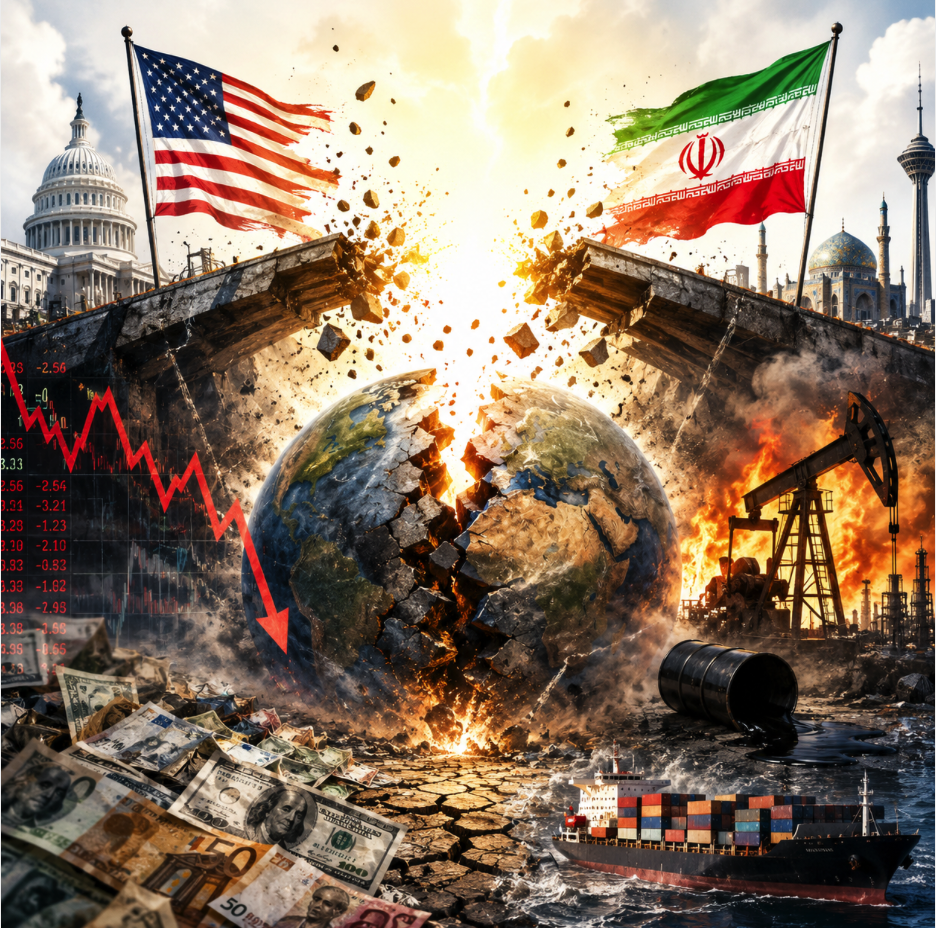
This is a moment in history that we will remember for a long time to come. Even though we were told over and over again that a deal with Iran was almost “finalized”, the truth is that there never was going to be a deal with Iran. It was all smoke and mirrors. The U.S. couldn’t give Iran what it was demanding, and Iran simply refused to give the U.S. what it was demanding. Now negotiations have totally collapsed, and it appears that the war is back on. Needless to say, this is going to be absolutely devastating for the global economy.

The Iranians are absolutely furious that Israeli troops have been advancing deep into Lebanese territory during the ceasefire period, and they are identifying that as the primary reason why they have decided to pull out of talks with the United States…

Iran negotiators will stop exchanging messages with the U.S. through intermediaries, and Tehran will move to fully close the Strait of Hormuz, in retaliation for ongoing ceasefire violations, Iran’s state-affiliated news outlet Tasnim said Monday.

The report, in a translated post on the social media site Telegram, homed in on Israel’s military operations in Lebanon against the Iran-backed militia Hezbollah.

“No dialogue will take place” until Israel fully withdraws from occupied areas in Lebanon and stops all attacks in both Lebanon and Gaza, per Tasnim.

Israel will stop shooting as long as Hezbollah agrees to stop sending attack drones into northern Israel.

But there is no way that we are going to see the IDF completely pull out of Lebanon.

If the Iranians are waiting for that to happen, they will be waiting for a really, really long time.

The Iranians are alleging that the U.S. naval blockade of the Iranian coastline is also a violation of the ceasefire, and they want that to end too.

President Trump has vowed to keep that blockade going until a deal is finally reached, and so the Iranians are not going to get that either.

So it appears that any hope for a deal is completely dead, and the Iranians apparently intend to “completely block the Strait of Hormuz and activate other fronts including the Bab al-Mandeb Strait”

“Also, the resistance front and Iran have resolved to completely block the Strait of Hormuz and activate other fronts including the Bab al-Mandeb Strait, in order to punish the Zionists and their supporters,” the report said.

The Bab el-Mandeb Strait is a trade chokepoint that connects the Red Sea to the Gulf of Aden.

Since the war began, Saudi Arabia has still been able to export quite a bit of oil by sending it via pipeline to ports on the Red Sea.

But if the Bab al-Mandeb Strait is also closed, the Saudis won’t be able to export any oil at all.

Last week, I published an article that discussed the fact that global oil inventories have already been dropping at the fastest pace ever recorded.

Shutting down the Bab al-Mandeb Strait would dramatically accelerate the depletion of existing supplies.

In other words, we are about to enter unprecedented territory.

Once news broke that the Iranians were cutting off negotiations, the price of oil rose by quite a bit on Monday

The price of oil rose sharply on Monday, after Iranian government-aligned media reported that the country was cutting off talks with the United States to end the ongoing war.

U.S. crude oil soared as much as 8.5% to nearly $95 per barrel, an increase of almost $8. International Brent crude climbed as much as 7.3% to more than $97 per barrel, a $6 spike.

Heating oil, a proxy for jet fuel, also rose 7%, while wholesale gas prices rose 4%.

Of course this is just the beginning.

If the crisis in the Middle East is not resolved, the price of oil is going to go absolutely haywire.

A few days ago, the CEO of Chevron made some very alarming comments that have received a lot of attention…

That is what made Chevron CEO Mike Wirth’s remarks at the Bernstein 42nd Annual Strategic Decisions Conference on May 28, 2026, so striking.

He wasn’t hedging.

“The buffers and the shock absorbers are being steadily drawn down, and the ability for the market to absorb this imbalance is drastically diminished today versus where we started,” Wirth said, according to Seeking Alpha.

He is exactly correct.

We are in a far worse position today than we were when this war began.

And Wirth is projecting that the months of June and July could represent a major turning point…

Wirth went further: “Over the next few weeks, we’re likely to see those pressures flow through more directly to physical prices, and there’s more upwards pressure that I would expect as we get into June and certainly into July.”

That is a specific, directional warning from the CEO of one of the world’s largest energy companies. The Iran war has been grinding through global oil reserves for more than ten weeks. The cushion that absorbed the initial shock is nearly gone. And the data is starting to confirm what Wirth is describing.

All along there was hope that we would be bailed out by a deal between the Iranians and the Trump administration.

But now the rug has been pulled out from underneath our feet.

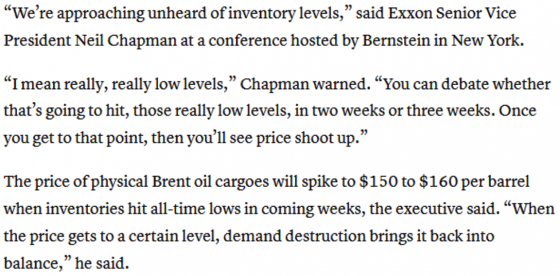
Exxon Senior Vice-President Neil Chapman recently warned that once inventory levels start hitting critical levels, we could see the price of oil soar to 150 dollars or 160 dollars a barrel

There have been others that have warned that the price of oil could soon hit 180 dollars a barrel.

It is difficult to project exactly how high the price of oil will go, because we have never faced anything like this before.

And the higher the price of oil goes, the worse it is going to be for the global economy.

Of course the collapse of negotiations is also really bad news for our farmers, because now there is no end in sight for the global fertilizer crisis

The effective closure of the strait of Hormuz has throttled global supplies of fertilizer, as well as oil. So far, the effect on consumers has been mostly felt as high prices at the gas pump, but global food supply chains, from seed to grocery shelf, tend to have longer lags. On May 7, John Denton, Secretary General of the International Chamber of Commerce warned during an interview with Forbes TV that the fertilizer shortage could cause deadly food scarcity and price hikes.

In April, a statement by the American Farm Bureau Federation said that around 70% of U.S. farmers report being unable to afford all the fertilizer they need. The AFBF’s Fertilizer Availability Survey of nearly 6,000 farmers and ranchers across the country also found that nearly six in 10 U.S. farmers report worsening finances, because of rising fertilizer and fuel costs during spring planting.

We had one shot at avoiding a horrifying global economic implosion.

We desperately needed the Strait of Hormuz to be reopened, and that isn’t going to happen.

If you have been waiting for a sign that will make it clear which way things are going to go, you just got it.

From this point forward, global events are going to move at a blinding pace.

Negotiations have collapsed, Iran has chosen war, and the crisis in the Middle East is about to get really crazy.

Michael’s new book entitled “10 Prophetic Events That Are Coming Next” is available in paperback and for the Kindle on Amazon.com, and you can subscribe to his Substack newsletter at michaeltsnyder.substack.com.

About the Author: Michael Snyder’s new book entitled “10 Prophetic Events That Are Coming Next” is available in paperback and for the Kindle on Amazon.com.  He has also written nine other books that are available on Amazon.com including “Chaos”“End Times”“7 Year Apocalypse”“Lost Prophecies Of The Future Of America”“The Beginning Of The End”, and “Living A Life That Really Matters”.  When you purchase any of Michael’s books you help to support the work that he is doing.  You can also get his articles by email as soon as he publishes them by subscribing to his Substack newsletter.  Michael has published thousands of articles on The Economic Collapse BlogEnd Of The American Dream and The Most Important News, and he always freely and happily allows others to republish those articles on their own websites.  These are such troubled times, and people need hope.  John 3:16 tells us about the hope that God has given us through Jesus Christ: “For God so loved the world, that he gave his only begotten Son, that whosoever believeth in him should not perish, but have everlasting life.”  If you have not already done so, we strongly urge you to invite Jesus Christ to be your Lord and Savior today.
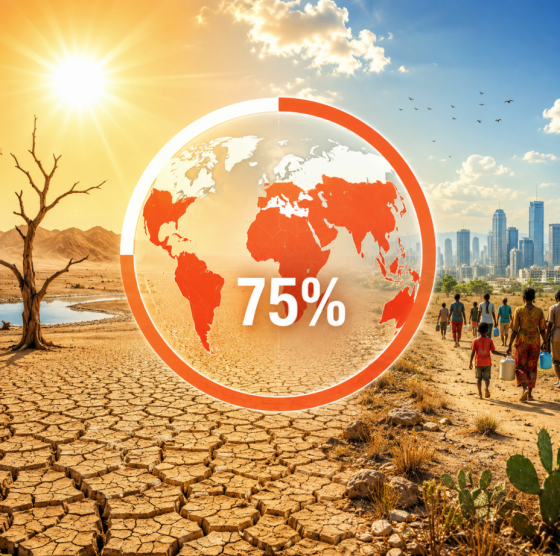
Permadrought: 75 Percent Of The Global Population Lives In A Country That Is Being Affected By “The Great Drying”

Our planet is drying out at a pace that is unlike anything we have ever seen before. Once massive lakes are rapidly shrinking, once mighty rivers are steadily dwindling, and colossal underground aquifers are being pumped dry all over the world. This is an absolutely enormous problem, because very soon we simply will not have enough fresh water to support 8 billion people. In fact, drought conditions are severely affecting global crop production in 2026. If current trends continue, it will become increasingly difficult to grow food. In other words, if the land on our planet doesn’t stop drying out there is no way that we will be able to avoid an era of widespread global famines.

This isn’t something that just started happening recently.

Over the last several decades, the world has been losing fresh water “at an unprecedented rate”

The world is losing fresh water at an unprecedented rate, two decades’ worth of satellite data has revealed.

Measurements from NASA’s twin GRACE satellites and GRACE follow-on missions have shown that since 2002, the amount of land suffering from water loss has been increasing year on year by twice the area of the state of California. That includes the loss of water from surface reservoirs such as lakes and rivers and underground aquifers, which are an important source of drinking water around the globe.

Mega-drying regions have emerged across the Northern Hemisphere with the worst-hit areas extending across the western coast of North America, Southwestern North America and Central America, the Middle East and Southeast Asia.

Just look at what has been happening to the Great Salt Lake.

Once upon a time it was absolutely gigantic.

But now it has lost approximately 73 percent of its water and approximately 60 percent of its surface area.

Of course this isn’t just happening in the United States.

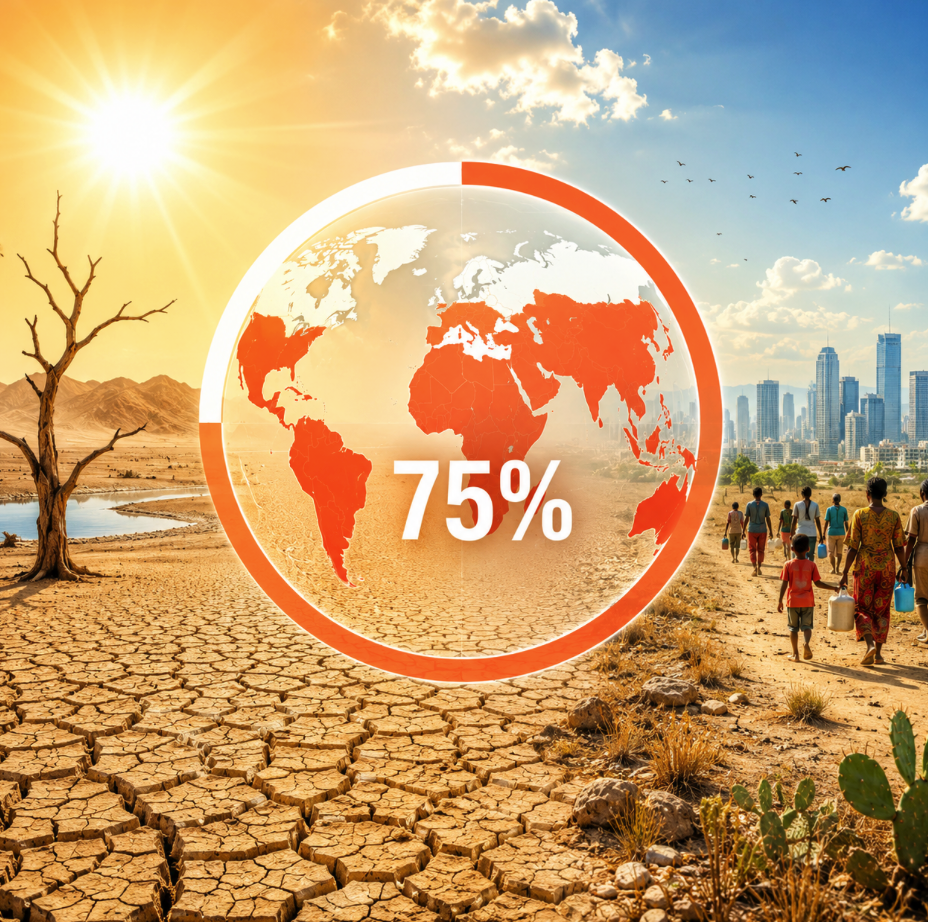
One study found that 75 percent of the population of the world currently lives in a country that is being affected by “continental drying”

Much of the Earth is suffering a pandemic of “continental drying,” affecting the countries containing 75% of the world’s population, the new research shows.

The study, published in the journal Science Advances, examined changes to Earth’s total supply of fresh water and found that nearly 6 billion people live in the 101 countries facing a net decline in water supply, posing a “critical, emerging threat to humanity.”

I was stunned when I first read that.

If 6 billion people live in nations that are steadily drying out, what does that mean for the future of humanity?

We aren’t just talking about a few isolated deserts.

The United Nations is telling us that excluding Antarctica, drylands now account for more than 40 percent of all the land on this planet.

And more than three-quarters of all the land on this planet has been getting drier over the past 30 years

As Earth continues to warm, more and more of the planet is becoming dry. A 2024 UN report found that in the last three decades, over three-fourths of all the world’s land became drier than it had been in the previous 30 years.

Drylands now comprise 40.6% of all global land (excluding Antarctica). In addition, the number of people living in drylands doubled over the last 30 years to 2.3 billion, which represents over 25% of the global population. In a worst-case climate change scenario, this number could climb to 5 billion by 2100.

Many of us have just come to accept that drought is a normal part of life.

If you look at the latest U.S. Drought Monitor map, it is a nightmare.

Right now, more than 60 percent of the continental United States is experiencing at least some level of drought

As of May 26, 2026, 50.77% of the United States and Puerto Rico and 60.77% of the Lower 48 states are in drought.

Some of the areas that are being hit the hardest are where we grow our food.

In particular, wheat farmers in the U.S. are having a very challenging time this year…

It’s a perfect storm of terrible conditions for wheat farmers this year. Drought, dramatic swings in temperature, the skyrocketing price of fertilizer and diesel, plus multiple viruses affecting wheat have all led to one of the most challenging years for farmers in decades.

There are different classes of winter wheat, but they’re all down when compared to last year’s crop, explained Todd Hubbs, a crop marketing specialist at Oklahoma State University Extension.

What are they supposed to do?

If it doesn’t rain, it doesn’t rain.

Unfortunately, it is being projected that the winter wheat harvest in the U.S. will be down by 21 percent compared to last year…

The most widely produced class of wheat in the U.S., Hard Red Winter wheat, has a current production forecast of 515 million bushels. That may sound like a lot, but it would end up being the lowest since 1957, Hubbs said.

Soft red winter and white wheat varieties are also having tough years, with the lowest production volume in 6 to 10 years.

In all, growers will see their smallest wheat crop in terms of production since 1972, according to the U.S. Department of Agriculture; 1.56 billion bushels this year, down 21% from 2025.

Are you going to eat 21 percent less wheat this year?

I don’t think that anyone is planning to make that kind of sacrifice.

But there simply won’t be as much wheat as normal in 2026.

Kansas is a key wheat producing state, and a lack of rain has created nightmare conditions in much of the state…

The latest U.S. Drought Monitor (USDM) data, published May 28, shows 57% of Kansas suffering from drought, Sittel said.

“For the 26-year history of the USDM, the median coverage of drought in Kansas is 22%, which is another way to look at our current conditions against a historical time series,” Sittel said.

Typically, the winter wheat crop receives a few inches of rainfall in the spring, but that didn’t happen this year.

“The majority of the crop didn’t get that extra rainfall, and where we didn’t get any of that rainfall, a lot of times the crop already got terminated and insurance was called upon,” Lollato said. “Or we’re looking at very, very limited yield potentials, like 15–20 bushels per acre.”

We just experienced the driest first three months of a year ever recorded in the United States.

That is really saying something.

In addition to a seemingly endless drought, U.S. farmers are also facing much higher prices for diesel fuel and fertilizer.

On top of everything else, now a “Super El Niño” is coming, and that means that drought conditions will greatly intensify in many parts of the world.

This may be a good time to remind my readers that the “Super El Niño” of 1877-1878 caused horrifying droughts that killed more than 50 million people all over the globe.

Unfortunately, scientists are warning that the “Super El Niño” that will start later this year could be even more powerful.

Yes, we really are facing a catastrophic scenario.

But for now most of the population is still pretending that everything is going to be just fine, and so they continue to party as things rapidly get worse all around them.

Michael’s new book entitled “10 Prophetic Events That Are Coming Next” is available in paperback and for the Kindle on Amazon.com, and you can subscribe to his Substack newsletter at michaeltsnyder.substack.com.

About the Author: Michael Snyder’s new book entitled “10 Prophetic Events That Are Coming Next” is available in paperback and for the Kindle on Amazon.com.  He has also written nine other books that are available on Amazon.com including “Chaos”“End Times”“7 Year Apocalypse”“Lost Prophecies Of The Future Of America”“The Beginning Of The End”, and “Living A Life That Really Matters”.  When you purchase any of Michael’s books you help to support the work that he is doing.  You can also get his articles by email as soon as he publishes them by subscribing to his Substack newsletter.  Michael has published thousands of articles on The Economic Collapse BlogEnd Of The American Dream and The Most Important News, and he always freely and happily allows others to republish those articles on their own websites.  These are such troubled times, and people need hope.  John 3:16 tells us about the hope that God has given us through Jesus Christ: “For God so loved the world, that he gave his only begotten Son, that whosoever believeth in him should not perish, but have everlasting life.”  If you have not already done so, we strongly urge you to invite Jesus Christ to be your Lord and Savior today.

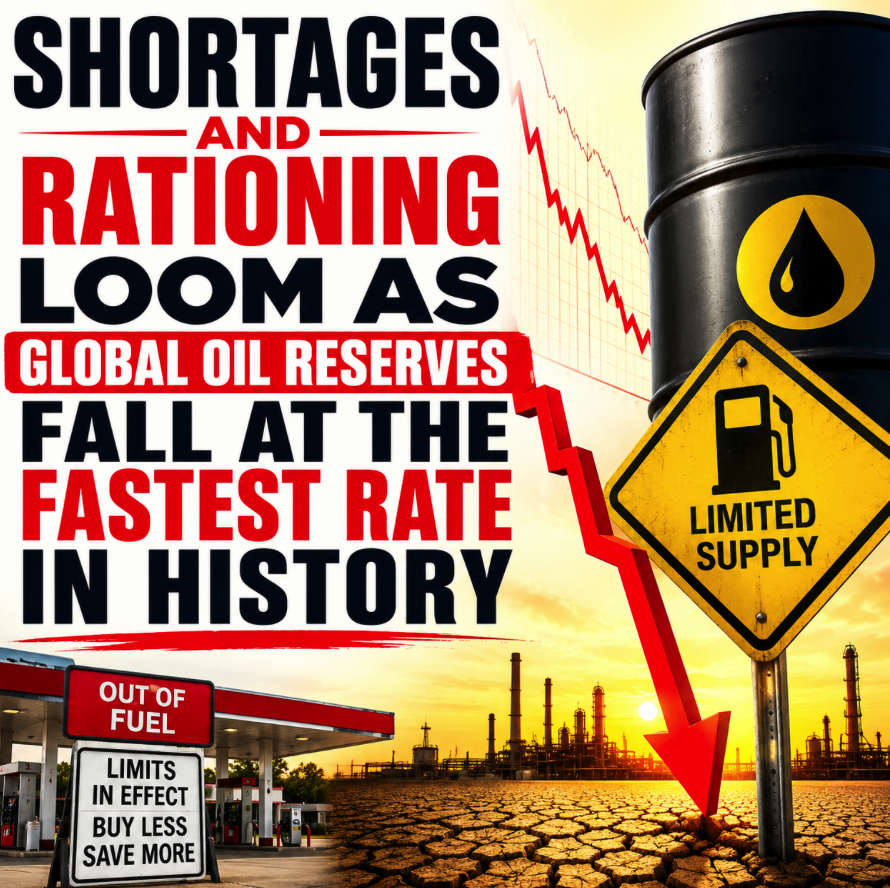
Shortages And Rationing Loom As Global Oil Reserves Fall At The Fastest Rate In History

No matter what happens now, the world is facing a very painful energy crisis. Let’s be as wildly optimistic as we possibly can and assume that Iran agrees to allow free passage through the Strait of Hormuz with absolutely no tolls or restrictions starting tomorrow. Before normal traffic through the Strait could resume, Iran would first have to remove all of the mines that they have laid in the Strait, and that could take months. Once all of the mines have been removed, it will take the tankers that are currently trapped in the Persian Gulf weeks to arrive at their destinations. Moving forward, Persian Gulf countries will be exporting much less oil and natural gas for the foreseeable future because of all the oil and natural gas infrastructure that was damaged or destroyed during the war. It will take years before all of that infrastructure is fully repaired and rebuilt. Meanwhile, global supplies of oil and natural gas will be very tight for an extended period of time.

What I have just laid out for you is the best case scenario.

Ultimately, what we end up facing could be so much worse.

Over the past couple of months, global oil reserves have been falling at the fastest rate ever recorded

Record inventory draw: Global oil stocks have fallen by 246 million barrels in March-April, with draws in May hitting a record 8.7 million barrels per day.

Hormuz closure impact: The Strait of Hormuz shutdown has cut off 25% of the world’s seaborne oil, compounding already low reserves and boosting prices.

US price outlook: Analysts expect U.S. gasoline prices could reach $5 this summer unless flows resume, with relief unlikely before autumn.

Needless to say, this is not sustainable.

Here in the United States, the strategic petroleum reserve has been dropping at a record-breaking pace

The SPR’s most recent drawdown, covering the week ended May 22, shows a drop of 9.1 million barrels, leaving the reserves at 365 million barrels. The previous weekly drawdown, covering the week of May 15, was its steepest on record — the U.S. withdrew 9.92 million barrels from the SPR then.

Before that record-breaking decline, the largest weekly drop in the SPR’s history occurred in the week ended Oct. 7, 2022, when the reserves dropped by 7.41 million barrels, and was connected to the war in Ukraine.

Commercial oil inventories are being rapidly depleted as well.

At some point the tanks are going to hit minimum operating levels and we are going to have an enormous crisis on our hands.

The chief economist at Capital Economics is projecting that commercial oil inventories “could reach critically low levels by the end of June”

“At the current pace of drawdown, commercial oil stocks could reach critically low levels by the end of June,” Neil Shearing, chief economist at Capital Economics, wrote in a research note on May 18.

If supply conditions don’t improve soon, “prices could rise sharply,” Shearing warned.

Jeff Currie is warning that Asia is already very close to minimum operating levels, and he is projecting that the U.S. could potentially be dealing with shortages in July

Oil markets are nearing minimum operating levels in Asia, with Europe likely next and the U.S. potentially facing shortages by July, said veteran market strategist Jeff Currie on Monday, underscoring the global energy shock due to the Iran war.

Headline global inventory figures can be misleading as much of the oil stored worldwide cannot be used immediately, said Currie, Carlyle’s chief strategy officer of energy pathways and co-chairman of Abaxx Markets.

A large portion of that oil is needed to keep pipelines and storage systems running safely, leaving only a smaller share available for the market. Asia is already close to these so-called “minimum operating levels,” Currie told CNBC on the sidelines of the UBS Wealth Conference in Singapore.

This is really happening.

The Australian government is so concerned about what is ahead that they have already prepared a plan to limit the amount of fuel each vehicle can purchase per day when that becomes necessary…

Contained in documents obtained by Guardian Australian under freedom of information, one option the government had at its disposal to arrest a local fuel supply shortage would be to impose a “maximum transaction value per vehicle per day” – a rationing rule which would limit how much fuel a single vehicle can buy at a service station over a 24-hour period.

If the Strait of Hormuz does not get reopened, we could eventually see similar measures get implemented all over the world.

Of course rationing of motor oil has already started

Nissan is rationing 5W-30 and 0W-20 Nissan Genuine Motor Oils. Starting this week, Nissan’s stock of these oils has dropped by 30% year-on-year. With only 70% left in the tank, the brand is already taking precautions, sending memos to dealers to manage its stock during the shortage.

The brand will prioritize certain owners, such as those claiming “warranty, extended warranty, recall repairs, goodwill, and prepaid maintenance,” according to Kim Less, the vice president of aftersales at Nissan Americas, in the bulletin addressed to Nissan dealers.

“Given these constraints, it is critical to prioritize the use of Nissan Genuine 0W-20 (and 5W-30, where applicable) for warranty, extended warranty, recall repairs, goodwill, and prepaid maintenance,” Kim Less, vice president of aftersales, Nissan Americas, said in the May 15 bulletin to Nissan dealers.

I would encourage my readers to stock up on motor oil while they still can.

Supplies are only going to get tighter from this point forward.

The pharmaceutical industry is also very dependent on raw materials from the Middle East, and one pharmacist is claiming that the current drug shortage is the “worst I’ve ever known”

Some people living with heart conditions, stroke risks, eye infections and bipolar disorder are among those unable to get the medications they rely on, a pharmacist has said.

Graham Jones, who owns Shrivenham Pharmacy in Oxfordshire, said vital medication like aspirin was harder to obtain because of surging global prices and government funding which was not keeping up with costs.

Jones said the current medication shortage was the “worst I’ve ever known”.

Personally, I am even more concerned about the global fertilizer shortage.

The UN is telling us that we could be facing a worldwide food crisis that could last for “years”

The de facto closure of the Strait of Hormuz risks a global food crisis that could extend for years, the UN warned.

Global fertilizer companies have slashed production over shortfalls of sulphur, required to make many farming inputs; about half of the global supply passed through the strait before the Iran war.

As a result, farmers are likely to produce lower yields in coming harvests. Richer economies like those in Europe are mulling building fertilizer stockpiles, reducing duties on imports, and onshoring production, but poorer ones have limited room to adapt.

I want to be very clear about what lies in front of us.

No matter what happens now, there will be shortages and rationing.

It is just a matter of how intense they will be and how long they will last.

Needless to say, the outlook for the global economy in the months ahead is not promising at all.

We really do have a major crisis on our hands, and it will become a historic nightmare if the Strait of Hormuz does not get reopened soon.

Michael’s new book entitled “10 Prophetic Events That Are Coming Next” is available in paperback and for the Kindle on Amazon.com, and you can subscribe to his Substack newsletter at michaeltsnyder.substack.com.

About the Author: Michael Snyder’s new book entitled “10 Prophetic Events That Are Coming Next” is available in paperback and for the Kindle on Amazon.com.  He has also written nine other books that are available on Amazon.com including “Chaos”“End Times”“7 Year Apocalypse”“Lost Prophecies Of The Future Of America”“The Beginning Of The End”, and “Living A Life That Really Matters”.  When you purchase any of Michael’s books you help to support the work that he is doing.  You can also get his articles by email as soon as he publishes them by subscribing to his Substack newsletter.  Michael has published thousands of articles on The Economic Collapse BlogEnd Of The American Dream and The Most Important News, and he always freely and happily allows others to republish those articles on their own websites.  These are such troubled times, and people need hope.  John 3:16 tells us about the hope that God has given us through Jesus Christ: “For God so loved the world, that he gave his only begotten Son, that whosoever believeth in him should not perish, but have everlasting life.”  If you have not already done so, we strongly urge you to invite Jesus Christ to be your Lord and Savior today.