
The Largest Supply Disruption In History Has Made The Price Of Oil The Most Important Economic Number In The World At This Moment

What a wild week it has been already. On Sunday night, I watched as the price of oil hit $116 a barrel. It was insane. Financial markets started to panic all over the world because investors know that if the price of oil stays above $100 a barrel for an extended period of time it will absolutely crush the global economy. Our entire way of life depends upon cheap energy, because virtually every type of human activity in the modern world uses energy. I am using energy as I write this article, and you are using energy as you read this article. After the crazy spike in the price of oil that we witnessed on Sunday night, authorities quickly shifted into damage control mode, and for the moment they have successfully pushed the price of oil back below 90 dollars a barrel. But how long will they be able to keep it there?

According to CNBC, we are currently experiencing the largest oil supply disruption in the history of the world…

The U.S. war against Iran has triggered the largest oil supply disruption in history, more than double the previous record set during the Middle East crisis of the 1950s, according to an analysis by consulting firm Rapidan Energy.

About 20% of the world’s oil supply has been disrupted for nine days now as tanker traffic through the Strait of Hormuz remains at a standstill. Crude prices have surged above $100 per barrel in response.

The biggest disruption before the current war was during the Suez Crisis of 1956 when Britain, France and Israel invaded Egypt’s Sinai Peninsula, the energy consulting firm told clients in a Sunday note. In that crisis, about 10% of the world’s oil supply at the time was disrupted.

Needless to say, there have been other times when the global supply of oil has been disrupted for one reason or another.

During those times, nations with spare capacity have been able to step up and bridge the gap.

But this time around, the nations that possess most of the spare capacity are being directly affected by this war

The big difference between the supply shock of the Iran war and past crises is the world has no spare oil capacity to address the problem, the analysts said. Saudi Arabia and the United Arab Emirates hold the overwhelming majority of swing capacity but they have been cut off from the global oil market by the Hormuz closure, the analysts said.

“The conflict has not only taken offline a historically high share of global supply – it has simultaneously disrupted the primary holders of spare capacity,” the Rapidan analysts said. “The result is a market with no meaningful cushion. There is no swing producer positioned to step in.”

It appears that a lot of pain at the pump is ahead for all of us.

Already, the average price of a gallon of gasoline in the state of California has surpassed the five dollar mark

Prices are currently highest in California, where drivers were paying an average of $5.20 per gallon on Monday morning, and in Washington state, where gas hit $4.63 per gallon.

We haven’t seen anything like this in a long time.

If you can believe it, one gas station in Los Angeles is actually charging more than 8 dollars for a gallon of gasoline…

A lot of people actually thought that the article that I posted yesterday was exaggerating the threat.

I guess not.

The Iranians continue to insist that they will be able to push the price of oil up to $200 a barrel

“If they can afford the price of oil at $200 per barrel, let them keep playing this game.”

The spokesman for a wing of the IRGC, Ebrahim Zolfighari, says the US has opened a new chapter in the war by bombing Iran’s energy infrastructure.

The good news is that for now western authorities have been able to push the price of oil back below $90 a barrel.

Early on Monday, G7 finance ministers suggested that there could soon be a coordinated release of emergency oil reserves

The G7 said it was ready to take “necessary measures” to address the economic impact of the US-Israel war on Iran, after a meeting prompted by soaring oil prices, which rose above $100 (£74) a barrel for the first time since 2022.

Following a remote meeting on Monday, G7 finance ministers said they would closely monitor the situation but stopped short of agreeing to release emergency oil reserves.

“We discussed the current conflict in the Middle East, its impact for regional stability, global economic conditions, and financial markets, and the importance of secure trading routes,” they said in a statement.

When that news broke, it immediately ended the panic.

So that was a good thing.

But the truth is that releasing those oil reserves would only be a temporary measure, and it wouldn’t provide that much relief.

Later on Monday, the price of oil really started plummeting once President Trump said that “the war is very complete”

President Trump told CBS News that he believes the U.S.-Israeli war with Iran is “very far ahead of schedule.”

“I think the war is very complete, pretty much,” he said. “They have no navy, no communications, they’ve got no air force. Their missiles are down to a scatter. Their drones are being blown up all over the place, including their manufacturing of drones. If you look, they have nothing left. There’s nothing left in a military sense.”

Of course the war is not even close to over, but Trump’s statement was able to push the price of oil way down.

And during that same interview, Trump warned that he was considering taking over the Strait of Hormuz

Speaking to CBS News Senior White House Correspondent Weijia Jiang on Monday, U.S. President Donald Trump said that he is considering taking further action to secure the Strait of Hormuz, the critical waterway spanning from Iran to Oman through which a fifth of global oil supplies flow annually.

Trump said that while some ships are moving through the Strait despite the Iranian threat, he said that he is “thinking about taking it over.”

It would take boots on the ground to physically secure the Strait of Hormuz, and Trump knows that.

So what are we to make of his contradictory statements?

The Chinese have also been very alarmed by what has been going on in the Strait of Hormuz, because they get a lot of their oil from the Middle East.

Just hours ago, China warned that it “will take necessary measures to safeguard its own energy security”

“Energy security is of paramount importance to the global economy, and all parties bear responsibility for ensuring stable and uninterrupted energy supplies,” Chinese Foreign Ministry spokesperson Guo Jiakun said Monday when asked whether Beijing would join G7 discussions about a coordinated release of strategic petroleum reserves.

“China will take necessary measures to safeguard its own energy security,” Guo added, referring reporters to the country’s “relevant authorities” for details.

China has repeatedly called for unimpeded tanker access through the strait, citing its importance to global trade, and Chinese officials have been holding talks with Iran about resuming safe oil passage, according to media reports last week. At the same time, Beijing has avoided directly blaming Tehran and has repeatedly condemned the U.S.-Israeli offensive as a violation of international law.

The Chinese are usually very hesitant to take military action.

But once they decide to pull the trigger, they don’t mess around.

Personally, I believe that this crisis is far from over.

And that means that the price of oil could ultimately go much higher.

Former IEA executive Neil Atkinson seems to agree with that assessment.  In fact, he is convinced that “the sky is the limit” as for what this war could mean for the price of oil…

“Though there are oil stocks around the world, the point is that if this closure of the Strait persists, those oil stocks if they are deployed will be depleted and we are going to be in a situation where, with the oil production actually shut in, in Iraq and possibly in Kuwait and maybe even in time in Saudi Arabia, that we are going to be in a crisis the likes of which we have never seen before,” Atkinson told CNBC’s “Squawk Box Europe.”

Asked what this could mean for oil prices, Atkinson replied: “Sorry, we are getting into the realms of educated guesswork here. I mean, there is no precedent for this. The sky is the limit.”

It would be wonderful if this war comes to an end before the end of this month.

That would be a good thing for the entire world.

But if that doesn’t happen, it is going to be exceedingly difficult for western authorities to keep the price of oil down.

At this moment the price of oil is the most important economic number in the world, and if it rises above the $100 mark for an extended period of time the consequences will be disastrous.

Michael’s new book entitled “10 Prophetic Events That Are Coming Next” is available in paperback and for the Kindle on Amazon.com, and you can subscribe to his Substack newsletter at michaeltsnyder.substack.com.

About the Author: Michael Snyder’s new book entitled “10 Prophetic Events That Are Coming Next” is available in paperback and for the Kindle on Amazon.com.  He has also written nine other books that are available on Amazon.com including “Chaos”“End Times”“7 Year Apocalypse”“Lost Prophecies Of The Future Of America”“The Beginning Of The End”, and “Living A Life That Really Matters”.  When you purchase any of Michael’s books you help to support the work that he is doing.  You can also get his articles by email as soon as he publishes them by subscribing to his Substack newsletter.  Michael has published thousands of articles on The Economic Collapse BlogEnd Of The American Dream and The Most Important News, and he always freely and happily allows others to republish those articles on their own websites.  These are such troubled times, and people need hope.  John 3:16 tells us about the hope that God has given us through Jesus Christ: “For God so loved the world, that he gave his only begotten Son, that whosoever believeth in him should not perish, but have everlasting life.”  If you have not already done so, we strongly urge you to invite Jesus Christ to be your Lord and Savior today.

The Economic Impact Of This Horrifying War With Iran Is Not Going To Be Pretty

There is no way to get around it. We are facing a major global economic disruption, and the longer this war goes on the worse it will get. As I have reminded my readers on numerous occasions, our entire way of life is predicated on cheap energy, and the Middle East is the most important energy producing region in the entire world. Traffic through the Strait of Hormuz has been paralyzed, and energy infrastructure has been under attack by both sides. In fact, this morning Tehran was “covered in thick black clouds of smoke” after a refinery and multiple oil depots were destroyed…

Even if traffic through the Strait of Hormuz was restored tomorrow, and that is not going to happen, the damage that has been done to energy infrastructure throughout the Middle East would take many months to repair.

It would be difficult for me to overstate the severity of the disruption that we are currently witnessing.

In neighboring Iraq, oil production has already fallen by 70 percent since the start of the war…

Oil production in Iraq has fallen by 70% since the war broke out, according to Reuters. The country is producing about 1.3 million barrels per day now, down from about 4.3 million before the war. Kuwait, another oil-rich Gulf state, has also slashed its oil production.

Unfortunately, production is also way down in Saudi Arabia, Qatar and other nations in the region.

Most people living in the western world have no idea what this is going to mean.

The average price of a gallon of gasoline in the United States has soared over the past 10 days, but this is just the beginning

According to AAA, the average price for regular unleaded fuel in Maryland on Saturday was $3.46 per gallon. This time last week, the price was $2.94.

The price of fuel in Maryland was above the national average. The country’s average on Saturday was $3.41 per gallon of regular gas.

Maryland ranked 10th out of the 50 states and Washington D.C., for the most expensive regular fuel prices. California has the highest prices, with its average being $5.07 per gallon.

Of course the price of gasoline affects the price of so many other things that we regularly purchase.

We have already been experiencing a seemingly endless cost of living crisis, but now we could see prices escalate to an entirely new level.

The energy minister of Qatar, Saad al-Kaabi, is warning that the war in the Middle East “will bring down the economies of the world”

“This will bring down the economies of the world,” Saad al-Kaabi, Qatar’s energy minister and CEO of its state-owned energy company, told the Financial Times on Friday. “If this war continues for a few weeks, GDP growth around the world will be impacted. Everybody’s energy price is going to go higher.”

Qatar, like all of the major oil and gas exporters along the Persian Gulf, has had to almost entirely halt shipments over the past week. Tanker traffic through the Strait of Hormuz that links the Gulf to the rest of the world has been at a standstill as operators fear attacks and insurance companies cancel war coverage.

We are in far more trouble than most people realize.

Even before this war with Iran erupted, the employment numbers in the U.S. were moving in a very troubling direction.

In fact, the BLS is telling us that the U.S. economy actually lost 92,000 jobs during the month of February

The U.S. economy lost jobs in February, a month marred by severe winter weather and a strike at a major health-care provider, the Bureau of Labor Statistics reported Friday.

Nonfarm payrolls fell by 92,000 for the month, compared with the estimate for 50,000 and below the downwardly revised January total of 126,000. February marked the third time in the past five months that payrolls declined, following a sharp revision showing a drop of 17,000 in December.

Read the last sentence of that quote again.

The U.S. has now lost jobs in three of the past five months.

We haven’t experienced a stretch like this since the early days of the pandemic.

And every day even more major companies announce new layoffs.

For example, Capital One has decided to give the axe to 1,139 employees in Illinois…

Capital One has announced major layoffs that will affect 1,139 employees in an office in Riverwoods, Illinois, according to multiple reports.

Perhaps if Capital One wasn’t spending so much money bombarding us with obnoxious commercials they wouldn’t have to let so many workers go.

We are also being told that Oracle is “gearing up to cut thousands of jobs”

Oracle is reportedly gearing up to cut thousands of jobs in order to fund AI data centers. According to a widely cited report in Bloomberg, the tech giant is facing a cash crunch as it looks to massively expand its AI data center operations.

Oracle was supposed to be one of the big winners of the “AI boom”.

Sadly, the “AI boom” is rapidly turning into the “AI bust”, and that is going to have enormous implications for all of us.

As the cost of living rises and the employment market gets tighter and tighter, ordinary Americans have less money to spend.

According to CNN, U.S. retail sales unexpectedly fell in January…

That comes as spending itself is already hitting a rough patch: Retail sales declined 0.2% in January from the prior month, the Commerce Department said Friday, the biggest decline since May. January’s reading came in below expectations of 0%, according to a poll of economists by data firm FactSet. The figures are adjusted for seasonal swings but not inflation. The report was delayed a few weeks because of last year’s government shutdown.

This is such a tough time to be in the retail business.

Thousands of stores have been closing all over the nation, and most of our once thriving shopping malls are either dead or dying

A ‘dead’ mall in the Bay Area has taken its next victim – and customers are heartbroken.

Barnes & Noble announced it will close its branch in the Shops at Tanforan – a mall that just last year was slammed with the closure of another staple, JCPenney.

In fact, only a few stores remain open at the Shops at Tanforan, including a jeweler, a bridal shop and a cell phone store. There’s still a Target and Starbucks at the mall, as well as a Chipotle in the food court.

Now that we are engaged in a major war in the Middle East that is massively disrupting global trade, economic numbers all over the world are likely to deteriorate dramatically in the months ahead.

In addition to potentially facing the worst energy crisis in more than 50 years, we are also potentially facing a historic fertilizer crisis.

Normally, one-fourth of all nitrogen fertilizer that is traded globally goes through the Strait of Hormuz.

If this war does not end quickly, we could soon see a worldwide food price shock that will hit impoverished countries extremely hard.

So let us hope for the best, but let us also get prepared for the worst.

Michael’s new book entitled “10 Prophetic Events That Are Coming Next” is available in paperback and for the Kindle on Amazon.com, and you can subscribe to his Substack newsletter at michaeltsnyder.substack.com.

About the Author: Michael Snyder’s new book entitled “10 Prophetic Events That Are Coming Next” is available in paperback and for the Kindle on Amazon.com.  He has also written nine other books that are available on Amazon.com including “Chaos”“End Times”“7 Year Apocalypse”“Lost Prophecies Of The Future Of America”“The Beginning Of The End”, and “Living A Life That Really Matters”.  When you purchase any of Michael’s books you help to support the work that he is doing.  You can also get his articles by email as soon as he publishes them by subscribing to his Substack newsletter.  Michael has published thousands of articles on The Economic Collapse BlogEnd Of The American Dream and The Most Important News, and he always freely and happily allows others to republish those articles on their own websites.  These are such troubled times, and people need hope.  John 3:16 tells us about the hope that God has given us through Jesus Christ: “For God so loved the world, that he gave his only begotten Son, that whosoever believeth in him should not perish, but have everlasting life.”  If you have not already done so, we strongly urge you to invite Jesus Christ to be your Lord and Savior today.

Are You Prepared For The Worst Global Oil Crisis In More Than 50 Years?

If you have not already done so, I would recommend filling up your vehicle, because it looks like the price of gasoline is going to go much higher. At the very beginning of this war with Iran, the price of oil didn’t rise too much because many investors were anticipating a quick victory over Iran. But now it has become exceedingly clear that there will be no quick victory, and the price of oil is spiking dramatically. Unless something really crazy happens, this is going to be an extended conflict, and that means that the flow of oil out of the Middle East will not return to normal for quite some time.

According to CNBC, the Iranians just hit another oil tanker with a missile…

Iran claimed to have struck an oil tanker with a missile, according to a state media report. Iran’s Revolutionary Guard ordered a closure of the Strait of Hormuz earlier this week and threatened to attack tankers passing through it, according to state media.

The British Navy on Thursday reported a large explosion at a tanker at anchor in Iraqi territorial waters. The ship’s master reported seeing a small vessel flee the scene. The crew is safe and no fires were reported.

The Iranian side of the Strait of Hormuz is absolutely teeming with anti-ship missiles.

Until something is done about that, traffic through the Strait of Hormuz will continue to be paralyzed

“You’ve essentially had the Strait of Hormuz grind down to a halt,” explained Matt Smith, an analyst at Kpler, a data and analytics firm.

He said the slowdown isn’t necessarily because Iran has formally closed the waterway, though Tehran has threatened to, but because shippers are weighing the risk of missile or drone strikes in the narrow corridor.

The result, Smith said, is a growing bottleneck of crude and refined products. And if the disruption stretches from days into weeks, Smith warned, the fallout could intensify quickly.

“If this drags on for weeks, the ramifications are huge,” he said, pointing to early ripple effects already emerging in global energy markets.

Many are comparing the current state of affairs to the oil embargo of 1973.

But the truth is that the supply disruption that we are experiencing now is far greater than anything that we experienced back then…

So how does this get fixed?

Well, the truth is that it isn’t going to get fixed until the war ends.

At this stage, the U.S. and Israel have achieved full aerial dominance and are bombing the living daylights out of Iran.

But that won’t bring an end to the regime.

Regime leaders are now hiding deep underneath hospitals, schools and mosques, 125,000 heavily-armed members of the IRGC have full control of the major cities, and Iran has one of the largest armies in the world.

Sending in a few thousand Kurds won’t do much against an army that boasts more than 600,000 men on active duty and more than 300,000 men among the reserves.

In order to bring the regime in Iran to an end, it will require either a ground invasion or the use of nuclear weapons.

Needless to say, the Trump administration is not even considering either of those two options.

The other way that this war could stop is if the U.S. and Israel simply decide to stop attacking and allow the current regime to remain in power.

That would be considered a victory for Iran and a loss for the U.S. and Israel.

Personally, I don’t think that President Trump will be eager to admit defeat any time soon.

So for now, the war will continue, and the global oil crisis will escalate.

Interestingly, the Chinese are trying to convince the Iranians to allow vessels that are carrying oil and liquified natural gas to China to travel safely through the region…

China is in talks with Iran to allow crude oil and Qatari liquefied natural gas vessels safe passage through the Strait of Hormuz as the US-Israeli war on Tehran intensifies, three diplomatic sources tell Reuters.

The war, which entered its sixth day on Thursday, has left the critical shipping passageway all but shut, with countries around the world cut off from a fifth of global oil and liquefied natural gas supplies.

China, which has friendly relations with Iran and relies heavily on Middle Eastern supplies, is unhappy about the Islamic Republic’s move to paralyze shipping through the Strait and is pressing Tehran to allow safe passage for the vessels, according to the sources.

China is very dependent on oil and liquified natural gas from the Middle East, and I have a feeling that the Iranians may make an exception for them.

But the rest of us are going to experience significant pain.

Since the war began, gasoline prices have already been jumping all over the country…

Retail gasoline prices in the U.S. have jumped nearly 27 cents since last week to $3.25 per gallon on average, according to the motorist group AAA. The last time gas prices made a similar jump was in March 2022 after Russia invaded Ukraine, the group said.

It is obvious that this is just the beginning.

Unless some sort of a miracle happens, the price of gasoline is only going to go higher, and the White House is desperately searching for solutions

President Donald Trump’s chief of staff, Susie Wiles, is telling his advisers to bring ideas to the Oval Office to lower gasoline prices in the wake of the U.S. attack on Iran, according to two energy industry executives familiar with the conversations.

The White House is “looking under every rock for ideas on improving energy prices, especially gasoline prices,” said one of the executives, who was granted anonymity to describe internal administration discussions.

Apparently things are so tense that Interior Secretary Doug Burgum and other top advisers “are getting screamed at”

Energy Secretary Chris Wright and other advisers focused on energy policy, including a council led by Interior Secretary Doug Burgum, “are getting screamed at to find some good news” on bringing down prices, the same executive said. “Folks are scrambling for announcements and messaging to counter the narrative” of rising prices, this person said.

I don’t know what Doug Burgum is supposed to do.

He can’t stop this war.

Now that missiles are flying back and forth, there is no turning back now.

Sensing an opportunity, Vladimir Putin is threatening to cut off the flow of natural gas to Europe…

A smirking Vladimir Putin has threatened to halt gas supplies to Europe and Britain amid a spike in energy prices triggered by the Iran crisis. Oil and gas prices have soared following the US and Israeli attack on Iran and Tehran’s strikes on Gulf Arab neighbours. The conflict has paralysed shipping through the Strait of Hormuz and forced the shutdown of Qatar’s LNG production and Saudi Arabia’s largest oil refinery. The Russian president said oil prices were rising due to the ‘aggression against Iran’ and due to Western restrictions on Russian oil, while European gas prices were rising because customers were willing to buy gas volumes at higher prices due to events in the Middle East and the closure of the Strait of Hormuz.

During the weeks ahead, global energy prices are going to be such a huge story.

All over the world, people are going to be blaming the United States and Israel for the price of gasoline.

We were warned in advance that this sort of a scenario was coming, and now it is here.

The longer this war drags on, the worse global economic conditions will become.

Our entire way of life depends upon cheap energy, and now that entire paradigm has been put at risk.

Michael’s new book entitled “10 Prophetic Events That Are Coming Next” is available in paperback and for the Kindle on Amazon.com, and you can subscribe to his Substack newsletter at michaeltsnyder.substack.com.

About the Author: Michael Snyder’s new book entitled “10 Prophetic Events That Are Coming Next” is available in paperback and for the Kindle on Amazon.com.  He has also written nine other books that are available on Amazon.com including “Chaos”“End Times”“7 Year Apocalypse”“Lost Prophecies Of The Future Of America”“The Beginning Of The End”, and “Living A Life That Really Matters”.  When you purchase any of Michael’s books you help to support the work that he is doing.  You can also get his articles by email as soon as he publishes them by subscribing to his Substack newsletter.  Michael has published thousands of articles on The Economic Collapse BlogEnd Of The American Dream and The Most Important News, and he always freely and happily allows others to republish those articles on their own websites.  These are such troubled times, and people need hope.  John 3:16 tells us about the hope that God has given us through Jesus Christ: “For God so loved the world, that he gave his only begotten Son, that whosoever believeth in him should not perish, but have everlasting life.”  If you have not already done so, we strongly urge you to invite Jesus Christ to be your Lord and Savior today.

Famine Incoming? About One-Fourth Of All Globally Traded Nitrogen Fertilizer Normally Travels Through The Strait Of Hormuz

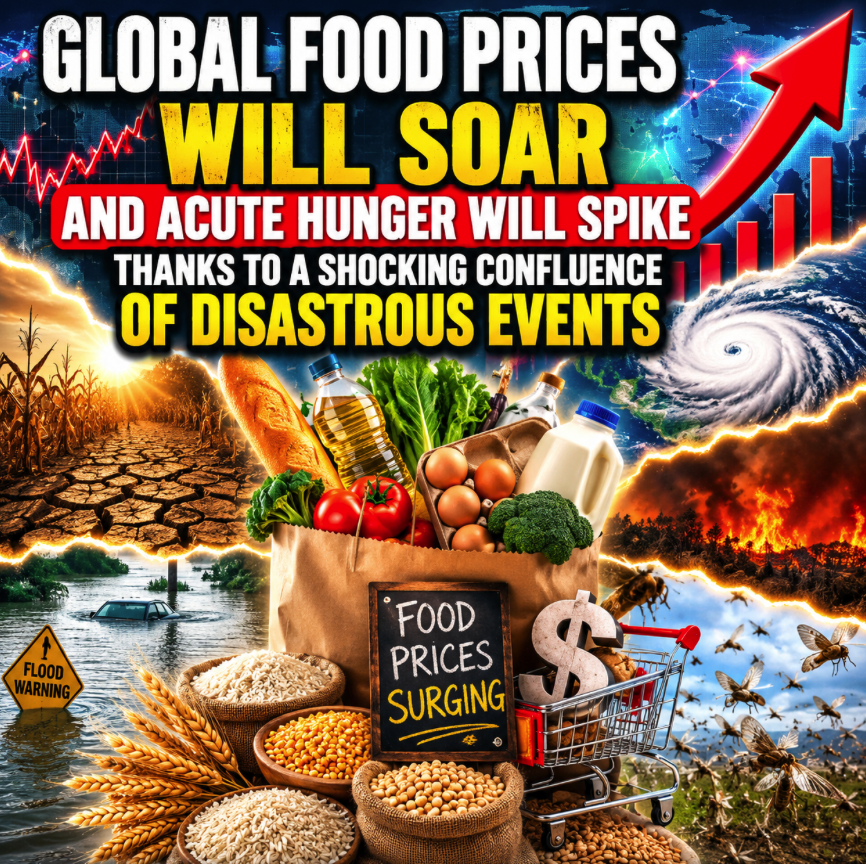
If the war with Iran persists for an extended period of time, a lot of people could literally starve. Approximately half of all global food production is dependent on the use of fertilizer. Without fertilizer, crop yields would drop precipitously and there wouldn’t be anywhere near enough food for everyone. Even now, hundreds of millions of people are going to bed hungry every night, and there are severe food shortages in quite a few African nations. This is a trend that I have been closely monitoring for quite some time. We are at a very serious tipping point, and approximately one-fourth of all globally traded nitrogen fertilizer normally travels through the Strait of Hormuz. If we can’t get that fertilizer into the hands of those that need it, we are going to have a major crisis on our hands.

At this moment, traffic through the Strait of Hormuz has essentially been paralyzed

At least 200 ships, including oil and liquefied natural gas tankers as well as cargo ships, remained at anchor in open waters off the coast of major Gulf producers including Iraq, Saudi Arabia and Qatar, according to Reuters estimates based on ship-tracking data from the MarineTraffic platform.

Hundreds of other vessels remained outside Hormuz unable to reach ports, shipping data showed. The waterway is a key artery for around a fifth of the world’s oil and LNG supply.

Hardly anything is getting through, and it is likely to remain that way for quite a while, because the Iranians have already damaged a significant number of commercial vessels

This is something that is not getting nearly enough attention from the mainstream media.

The latest vessel that was hit by Iran was a Malta-flagged container ship known as the Safeen Prestige

A container ship was struck by a projectile while transiting the Strait of Hormuz north of Oman, maritime security agencies said.

The United Kingdom Maritime Trade Operations (UKMTO), an agency linked to the U.K. military that monitors commercial shipping, said the vessel was sailing eastbound when it was hit by an unknown projectile just above the water line.

The strike caused a fire in the ship’s engine room, UKMTO said, adding that no environmental impact had been reported.

Maritime security agency Vanguard Tech identified the vessel as the Malta-flagged container ship Safeen Prestige.

We have literally never seen anything like this before.

For now, the 2nd largest shipping company in the world has suspended all cargo bookings for the region…

Obviously the price of oil has gone up, and I believe that it will go even higher.

But what this is going to mean for global food production could be of even greater importance.

Farmers all over the western hemisphere are getting ready to plant, and it is being reported that “close to one-quarter of globally traded nitrogen fertilizer” normally travels through the Strait of Hormuz…

Forbes’ Robert Rapier reported that “globally, about 180 million metric tons of nitrogen fertilizers are consumed each year (measured in nutrient terms). Of that, roughly 55–60 million metric tons of urea move through international seaborne trade annually. The Middle East accounts for approximately 40–50% of that traded volume.”

“And nearly all of those exports must transit the Strait of Hormuz,” Rapier reported. “In other words, close to one-quarter of globally traded nitrogen fertilizer—and a meaningful share of total global nitrogen production—moves through that single maritime chokepoint that is now threatened by war.”

Fertilizer prices were already exceptionally high even before this war erupted.

Now there is going to be a scramble for whatever supplies are available, and prices are going to go even higher.

One industry insider says that the timing of this war “literally could not be worse”

The timing of the conflict “literally could not be worse” for the industry, Josh Linville, vice president for fertilizers at brokerage StoneX Group, said by email. “There is never a good time for war, but this couldn’t be much worse.”

I honestly don’t know how this is going to be fixed.

If farmers don’t get enough fertilizer, global food production could decline substantially in 2026

Roughly half of global food production depends on fertilisers. Without them, crop yields would fall sharply, placing the delicate balance of global food security at risk. Their industrial production rests largely on the Haber–Bosch process, devised by Fritz Haber and subsequently industrialised by Carl Bosch, which combines nitrogen drawn from the air with hydrogen (today sourced mainly from natural gas) to synthesise ammonia.

Ammonia is the indispensable feedstock for a wide range of nitrogen-based fertilisers, including urea, the most widely used chemical fertiliser in the world. According to an analysis by Rabobank, a significant share of the urea passing through the Strait of Hormuz comes from Qatar and Iran, accounting for an estimated 5 million tonnes annually, while the United Arab Emirates and Saudi Arabia contribute a further 2 million tonnes each year.

We really are in unprecedented territory.

The farmers that are able to get their hands on sufficient supplies of fertilizer certainly are going to pay a lot more for it, because prices are already skyrocketing

Prices for granular urea in Egypt have surged by $60 a metric ton since the effective closure of the Strait of Hormuz, and buyers are already looking for other suppliers in North Africa and Southeast Asia, Bloomberg Green Markets reported.

Meanwhile in New Orleans, the price of March barges for urea — the most widely used nitrogen fertilizer and one crucial to corn fields — were $60 to $80 higher on Monday compared with Friday prices, and there is “potentially hundreds of dollars per ton increases in the coming days,” said Taylor Eastman, a fertilizer trader at Andersons Inc.

Meanwhile, the closure of the Strait of Hormuz is also driving up natural gas prices in Europe and elsewhere…

A prolonged surge in natural gas prices triggered by the ongoing war in the Middle East risks denting European growth and hitting some Asian economies hard, analysts have warned.

Global gas prices have soared this week amid fears of a lengthy disruption to energy flows through the Strait of Hormuz — a key shipping route running between Oman and Iran that handles about one-fifth of global LNG trade — as the Iran conflict escalates.

Dutch Title Transfer Facility (TTF) futures, Europe’s benchmark gas contract, rose 35% on Tuesday to more than 60 euros ($69.64) per megawatt-hour. On the week, prices are around 76% higher.

Qatar is normally one of the largest producers in the region.

But now they have shut down production for at least a month and they have declared force majeure on shipments of liquified natural gas…

QatarEnergy just declared Force Majeure.

Three words that mean: we cannot deliver, and legally, we do not have to.

This is no longer a supply disruption. This is a contract collapse.

Force Majeure is not a precaution. It is a formal legal declaration that an unforeseeable event beyond QatarEnergy’s control has made fulfillment impossible. Every affected buyer just had their contract voided. The gas they were counting on is gone, and they have no legal recourse to get it back.

82% of Qatar’s LNG goes to Asia.

China relies on Qatar for 30% of its LNG imports. India 42 to 52%. South Korea 14 to 19%. Taiwan 25%. Japan is already rationing to spot markets.

Asian benchmark prices jumped 39% the day production stopped.

We have never seen a supply shock of this magnitude.

If this war keeps going for an extended period of time, this is just the beginning.

Here in the western world, food prices are likely to keep rising at a brisk pace.

But in impoverished nations around the globe, things will be far worse.

If this war does not end soon, large numbers of people could end up dead as a result of the horrifying famine that is now looming.

Michael’s new book entitled “10 Prophetic Events That Are Coming Next” is available in paperback and for the Kindle on Amazon.com, and you can subscribe to his Substack newsletter at michaeltsnyder.substack.com.

About the Author: Michael Snyder’s new book entitled “10 Prophetic Events That Are Coming Next” is available in paperback and for the Kindle on Amazon.com.  He has also written nine other books that are available on Amazon.com including “Chaos”“End Times”“7 Year Apocalypse”“Lost Prophecies Of The Future Of America”“The Beginning Of The End”, and “Living A Life That Really Matters”.  When you purchase any of Michael’s books you help to support the work that he is doing.  You can also get his articles by email as soon as he publishes them by subscribing to his Substack newsletter.  Michael has published thousands of articles on The Economic Collapse BlogEnd Of The American Dream and The Most Important News, and he always freely and happily allows others to republish those articles on their own websites.  These are such troubled times, and people need hope.  John 3:16 tells us about the hope that God has given us through Jesus Christ: “For God so loved the world, that he gave his only begotten Son, that whosoever believeth in him should not perish, but have everlasting life.”  If you have not already done so, we strongly urge you to invite Jesus Christ to be your Lord and Savior today.

Major Bombshell! Israel Says That It Just Destroyed A Secret Nuclear Weapons Development Compound In Iran

There are a lot of people out there that seem to think that the nuts that are currently running Iran are good people that always tell the truth and that we can always trust them to do the right thing. But of course there is no government on the entire planet that always tells the truth and that always does the right thing. The Shiite radicals that have been imposing tyranny on the Iranian people for decades truly believe that their version of Islam will rule the entire world, and they will literally do anything in pursuit of that goal. We have already seen that they are willing to gun down tens of thousands of their own people. So it shouldn’t exactly be a shock that they haven’t been telling us the truth about their pursuit of nuclear weapons.

Earlier today, the IDF announced that it has destroyed a secret compound in Iran known as “Minzadehei” that was being used “by a group of nuclear scientists who operated to develop a key component for nuclear weapons”…

This is a major bombshell, and we deserve some answers.

Exactly what was being produced at this facility?

And how long has it been operational?

In recent days there has been so much debate in the western world about whether Iran really was close to developing nuclear weapons or not.

What was going on at this compound could be the key to settling that debate.

Within the past 24 hours, the war with Iran has gone to an entirely new level.

Just hours ago, the IDF bombed the building where Iran’s Assembly of Experts had assembled to elect the nation’s new supreme leader

Israeli forces “flattened” a building where Iran’s 88-member Assembly of Experts had gathered to select the regime’s next supreme leader, according to Israeli officials and regional reports.

“We wanted to prevent them from picking a new supreme leader,” an Israeli defense official told Axios shortly after pinpoint strikes leveled the building. Video posted on X showed rubble where the building once stood.

The attack came as the powerful regime body was counting votes, hoping to select a supreme leader to replace Ali Khamenei after his death during the opening salvo of the U.S.-Israeli operation against the Iranian regime. The assembly claimed just hours earlier that it “won’t take long” to select a successor, though that process is likely at a standstill in the wake of Israel’s operation. While it remains unclear how many Iranian leaders were in the building and how many regime officials the strike killed, Fox News reported that “multiple Iranian officials responsible for counting the votes of the Supreme Council were killed,” while Israeli journalist Amit Segal said “the council secretary was killed and the ballot box was burned” in the strike.

This was essentially the equivalent of bombing the Vatican while cardinals are electing the next pope.

It is an extremely solemn ceremony for the Shiites in Iran, and so this surprise attack is something that they will never forget.

Personally, I have no idea why Iranian leaders thought that it would be safe to gather in one place.

Did they actually believe that they could hold this vote without the U.S. and Israel finding out about it?

In addition to hitting the building where the Assembly of Experts had assembled, the IDF bombed a number of other key government buildings as well…

Overnight, the Israeli Air Force struck Iran’s “leadership complex” in Tehran, the military said Tuesday, saying that around 100 fighter jets dropped over 250 bombs on the complex as the joint US-Israeli bombing campaign and Iran’s retaliatory missile and drone launches continued into their fourth day, wounding 12 people in Israel.

The buildings targeted in the complex included Iran’s presidential bureau, the headquarters of Iran’s Supreme National Security Council, a compound used by Iran’s “most senior forum” for meetings, and an “institution for training Iranian army officers,” according to the IDF.

“The leadership complex of the terror regime is one of the most secured assets in Iran and spans many streets in the heart of Tehran,” the military said, describing it as the “most important and central headquarters for the Iranian terror regime.”

The Israelis are not messing around this time.

And now that Hezbollah has started firing missiles into Israel, IDF forces have begun moving deeper into southern Lebanon

Israel’s Defense Minister Israel Katz and Israeli Prime Minister Benjamin Netanyahu have instructed their military to “advance and seize additional strategic high ground” in Lebanon, after forces unleashed a wave of attacks on the country this week.

The Defense Minister said that he and Netanyahu called on the Israel Defense Forces (IDF) to “prevent fire and protect the Israeli border communities” in a video address on Tuesday.

“The IDF operated overnight and continued taking control of the area,” the minister said, adding, “the IDF continues to act forcefully against Hezbollah targets in Lebanon.”

Needless to say, U.S. forces have been very active too.

According to U.S. Central Command, our bombers and fighters have struck approximately 1,700 Iranian targets so far…

The US military has hit an additional roughly 700 targets in Iran since Sunday and has introduced new bombers and fighter aircraft to the operation, a fact sheet released on Tuesday said.

US Central Command said Tuesday that more than 1,700 targets have been struck throughout the operation dubbed Operation Epic Fury. As of Sunday, more than 1,000 targets had been struck. A listing of US assets involved also added B-1 Bombers, long-range B-52 bombers, and F-15 fighter jets.

The U.S. and Israel are absolutely pummeling Iran.

But the Iranians are far from done.

They have been hitting targets all over the Middle East, and many Israelis were quite shocked when Iranian munitions started raining down right in the heart of Tel Aviv.

We have known for a long time that a “final showdown” with Iran was coming.

Hours ago, President Trump declared that it is “too late” for talks with Iran.

The U.S. and Israel are going for it.  Regime change is the goal, and the Iranians are going to pull out all the stops in a desperate attempt to survive.

Michael’s new book entitled “10 Prophetic Events That Are Coming Next” is available in paperback and for the Kindle on Amazon.com, and you can subscribe to his Substack newsletter at michaeltsnyder.substack.com.

About the Author: Michael Snyder’s new book entitled “10 Prophetic Events That Are Coming Next” is available in paperback and for the Kindle on Amazon.com.  He has also written nine other books that are available on Amazon.com including “Chaos”“End Times”“7 Year Apocalypse”“Lost Prophecies Of The Future Of America”“The Beginning Of The End”, and “Living A Life That Really Matters”.  When you purchase any of Michael’s books you help to support the work that he is doing.  You can also get his articles by email as soon as he publishes them by subscribing to his Substack newsletter.  Michael has published thousands of articles on The Economic Collapse BlogEnd Of The American Dream and The Most Important News, and he always freely and happily allows others to republish those articles on their own websites.  These are such troubled times, and people need hope.  John 3:16 tells us about the hope that God has given us through Jesus Christ: “For God so loved the world, that he gave his only begotten Son, that whosoever believeth in him should not perish, but have everlasting life.”  If you have not already done so, we strongly urge you to invite Jesus Christ to be your Lord and Savior today.

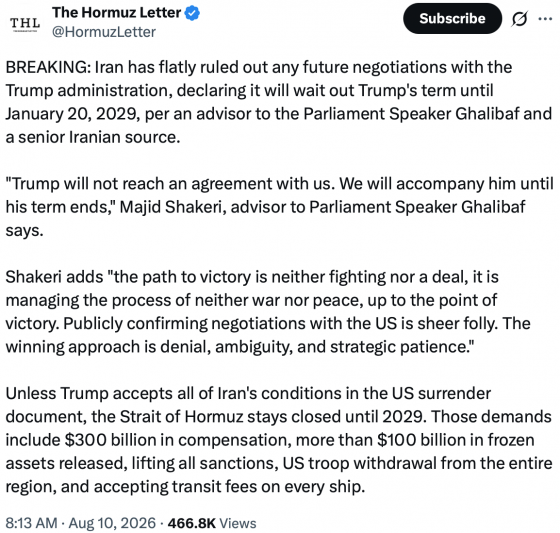
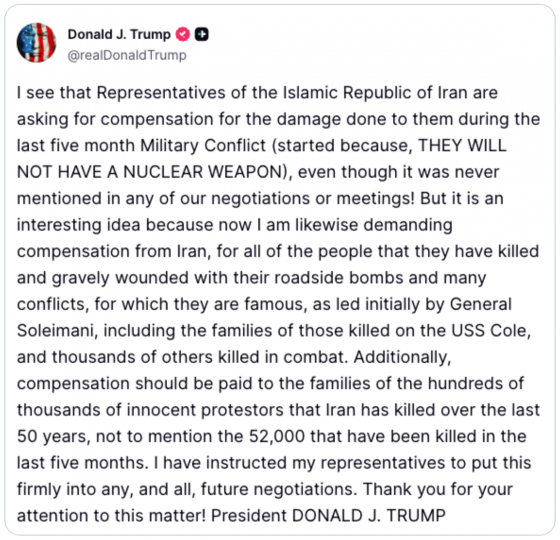
Iran Defiantly Declares That There Will Be No Negotiations And Trump Is Refusing To Rule Out U.S. Boots On The Ground

It appears that both sides are settling in for a long conflict. The Iranians are making it clear that there will be no negotiations and no surrender. By now, the leaders of the regime are almost certainly holed up in very deep bunkers underneath hospitals, schools and other very sensitive targets in highly populated areas. They probably figure that if they can just weather the bombing for a few weeks they can emerge victorious at the end of the conflict and declare victory. The protesters in Iran are no match for the heavily-armed IRGC, and so it is unlikely that regime change will occur unless foreign troops enter the country. Iranian leaders are likely convinced that President Trump will never pull the trigger on such a move, but now Trump has publicly stated that he is refusing to rule out U.S. boots on the ground.

Even when Ayatollah Khamenei was still alive, Ali Larijani was essentially running things in Iran.

Now that Khamenei is gone, Larijani is very much in control, and he is defiantly declaring that there will be no negotiations with the United States…

Iran’s security chief Ali Larijani said that Tehran has no plans to engage in negotiations with the United States.

“We will not negotiate with the United States,” the former adviser to the late supreme leader said in a post on X, dismissing reports that it is seeking to restart negotiations with Washington.

Anyone that was hoping for a quick end to the war is going to be disappointed.

Larijani is accusing the U.S. and Israel of attempting to “plunder and disintegrate” Iran…

Ali Larijani, a close ally of Ayatollah Ali Khamenei, delivered the blunt message on Sunday after announcing the formation of a provisional governing structure within hours of the airstrike that killed the supreme leader.

Larijani accused the United States and Israel of seeking to ‘plunder and disintegrate’ Iran and warned so-called ‘secessionist groups’ within his country.

He delivered a direct rebuke to President Donald Trump and warned: ‘We will not negotiate.’

‘Trump plunged the region into chaos with his “delusional fantasies” and now fears more American troop casualties,’ Larijani wrote on X.

It is true that the U.S. and Israel want to bring an end to the Islamic Republic.

Anything short of that will be a defeat for the U.S. and Israel.

So Larijani’s main goal is survival.

If he can keep the government together and the IRGC in control of the major cities until the end of the war, he wins.

And he fully understands that.

Interestingly, there are rumors that Larijani is attempting to install his own brother as the new supreme leader…

These are not good people, and they are going to do whatever it takes to make it through this.

In a desperate attempt to gain leverage with the rest of the world, the Iranians have decided to close down the Strait of Hormuz and they are vowing that they “will not allow a single drop of oil to leave the region”

A senior Revolutionary Guards commander warned Tehran would target shipping through the Strait of Hormuz and strike oil infrastructure in the Middle East to prevent exports.

“Any ship that seeks to pass through the Strait of Hormuz we will set on fire,” Brigadier General Ebrahim Jabbari said in remarks carried by Iranian media on Monday.

“We will also attack oil pipelines and will not allow a single drop of oil to leave the region,” he said, adding that “oil prices will reach $200 in the coming days.”

I think that it is likely that they will be able to force the price of oil above $100 a barrel, but crossing the $200 threshold is probably a pipe dream.

We shall see what happens.

In the days ahead, there will almost certainly be a lot more attacks on oil infrastructure.

Earlier today, we learned that the Ras Tanura refinery in Saudi Arabia was shut down after an attack by Iranian drones…

Saudi Arabia’s state oil giant Aramco shut its Ras Tanura refinery following a drone strike, an industry source said on Monday, after Tehran launched strikes across the region in response to the US-Israeli attack on Iran.

The Ras Tanura complex, on the kingdom’s Gulf coast, houses one of the Middle East’s largest refineries with a capacity of 550,000 barrels per day (bpd) and serves as a critical export terminal for Saudi crude oil.

Ras Tanura was shut as a precautionary measure, and the situation is under control, the source said. Two drones were intercepted at the facility, with debris causing a limited fire, the Saudi defense ministry’s spokesperson said on Al Arabiya TV, adding there were no injuries.

The Iranians are probably calculating that if they can put enough pressure on the global supply of oil that it will force the United States and Israel to cease their attacks.

But I don’t think that the U.S. and Israel are going to turn back now.

After months of planning, President Trump gave the order to go ahead with Operation Epic Fury at 3:38 PM on February 27th

The U.S. war in Iran began Saturday, Feb. 28, with a “massive, overwhelming” strike that involved thousands of American servicemembers, hundreds of planes and two aircraft carriers, and hit more than a thousand targets across the country, the Pentagon’s top general told reporters.

The military received its “final go order” from President Donald Trump a day earlier on Feb. 27 at 3:38 p.m., Gen. Dan Caine, the chairman of the Joint Chiefs of Staff, said at a news conference March 2.

Trump’s message to troops: “Operation Epic Fury is approved. No aborts. Good luck,” Caine said, using the Pentagon’s operational name for the attack.

Trump knows that if the regime in Iran is still standing at the end of this war, it will be a major defeat for him.

So he is keeping his options open.

On Monday, he steadfastly refused to rule out sending U.S. troops into Iran during an interview with the New York Post

President Trump told The Post Monday that he’s not ruling out sending US ground troops into Iran “if they were necessary” — adding that Operation Epic Fury was “way ahead of schedule” after taking out dozens of Tehran’s top officials.

“I don’t have the yips with respect to boots on the ground — like every president says, ‘There will be no boots on the ground.’ I don’t say it,” Trump said after launching strikes Saturday to decapitate Iran’s military and political leadership. “I say ‘probably don’t need them,’ [or] ‘if they were necessary.’”

Secretary of War Pete Hegseth said at a Monday morning Pentagon press conference that no American troops are currently inside Iran, though he also did not rule out the possibility.

President Trump is not stupid.

He knows that regime change in Iran is not going to be easy.

In an interview with CNN’s Jake Tapper, Trump ominously stated that we “haven’t even started hitting them hard” and he warned that the “big one is coming soon”

I asked the president how long he thought this military operation or war might last. He said, quote, “I don’t want to see it go on too long. I always thought it would be four weeks and we’re a little ahead of schedule.” I asked a president if the U.S. was doing more than these military strikes to help the Iranian people regain control of Iran against the regime, to seize the country from the Iranian regime, and he said, yes, the president said, “Yes, we are indeed. But right now we want everyone staying inside. It’s not safe out there.” And then the president said, it’s about to get even less safe. He said, quote, “We haven’t even started hitting them hard. The big wave hasn’t even happened. The big one is coming soon.”

What does Trump mean by that?

Perhaps we will soon find out.

Trump keeps telling us that he expects the war to last for four to five weeks, but he is fully prepared for it to go much longer than that if necessary

President Donald Trump says the US has the capability to continue Iran strikes far longer than the five-week projection.

“From the beginning, we projected four to five weeks, but we have capability to go far longer than that, we’ll do it. Whatever somebody said today, they said, Oh, well, President wants to do it really quickly. After that, he’ll get bored. I don’t get bored.”

It is easy to take out stationary military targets that are above ground.

At this stage, U.S. Central Command is telling us that over 1,000 targets have already been destroyed…

While U.S. Central Command said more than 1,000 targets have already been wiped out and the White House has boasted of destroying most of the country’s top leadership, Iran has still managed to unleash a huge number of retaliatory attacks, reportedly alarming military officials.

Without a doubt, all of this bombing has made a big difference.

But as long as the IRGC has 125,000 heavily-armed members in control of the major cities, the regime will remain in power.

So yes, the United States and Israel are successfully bombing the living daylights out of targets all over Iran right now.

However, the truth is that this “final showdown” with Iran is far from over.

The Iranian regime is still very much alive, and they are going to do whatever they feel is necessary to survive.

Michael’s new book entitled “10 Prophetic Events That Are Coming Next” is available in paperback and for the Kindle on Amazon.com, and you can subscribe to his Substack newsletter at michaeltsnyder.substack.com.

About the Author: Michael Snyder’s new book entitled “10 Prophetic Events That Are Coming Next” is available in paperback and for the Kindle on Amazon.com.  He has also written nine other books that are available on Amazon.com including “Chaos”“End Times”“7 Year Apocalypse”“Lost Prophecies Of The Future Of America”“The Beginning Of The End”, and “Living A Life That Really Matters”.  When you purchase any of Michael’s books you help to support the work that he is doing.  You can also get his articles by email as soon as he publishes them by subscribing to his Substack newsletter.  Michael has published thousands of articles on The Economic Collapse BlogEnd Of The American Dream and The Most Important News, and he always freely and happily allows others to republish those articles on their own websites.  These are such troubled times, and people need hope.  John 3:16 tells us about the hope that God has given us through Jesus Christ: “For God so loved the world, that he gave his only begotten Son, that whosoever believeth in him should not perish, but have everlasting life.”  If you have not already done so, we strongly urge you to invite Jesus Christ to be your Lord and Savior today.

Now That Iran Has Closed The Strait Of Hormuz, How High Will The Price Of Oil Go?

The war with Iran that we have been waiting for is officially here. The U.S. and Israel are absolutely pummeling Iranian military targets, and in return the Iranians are striking targets all over the Middle East. As you will see below, even a British military base in Cyprus has just been hit. I think that the Iranians were hoping that the unexpected nations that they are targeting would be so traumatized that they would beg the United States to stop the conflict, but instead it seems like almost everyone is uniting against Iran. There is a growing consensus that there is no way that the regime in Iran can remain in place after this, and that means that this war could go on for an extended period of time.

Needless to say, this is not going to be good news for the global economy at all.

Our entire way of life depends upon cheap energy, and nearly a third of all oil that travels by sea must go through the Strait of Hormuz…

Positioned between Oman and Iran, the strait serves as a critical transit route – and potential chokepoint – for global crude, with about 13 million barrels per day moving through it in 2025, equal to approximately 31% of all seaborne oil flows, Kpler data showed.

It links major Gulf producers including Saudi Arabia, Iran, Iraq and the United Arab Emirates to the Gulf of Oman and the Arabian Sea.

Everyone agrees that the closure of the Strait of Hormuz would be a really big deal.

Unfortunately, it appears that the Iranians have already decided to pull the trigger.

It is being reported that the IRGC is warning vessels that the the Strait of Hormuz is now closed…

A European Union naval mission official told Reuters that vessels in the region are receiving marine radio warnings from Iran’s Revolutionary Guard instructing ships not to pass through the Strait of Hormuz.

Apparently there were some tankers that chose not to heed the warnings from the IRGC, and so they got attacked.

The first tanker that got hit by the Iranians was named Skylight

The first attack against a ship in the Strait of Hormuz occurred on Sunday morning.

Oman’s Maritime Security Centre announced that an oil tanker named Skylight, flying the flag of the Republic of Palau, was targeted around five nautical miles (9.26km) north of Khasab Port.

In a statement shared on X, Oman authorities confirmed that there were 20 crew members on board, including 15 holding Indian nationality and 5 of Iranian nationality, and they were all evacuated.

According to a British news source, other oil tankers were subsequently attacked…

THREE British and US oil tankers have been hit in the Gulf and the Strait of Hormuz, Iran has claimed, as Donald Trump claims to have sunk nine of its regime’s warships.

Iran has launched a new round of ship strikes in a brazen retaliation for the US’ devastating “Epic Fury” military operation.

I don’t think that we are going to see much oil get through the Strait of Hormuz for the foreseeable future.

As a result, the price of oil is likely to go much higher.

As I write this article, it has smashed through the $70 barrier, but this is probably just the beginning.

A former White House energy advisor named Bob McNally is warning that if the Strait of Hormuz is closed for an extended period of time it will mean “a guaranteed global recession”

More than 14 million barrels per day flowed through the Strait in 2025, or a third of the world’s total seaborne crude exports, according to data from energy consulting firm Kpler. About three-quarters of those barrels went to China, India, Japan and South Korea. China, the world’s second-largest economy, receives half of its crude imports from the Strait.

“A prolonged closure of the Strait of Hormuz is a guaranteed global recession,” McNally said.

I believe that he is correct.

The Iranians have large numbers of anti-ship missile launchers dug deep into the cliffs that overlook the Strait.

I am not sure that there will be an easy way to take out those launchers.

So for now the Iranians have the upper hand in the Strait of Hormuz, and one analyst is telling us that “nothing seems to be going through at the moment”

“Tankers are starting to build by the Strait of Hormuz, but nothing seems to be going through at the moment – tankers are definitely spooked,” said Matt Smith, oil analyst at energy consulting firm Kpler.

If the price of oil rises above 100 dollars a barrel, that will be a real problem.

Unfortunately, some analysts are convinced that is precisely what could happen.  Here is one example

Should Iran succeed in closing the Strait, the implications for the global oil markets could be severe.

“This could present a scenario three times the severity of the Arab oil embargo and Iranian revolution in the 1970s, and drive oil prices into the triple digits, while LNG prices retest the record highs of 2022,” Kavonic noted.

And here is another example

If access through the strait is limited for an extended period, prices could go “materially above $100/barrel,” said analysts at TD Securities in a March 1 note.

On the other hand, if access through the strait is guaranteed and hostilities cease, the added costs to account for extra risk could evaporate in a matter of weeks, the TD team wrote.

If the war ends quickly, the disruption that we will experience will be fairly minimal.

But if this war persists for some time, everybody is going to feel the pain

If oil rises and stays there, drivers will feel it quickly at the pump. The national average gasoline price is about $2.98 a gallon but oil at $100 for a few months would drive that up.

The impact would not stop at the gas station. Oil is needed for transportation, shipping, manufacturing, packaging and agriculture. Higher crude prices raise costs for trucking groceries, flying passengers, producing plastics and moving goods around the country.

Theoretically, one of the oil-exporting nations that would be hurt the most by the closure of the Strait of Hormuz would be Saudi Arabia.

But the Washington Post is reporting that Saudi Arabia has been secretly encouraging President Trump to attack Iran…

President Donald Trump launched Saturday’s wide-ranging attack on Iran after a weeks-long lobbying effort by an unusual pair of U.S. allies in the Middle East — Israel and Saudi Arabia — according to four people familiar with the matter, as Israeli and U.S. forces teamed to topple Iranian Supreme Leader Ali Khamenei after nearly four decades in power.

Saudi Crown Prince Mohammed bin Salman made multiple private phone calls to Trump over the past month advocating a U.S. attack, despite his public support for a diplomatic solution, the four people said. Israeli Prime Minister Benjamin Netanyahu, meanwhile, continued his long-running public campaign for U.S. strikes against what he views as an existential enemy of his country.

The combined effort helped lead Trump to order a massive aerial campaign against Iran’s leadership and military, which in its initial hour led to the death of Khamenei and several other senior Iranian officials.

Why would Saudi Arabia do this?

The Saudis know that the closure of the Strait of Hormuz is just temporary.

But their problems with Iran have been going on for a very long time.

Saudi Arabia is the global epicenter for Sunni Islam, and Iran is the global epicenter for Shia Islam.

The Saudis are convinced that Sunni Islam will someday dominate the entire world, and the Iranians are convinced that Shia Islam will someday dominate the entire world.

Most people living in the western world do not realize this.

The global struggle between Sunni Islam and Shia Islam stretches back for many centuries, and now Saudi Arabia senses an opportunity to strike a decisive blow to their mortal enemy.

This also helps to explain why the Iranians have been launching missiles at many of their Sunni neighbors.

The Iranians are not stupid.  They can see what is going on and they are very upset about it.

So I can understand why the Iranians have been targeting Sunni countries, but I have no idea why they thought it would be a good idea to hit Cyprus

The United Kingdom’s Akrotiri air force base in Cyprus has been hit by a drone, the Cyprus Mail learned in the early hours of Monday morning.

Personnel on the bases were informed that a “small drone” had “impacted the airfield” and that the bases’ authorities were responding.

Does Iran actually want to draw as many countries into this war as possible?

It kind of seems as if that is their goal.

Interestingly, multiple rockets were fired into Israel from southern Lebanon just a little while ago.

Many are suggesting that this means that Hezbollah has joined the war.

In response, the IDF is now conducting airstrikes in Lebanon.

We were warned that a conflict with Iran could become a major regional war, and it appears that this is now becoming a reality.

So buckle up and hold on tight, because I think that we are just in the early moments of a really wild ride.

Michael’s new book entitled “10 Prophetic Events That Are Coming Next” is available in paperback and for the Kindle on Amazon.com, and you can subscribe to his Substack newsletter at michaeltsnyder.substack.com.

About the Author: Michael Snyder’s new book entitled “10 Prophetic Events That Are Coming Next” is available in paperback and for the Kindle on Amazon.com.  He has also written nine other books that are available on Amazon.com including “Chaos”“End Times”“7 Year Apocalypse”“Lost Prophecies Of The Future Of America”“The Beginning Of The End”, and “Living A Life That Really Matters”.  When you purchase any of Michael’s books you help to support the work that he is doing.  You can also get his articles by email as soon as he publishes them by subscribing to his Substack newsletter.  Michael has published thousands of articles on The Economic Collapse BlogEnd Of The American Dream and The Most Important News, and he always freely and happily allows others to republish those articles on their own websites.  These are such troubled times, and people need hope.  John 3:16 tells us about the hope that God has given us through Jesus Christ: “For God so loved the world, that he gave his only begotten Son, that whosoever believeth in him should not perish, but have everlasting life.”  If you have not already done so, we strongly urge you to invite Jesus Christ to be your Lord and Savior today.

Now We Wait For War With Iran To Begin As A Rare 6 Planet Parade And A Blood Moon Eclipse Loom

Negotiations with Iran have reached a breaking point just as a parade of 6 planets is appearing in the night sky and a major blood moon eclipse is approaching next week. The skeptics will continue to insist that this is “just a coincidence” even as the missiles start flying. The third round of talks between the United States and Iran has ended in Geneva, and they produced nothing. The U.S. wanted Iran to transfer all enriched uranium out of the country, to cease all future uranium enrichment, to destroy all Iranian nuclear facilities and to agree that all restrictions on Iran’s nuclear program will be permanent. It is being reported that Iran flatly rejected all of those proposals…

In Geneva talks, Iran rejected the idea of transferring uranium stockpiles abroad, and objected to ending uranium enrichment, dismantling its nuclear facilities and permanent restrictions on its program, The Wall Street Journal reported citing people familiar with the talks.

In addition, the Iranians would not even talk about any restrictions on their ballistic missile program or their support for terrorist proxies throughout the Middle East.

On top of everything else, the Iranians are now apparently insisting that there will be absolutely no deal without “full sanctions relief”

So the Iranians don’t want to agree to any of the core concessions that the U.S. is seeking, but they want all of the sanctions to be lifted anyway.

That isn’t going to happen.

Apparently Steve Witkoff and Jared Kushner were very disappointed with how this round of talks turned out…

I have always felt that there was no chance for a deal.

Now that is becoming obvious to everyone.

In fact, one foreign policy expert told CBS News that she believes that war is imminent…

Despite this public expression of optimism from Iran’s side, Sanam Vakil, director of the Middle East and North Africa Program at the Chatham House thinktank in London, believes the two sides are still too far apart. She told CBS News on Wednesday that, in her view, a military clash is inevitable, and soon.

“I think it’s imminent — I mean it’s a matter of days. War looks inevitable to me because President Trump has been not just assembling a huge arsenal to strike Iran, but also because President Trump has been clearly signaling that he is seeking the submission of the Islamic Republic to terms and conditions that currently the leaders in Iran don’t appear willing to make.”

Ultimately, the decision as to whether there will be war or not rests with Trump.

On Friday, he is supposed to meet with his team to discuss what to do next

President Donald Trump is expected to convene senior advisers on Friday for detailed discussions on Iran and to decide on a course of action toward Tehran, Israel Hayom reported, citing US officials.

According to the report, internal deliberations are focused not on whether a strike would occur but on its scope and potential targets.

Options under discussion include nuclear facilities, missile sites, state institutions and infrastructure, the officials said, according to Israel Hayom.

We could potentially be days or even hours away from the start of an apocalyptic conflict with Iran.

Earlier today, a spokesperson for Iran’s armed forces issued quite an ominous warning

“The presence of the United States military in the region is part of psychological warfare and bullying,” Iran’s armed forces spokesman said on Thursday.

“If Washington understood the real capabilities of Iran’s armed forces, it would never speak of war,” Brigadier General Abolfazl Shekarchi said.

“In the event of any conflict, American soldiers and their equipment would be destroyed, and US resources and interests in the region would come under fire from Iran’s armed forces,” he added.

The Iranians keep dropping hints like this.

Do they possess weapons that we don’t know about?

I think that as this conflict plays out, both sides are going to be in for some huge surprises.

Interestingly, there is so much going on in the skies above our heads as all of this drama in the Middle East is happening.

On Saturday, a rare parade of six planets will be visible

Usually, people can look up at the bright sky and spot at least one planet. Two or three planets are also commonly hanging out in the night sky, according to NASA. But what about when four, five, or even six planets are visible? Well, then it’s what’s known as a “planetary parade”.

On Saturday, Feb. 28, after the sunsets, the rare phenomenon will occur, with six planets appearing to align and form a parade across the evening sky, according to Space.com.

Six planets, Mercury, Venus, Neptune, Saturn, Uranus, and Jupiter, will be visible, according to NASA. Seeing a parade of six or even seven planets is rare. Of the six, four will be visible to the naked eye, but binoculars or a telescope will be needed to see Uranus, Neptune, and possibly Mercury.

For much more on this “planetary parade”, please see the article that I posted just a few days ago.

If a parade of 6 planets in the night sky wasn’t enough, a blood moon eclipse will occur during Purim next week

Skywatchers across the United States will have the opportunity to see the only total lunar eclipse of 2026 in the early morning hours of Tuesday, March 3. This “Blood Moon” will also be the last total lunar eclipse visible from the U.S. until 2028.

A total lunar eclipse occurs during a full Moon when Earth moves directly between the Sun and the Moon, casting its shadow across the lunar surface.

When the Moon moves fully into Earth’s darker inner shadow, called the umbra, it turns a reddish-orange color. Sunlight passes through Earth’s atmosphere before reaching the Moon. Shorter blue wavelengths scatter away, while red and orange light continue through, creating the copper glow.

All throughout human history, blood moons have been associated with war.

And the events that resulted in the creation of the festival of Purim occurred in Iran.

Now there will be a blood moon eclipse during Purim just as war with Iran is looming.

Just another coincidence, right?

A lot of people were expecting peace in the Middle East.

They were wrong.

Earlier today, Israel conducted yet another round of airstrikes in Lebanon

Israeli warplanes carried out a series of strikes across Lebanon’s Bekaa Valley, including areas near the northeastern town of Hermel, according to Lebanon’s National News Agency. Early reports indicated no casualties, but the bombardment marked another escalation in Israel’s widening campaign against Hezbollah.

The Israeli military said the targets were “infrastructure” linked to Hezbollah’s elite Radwan Force, a unit Israel has repeatedly accused of preparing cross‑border operations. The strikes come as Israel intensifies its attacks in Lebanon amid soaring tensions with Iran and fears of a broader regional confrontation.

Hezbollah has signaled that it may intervene directly if Iran is attacked by Israel or the United States, a warning that has added to concerns about a multi‑front conflict. The group has already been trading fire with Israel for months, despite a ceasefire agreement reached in November 2024.

The Great Middle East War has been raging for years.

But now it is about to go to an entirely new level.

It appears that “the final showdown with Iran” is upon us, and I think that everyone will be shocked by the death and destruction that we will soon witness.

We really are living in apocalyptic times, and I am convinced that global events are about to start getting really, really crazy.

Michael’s new book entitled “10 Prophetic Events That Are Coming Next” is available in paperback and for the Kindle on Amazon.com, and you can subscribe to his Substack newsletter at michaeltsnyder.substack.com.

About the Author: Michael Snyder’s new book entitled “10 Prophetic Events That Are Coming Next” is available in paperback and for the Kindle on Amazon.com.  He has also written nine other books that are available on Amazon.com including “Chaos”“End Times”“7 Year Apocalypse”“Lost Prophecies Of The Future Of America”“The Beginning Of The End”, and “Living A Life That Really Matters”.  When you purchase any of Michael’s books you help to support the work that he is doing.  You can also get his articles by email as soon as he publishes them by subscribing to his Substack newsletter.  Michael has published thousands of articles on The Economic Collapse BlogEnd Of The American Dream and The Most Important News, and he always freely and happily allows others to republish those articles on their own websites.  These are such troubled times, and people need hope.  John 3:16 tells us about the hope that God has given us through Jesus Christ: “For God so loved the world, that he gave his only begotten Son, that whosoever believeth in him should not perish, but have everlasting life.”  If you have not already done so, we strongly urge you to invite Jesus Christ to be your Lord and Savior today.