This Is Going To Be A Complete And Utter Disaster For The Global Economy

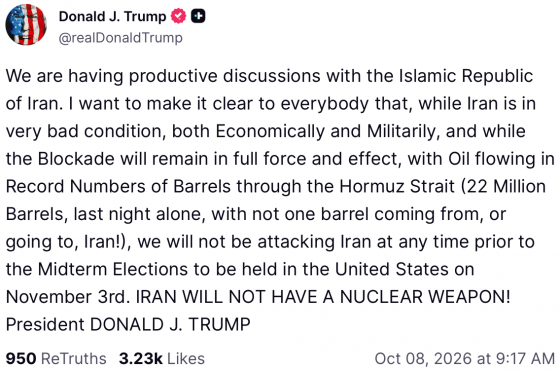
Iran is still holding traffic through the Strait of Hormuz hostage, and the entire world is going to suffer. Before the war, commercial traffic through the Strait of Hormuz flowed freely, and the global economy functioned normally. But even though there is a temporary ceasefire, Iran continues to maintain a stranglehold on the waterway, and they are insisting that this will continue to be the case when a permanent deal to end the war is reached. In other words, the Iranians are making it clear that this is how things are going to operate from now on, and they know that the U.S. and Europe are not eager to do what it would take militarily to reopen the Strait. Of course even if there is a military operation to reopen the Strait, it will take an extended period of time before it is safe for commercial traffic to pass through the waterway once again. Any way that you look at it, the truth is that this is going to be a complete and utter disaster for the global economy.

The Iranians were supposed to temporarily reopen the Strait of Hormuz as part of the ceasefire deal.

But that has not happened.

In fact, the CEO of Abu Dhabi National Oil Company has ominously declared that “the Strait of Hormuz is not open”

The Strait of Hormuz has not opened to ship traffic after the U.S. and Iran agreed to a two-week ceasefire, said the CEO of Abu Dhabi National Oil Co., or ADNOC, on Thursday.

“This moment requires clarity,” said Sultan Ahmed Al Jaber in a social media post. “So let’s be clear: the Strait of Hormuz is not open. Access is being restricted, conditioned and controlled.”

Iran has made clear that ships must obtain its permission to pass through the strait, Al Jaber said. “That is not freedom of navigation. That is coercion,” the ADNOC chief said.

Only a handful of ships are getting through right now.

According to the Wall Street Journal, the Iranians are only going to allow about a dozen ships to pass through the Strait each day…

Iran told mediators it will limit the number of ships crossing the strait to around a dozen a day, and the Iranian Navy warned ships anchored near the strait that they would need Tehran’s permission to cross.

Before the war, about 10 times as many vessels were traveling through the Strait of Hormuz on a daily basis.

The Iranians are telling us that any vessels that attempt to pass through without authorization “will be destroyed”

On Wednesday, Iran warned that oil tankers will be destroyed if they try to travel along the strait without permission, as it seeks to retain control over the passage during the ceasefire.

A radio message was broadcast yesterday by the regime to all oil ships in the vital waterway, saying: ‘If any vessels try to transit without permission, [they] will be destroyed.’

This is going to starve the global economy of desperately needed oil, natural gas, petrochemicals and fertilizer, and Iran fully understands this.

Any ships that Iran authorizes to pass through the Strait must “sail through Iranian waters around Larak ​Island to avoid the risk of naval mines”

Iran’s Islamic Revolutionary Guard Corps (IRGC) have told vessels to sail through Iranian waters around Larak ​Island to avoid the risk of naval mines in the usual lanes through the strait, Iran’s semi-official Tasnim news agency reported on Thursday.

Vessels are to enter the strait north of Larak Island and exit just south of it until further notice in coordination with the IRGC’s navy, Tasnim quoted the IRGC as saying.

Iran has essentially admitted that they have mined the Strait of Hormuz.

Even if the war ended immediately, it would take a long time to make sure that all the mines were gone.

The Iranians are forcing commercial ships to enter their own territorial waters so that they can charge a toll of up to 2 million dollars per vessel

Iran is charging tolls of up to $2 million per ship to pass through the strait, a maneuver dubbed the “Tehran Toll Booth” in shipping circles.

When asked about what Iran is doing, the White House said that it is “completely unacceptable”

White House press secretary Karoline Leavitt said the alleged closure of the strait, based on reports from Iranian state media, is “completely unacceptable.”

And President Trump is pledging that once a permanent peace agreement is reached the Strait of Hormuz will be “OPEN & SAFE”

There is just one huge problem.

The Iranians are insisting on control of the Strait of Hormuz as part of any peace deal.

So Trump is going to be faced with a decision.

Either he will give the Iranians what they want, or he will start the war back up again.

But let’s be wildly optimistic for a moment.

Let’s assume that the Iranians totally give in and allow commercial traffic to flow freely through the Strait of Hormuz.

Even if that were to happen, traffic through the Strait of Hormuz would not return to normal levels for a very long time to come.

We know that this is true, because traffic through the Red Sea has still not returned to normal even though there has been a ceasefire with the Houthis for quite some time…

Analysts told CNBC that the Houthis in Yemen disrupting the Red Sea last year provides a reference point to how quickly traffic could recover following a potential ceasefire.

“In the Red Sea with the Houthis, the ceasefire agreement was last January and traffic has not returned,” Nikos Petrakakos, managing director at maritime investment manager Tufton, told CNBC in an interview. “As long as there’s a threat of an attack, that’s enough. You don’t actually need the attack.”

The bottom line is that the crisis in the Middle East is going to continue to massively disrupt the global economy for an extended period no matter what happens next.

The last tankers that departed prior to the war are arriving at their destinations, and we are already starting to see rationing and shortages all over the globe.

In fact, Madagascar just declared a nationwide energy emergency

Madagascar has declared a two‑week nationwide state of energy emergency amid severe fuel shortages caused by the US and Israel’s war in Iran.

The presidency said the decision was taken following Tuesday’s cabinet meeting over fears the situation could lead to public disorder.

The “severe fuel shortages” that they are now experiencing will not be alleviated any time soon.

In Myanmar, a “rationing system for private vehicles” has just been imposed…

Amid fuel shortages, Myanmar’s military government has implemented a rationing system for private vehicles. Under the singular scheme, vehicles with even-numbered licence plates are only allowed to drive on even dates while those with odd-numbered plates can only drive on odd dates.

This is just the beginning.

Supplies of oil and natural gas are starting to get really tight in Europe, and European Central Bank President Christine Lagarde has warned that what the continent is facing is “probably beyond what we can imagine at the moment”

For the European Union, the short-term consequences of Iran’s blockade of the Strait of Hormuz — steeply rising gasoline and diesel prices, and a severe jet fuel shortage putting foreign travel at risk — could be dwarfed by the long-term implications of a prolonged closure. An industrial crash, higher manufacturing prices passed on to consumers in the form of damaging inflation, fertilizer shortages and resulting spikes in food prices, and higher household utility bills all have the potential to upend European politics.

What is already being called “the biggest global energy crisis in history” could have still more drastic consequences, and the EU is particularly exposed, with most of its major economies significantly more dependent on fossil fuel imports than the UK. European Central Bank President Christine Lagarde last month described the long-term effects for Europe as “probably beyond what we can imagine at the moment”.

Little wonder, then, that the EU has convened the dreaded European “working group”. EU Energy and Housing Commissioner Dan Jørgensen said on Friday that the bloc is exploring “all possibilities” to deal with a “long-lasting” shock, in which “energy prices will be higher for a very long time.” Jørgensen mentioned fuel rationing and releasing emergency oil reserves as potential steps to mitigate the crisis; fuel rationing has already been introduced in Slovenia, while fuel restrictions have been issued at four Italian airports.

And the International Monetary Fund is publicly admitting that there will be shortages of diesel and jet fuel “for some time”

The world will experience diesel and jet fuel shortages “for some time” because of the war in Iran, according to the International Monetary Fund (IMF).

The halting of normal flows through the Iran-controlled Strait of Hormuz – the vital oil and gas shipping route – “will for some time continue to have ripple effects”, said the organisation’s managing director Kristalina Georgieva.

She specifically mentioned shortages in refined oil products, diesel and jet fuel.

This is really happening.

Even if Iran surrenders, fully opens the Strait of Hormuz immediately and starts feverishly removing the mines, the world will still experience enormous supply disruptions throughout the remainder of 2026.

Of course the truth is that Iran does not intend to give in on anything.

The Iranians believe that they have won, and they are going to stick to the list of 10 demands that they have been relentlessly sharing with the world on social media.

Meanwhile, the Trump administration plans to stick to the list of 15 demands that it is making.

There is no way that those two lists are compatible.

So it appears that more fighting is probably inevitable, and that will just make economic conditions even worse.

Michael’s new book entitled “10 Prophetic Events That Are Coming Next” is available in paperback and for the Kindle on Amazon.com, and you can subscribe to his Substack newsletter at michaeltsnyder.substack.com.

About the Author: Michael Snyder’s new book entitled “10 Prophetic Events That Are Coming Next” is available in paperback and for the Kindle on Amazon.com.  He has also written nine other books that are available on Amazon.com including “Chaos”“End Times”“7 Year Apocalypse”“Lost Prophecies Of The Future Of America”“The Beginning Of The End”, and “Living A Life That Really Matters”.  When you purchase any of Michael’s books you help to support the work that he is doing.  You can also get his articles by email as soon as he publishes them by subscribing to his Substack newsletter.  Michael has published thousands of articles on The Economic Collapse BlogEnd Of The American Dream and The Most Important News, and he always freely and happily allows others to republish those articles on their own websites.  These are such troubled times, and people need hope.  John 3:16 tells us about the hope that God has given us through Jesus Christ: “For God so loved the world, that he gave his only begotten Son, that whosoever believeth in him should not perish, but have everlasting life.”  If you have not already done so, we strongly urge you to invite Jesus Christ to be your Lord and Savior today.

Widespread Rationing And Global Energy Shortages Are Baked In No Matter When The War Ends Now

It is difficult to believe the pace at which global events are now moving. Apocalyptic threats are being thrown around recklessly and severe damage is being done to the global economic system every single day. A lot of people still seem to think that economic conditions will snap back to normal once the war ends, and that is because they don’t understand the level of destruction that has already taken place. Even if the war ends tomorrow and commercial traffic starts flowing freely through the Strait of Hormuz once again, the world won’t be getting nearly as much energy from the Middle East because dozens of oil and natural gas facilities have either been damaged or destroyed. That means that widespread rationing and global energy shortages are baked in no matter what happens next.

According to the executive director of the IEA, 75 energy sites in the Persian Gulf region have been attacked, and approximately a third of those sites have experienced severe damage

International Energy Agency (IEA) Executive Director Fatih Birol was interviewed by the French newspaper Le Figaro earlier on Tuesday and warned that the Gulf energy shock “is more severe than those of 1973, 1979, and 2022 combined” because it is affecting oil, gas, food, fertilizers, petrochemicals, helium, and global trade all at once.

Birol said in the interview that more than 75 energy sites across the Gulf region have been attacked, with about a third severely damaged, suggesting tens of billions of dollars in repairs and a prolonged disruption of some energy flows, further tightening global supplies and compounding the disruption at the Strait of Hormuz chokepoint.

It is going to take years to rebuild the damage that has already been done by this war.

So what will things look like if this war stretches on for many more months?

Tankers that traveled through the Strait of Hormuz before the war began have still been arriving at their destinations.

But this month that is going to stop happening, and Birol is warning that we are entering a “black April”

These countries are producing just over half of pre-war levels. As for natural gas, exports have stopped entirely. March was already difficult, but April will be worse. If the Strait remains closed throughout April, we will lose twice as much crude and refined products as in March. We are entering a “black April.” In the Northern Hemisphere, April usually marks spring—but now it may feel like the beginning of winter.

Even in a wildly optimistic scenario in which the war ends immediately, conditions will continue to deteriorate for quite some time to come.

Right now, Asia is being hit harder than anywhere else, because they are the most dependent on Middle East energy…

In South Korea, the president urged citizens to take shorter showers to save energy. Butter chicken has disappeared from some restaurant menus in India because it needs to simmer for a long time, which is a challenge when there’s a shortage of cooking gas. In the Philippines, the government asked officials to reduce electricity usage by taking the stairs instead of elevators.

We haven’t seen anything like this in decades.

Bangladesh is already experiencing widespread fuel shortages, and we are witnessing fights, robberies and panic-buying at gas stations all over the country

In Bangladesh, the fuel shortages and panic have resulted in a spike in robberies, as people raid gas stations and fuel trucks in order to stockpile supplies.

Mohammad Najmul Haque, president of the Bangladesh Petrol Pump Owners Association, told the Washington Post that attacks are reported every day across the roughly 3,000 fuel stations in the country. The appearance of huge lines of people panic-buying fuel has contributed to a cycle of fear, leading others to do the same. Some gas station managers have been beaten—or even killed—Haque and Bangladeshi officials reported, over the fuel shortages.

Things will soon get even worse in nations all over Asia because the tankers are going to stop arriving this month.

Of course Europe is going to experience a tremendous amount of pain too.

Already, approximately 18 percent of all gas stations in France are “facing fuel supply shortages”

Around 18% of French petrol stations are currently ​facing fuel supply shortages, the government said on Tuesday, while rising prices at the pump prompted some drivers in western France to block a road in a sign of rumbling discontent.

As the US-Israeli-led war ​on Iran ‌enters its sixth week, a supply crunch on oil deliveries has ⁠led to a surge in crude and fuel prices in many parts of the world.

Here in the United States, we don’t have to worry about any gasoline shortages at this stage.

But in many areas of the nation gasoline sure is getting quite expensive

For Connie Lear, driving even her hybrid car is a luxury she can rarely afford.

Lear lives in the rural town of June Lake, California, a picturesque community of 300 people near Yosemite National Park and the Nevada state line.

June Lake is part of Mono County, which has the highest average gas price in the United States.

“My husband and I were watching the news this morning, and it came on about $4 gas and I said, ‘Well, where are you? Ours is $7.50!’” she said, citing the price at the only gas station in her town. The Mono County average was $6.72 as of Monday, according to AAA.

What are people going to do if the price of gasoline hits 10 dollars a gallon?

Of course if this war persists we could eventually be dealing with shortages too.

In fact, one industry insider is telling us that is exactly what is going to happen if “we continue on the path we are on now”

“The longer this goes on, the scarier it is. Today we might not have a shortfall, but eventually we will,” said Andy Lipow, president of Lipow Oil Associates.

“If we continue on the path we are on now, we will run out of fuel,” he warned.

It appears that supplies of jet fuel are even tighter.

Thousands of flights are being canceled all over the world, and four airports in Italy just started “imposing restrictions on refueling due to a shortage of jet fuel”

Europe’s airports have begun imposing restrictions on refueling due to a shortage of jet fuel, and airlines have preemptively canceled flights.

In Italy, four airports in Bologna, Milan, Treviso and Venice placed some restrictions on jet fuel through Thursday, according to an official notice, which says that “due to limited fuel availability from Air BP Italia, refueling services for operators contractually linked to Air BP Italia may be subject to restrictions.”

As I stated yesterday, if you need to fly somewhere you should do it as soon as possible.

Supplies of jet fuel are only going to get tighter from here.

The same thing can be said about petrochemicals.

I wish that this was not true, but without sufficient supplies of petrochemicals the global economy will not be able to function.

So the fact that major petrochemical facilities in the Middle East are being destroyed should deeply alarm all of us.

In Iran, two facilities that account for over 85 percent of Iranian petrochemical exports have been destroyed

Israeli Defense Minister Israel Katz confirmed the operation, stating that the strike on Assaluyeh marks the second major petrochemical complex targeted by Israel in Iran. He said that the two facilities together account for more than 85 percent of Iran’s petrochemical exports and are now no longer operational following the attacks.

Iranian media, including Fars News Agency and Mehr News Agency, reported multiple explosions in the South Pars Special Economic Energy Zone in Assaluyeh following the strikes. The reports indicated that the operation involved U.S. and Israeli fighter jets and that several key installations were hit, including the Jam and Damavand petrochemical plants.

In response, the Iranians hit the fourth biggest petrochemical manufacturer on the entire planet…

Iranian ballistic missiles struck Al-Jubail Industrial City, Saudi Arabia

The target was the Middle East’s largest petrochemical company, Saudi Basic Industries Corporation (SABIC), the fourth largest petrochemical manufacturer in the world after DuPont, BASF and Sinopec

If you do not understand how things are made, you may not think that this is that big of a deal.

But the truth is that almost everything that you buy either contains petrochemicals or is wrapped in packaging that is made from petrochemicals.

Goldman Sachs is warning that the petrochemical supply shock is “transmitting faster and at a greater magnitude than we had anticipated”

Goldman analysts, led by Georgina Fraser, warned clients on Monday that the petrochemical shock is worsening across Asia, with textile and packaging plants emerging as the first major downstream casualties.

The supply shock is transmitting faster and at a greater magnitude than we had anticipated,” Fraser emphasized in the note.

She said the supply shock is moving beyond higher energy prices into production cuts, margin compression, and early demand destruction, adding that “signals are materializing fastest, with textiles and packaging among the first downstream sectors affected.”

This is not a hypothetical scenario that may or may not happen someday.

This is an unprecedented global nightmare that is happening right now.

If you are a regular reader, you already know that I am extremely concerned about the worldwide shortage of fertilizer that has now erupted…

About a third of all fertilizer shipped globally goes through the Strait of Hormuz because Gulf countries such as Saudi Arabia, the United Arab Emirates, Kuwait and Iran are big global producers. Some plants in India, Bangladesh and Pakistan have stopped fertilizer production entirely because of a shortage of natural gas.

We can’t get the fertilizer that is trapped in the Persian Gulf through the Strait of Hormuz.

And we can’t get fertilizer plants all over the globe the natural gas from the Middle East that they need to operate.

Spring is planting season all over the northern hemisphere, and if nitrogen fertilizer is not applied within a certain window of time it won’t work.

Global food production is going to be way down in 2026.

The number of people facing acute hunger around the world was already at a record high before the war started, and now we are facing a scenario in which we could see widespread famine in many areas of the planet.

Even if the war ends tomorrow, it is going to take many years for the global economy to recover.

So what kind of crisis are we talking about if this war keeps raging for a long time to come?

Michael’s new book entitled “10 Prophetic Events That Are Coming Next” is available in paperback and for the Kindle on Amazon.com, and you can subscribe to his Substack newsletter at michaeltsnyder.substack.com.

About the Author: Michael Snyder’s new book entitled “10 Prophetic Events That Are Coming Next” is available in paperback and for the Kindle on Amazon.com.  He has also written nine other books that are available on Amazon.com including “Chaos”“End Times”“7 Year Apocalypse”“Lost Prophecies Of The Future Of America”“The Beginning Of The End”, and “Living A Life That Really Matters”.  When you purchase any of Michael’s books you help to support the work that he is doing.  You can also get his articles by email as soon as he publishes them by subscribing to his Substack newsletter.  Michael has published thousands of articles on The Economic Collapse BlogEnd Of The American Dream and The Most Important News, and he always freely and happily allows others to republish those articles on their own websites.  These are such troubled times, and people need hope.  John 3:16 tells us about the hope that God has given us through Jesus Christ: “For God so loved the world, that he gave his only begotten Son, that whosoever believeth in him should not perish, but have everlasting life.”  If you have not already done so, we strongly urge you to invite Jesus Christ to be your Lord and Savior today.

“A Shortage Of Nearly Everything” Is Coming If The War Does Not End Soon – In South Korea, People Are Already Panic-Buying Trash Bags

Even the mainstream media is now openly admitting that shortages are coming. But right now I am seeing so much apathy about the war in the Middle East and the global supply chain disruptions that are happening right in front of our eyes. So many people seem to be convinced that the war will end soon and things will go right back to the way that they were before. I really wish that was true. But the Iranians just told us that traffic through the Strait of Hormuz “will never return to its former state, especially for America and Israel”, and that means that this war is not going to end any time soon. As a result, the global supply chain disruptions that we are experiencing now are going to get far worse.

Most people living in the United States simply do not realize what is really going on out there.

All over the world, supplies of essential materials are getting very tight.

Even though this war is only a little over one month old, CNN is telling us that we could soon be facing “a shortage of nearly everything”

One month into the war in Iran, a growing shortage of crude oil is threatening to morph into something worse: a shortage of nearly everything.

This isn’t some rumor on social media.

This is CNN.

One of the most powerful news organizations in the entire world is openly admitting that widespread global shortages are rapidly approaching.

According to CNN’s report, people in South Korea are already panic-buying trash bags, and manufacturers in Taiwan are already completely running out of plastic…

In South Korea, where people have been panic-buying trash bags, the government has encouraged event organizers to minimize use of disposable items. Taiwan has started a hotline for manufacturers that have run out of plastic, while its rice farmers told local media they may hike prices because they can’t get vacuum-sealed bags.

In Japan, the oil crisis has sparked fears that patients with chronic kidney failure won’t be able to get treatment due to a lack of plastic medical tubes used in hemodialysis. Malaysian glove manufacturers say a dearth of a petroleum byproduct needed to make rubber latex is threatening global supplies of medical gloves.

“This spills into everything very, very quickly: beer, noodles, chips, toys, cosmetics,” said Dan Martin, co-head of business intelligence at Dezan Shira & Associates, an advisory firm that helps international businesses expand in Asia.

That’s because plastic caps, crates, snack bags and containers are becoming more difficult to procure. Petroleum derivatives are also needed to make adhesives for footwear and furniture, industrial lubricants for machinery and solvents for paints and cleaning processes, Martin added.

I was floored when I first read that.

We are just a little over one month into this war.

What will things look like three or four months from now if this war is still raging?

Just about everything that we buy either contains plastic or comes wrapped in plastic.

If you sit down and think about this for a while, it will hit you like a ton of bricks.

We are in an enormous amount of trouble.

The only way out would be for this war to come to a rapid conclusion.

But that isn’t going to happen.

The IRGC is running the show in Iran, and they will not accept any of President Trump’s offers.

The IRGC has issued their own list of demands which the U.S. and Israel can never possibly accept, and they have announced that traffic through the Strait of Hormuz “will never return to its former state” even after the war ends…

The Islamic Revolutionary Guard Corps Naval Command said in a post to X overnight that the Strait of Hormuz “will never return to its former state, especially for America and Israel.”

“The navy of the IRGC is in the process of completing the operational preparations for the announced plan of Iran’s officials for the new order in the Persian Gulf,” the statement said.

Iran wants to be given control over traffic through the Strait of Hormuz as part of any potential deal.

There is no way that is going to happen.

So the war is going to continue, and control of the Strait of Hormuz is going to have to be taken from Iran by force.

Sadly, global supplies of oil are just going to keep getting tighter and tighter, and fuel prices are going to continue to rise.

Here in the United States, the average price of a gallon of gasoline has already risen by 86 cents over the past month…

The national average now stands at $4.11 per gallon, up about 86 cents from a month ago, according to AAA. Costs are climbing across nearly every region, with some states already well above the U.S. average.

On the West Coast, drivers are seeing the highest costs, with prices reaching $5.92 per gallon in California and $5.37 in Washington. Meanwhile, on the East Coast, gas prices have surpassed $4 in several areas, including $4.27 in Washington, D.C., and $4.06 in New York.

If the war cannot be brought to a quick end, this is just the beginning.

Even more importantly, the average price of a gallon of diesel has risen by $1.45 over the past month…

Diesel has climbed to $5.61, up about $1.45 over the past month. As a key fuel for freight, shipping, and public transportation, it is particularly sensitive to refining capacity constraints and global supply disruptions.

Our farms run on diesel.

Nearly our entire trucking industry runs on diesel.

The price of nearly everything that you purchase on a regular basis is affected by the price of diesel, and so this is really bad news for all of us.

In California, the average price of a gallon of diesel has reached a whopping $7.67 per gallon

The average price of the fuel – used to power everything from trucks to industrial machinery – sat at a statewide $7.67 per gallon Sunday, according to the American Automobile Association, also the most Californians have ever paid.

Now experts are warning the huge surge is going to hit consumers in the pocket by summer, with everyday goods set to skyrocket.

Just weeks ago, on March 2, diesel in California was $3.90 a gallon, meaning prices have doubled in a month.

Jet fuel prices are going through the roof too.

In fact, they have approximately doubled since the end of February…

Jet fuel prices, as a result, reached $195 at the end of March, up nearly $100 from the end of February when the war began. And as the war drags on, jet fuel is getting harder to come by for countries that don’t produce their own or have limited supplies.

International Energy Agency Executive Director Fatih Biro said during a podcast interview earlier this week that the loss of oil in April would be twice what was lost in March, resulting in a growing scarcity of jet fuel and diesel.

“We are seeing that in Asia, but soon, I think, in April or May, it would come to Europe,” he said.

Supplies of jet fuel have gotten extremely tight.

We are already witnessing chaos in some parts of Asia, and we are being warned that Europe could be next

June Goh, a senior oil market analyst at Sparta Commodities, said in a post on X that jet fuel requires specialized storage, which means there is less stored than other products, like gasoline.

“Travel has gotten a lot more expensive in Asia, with many airlines adding fuel surcharges or downright canceling flights,” she wrote. “Europe is facing imminent jet fuel supply shortages. Brace yourselves.”

If you need to fly somewhere, I would do it soon.

Flights have been canceled all over Asia, and now European airlines are starting to follow suit

Lufthansa is also prepping for the worst, a spokesperson told Bloomberg. The company has teams developing crisis response plans, and could ground up to 40 aircraft, the spokesperson said.

A spokesperson for Scandinavian Airlines said it would cut about 1,000 flights due to the surge in jet fuel costs, The Wall Street Journal reported.

This is not something that is going to happen someday.

This is happening now.

And even if the war ended tomorrow, conditions would not go back to the way that they were before.

In fact, Mark Zandi is warning that we might not ever see pre-war prices again…

“I don’t think we’re going back to the pre-war prices for the foreseeable future,” said Mark Zandi, the chief economist of Moody’s Analytics and among the first economists to predict the 2008 financial crisis, speaking with Politico for its report Monday. “Certainly won’t be this year, won’t even be next year. Might not be ever.”

There is no way that global energy markets can simply snap back to pre-war conditions.

Too much energy infrastructure has already been destroyed.

If Iran does not agree to make a deal before Trump’s Tuesday deadline, things will get a whole lot worse.

This is the greatest challenge to the global economy that most of us have seen in our entire lifetimes.

For now, most people living in the western world continue to believe that everything will work out just fine somehow, but reality will give them a wake up call soon enough.

Michael’s new book entitled “10 Prophetic Events That Are Coming Next” is available in paperback and for the Kindle on Amazon.com, and you can subscribe to his Substack newsletter at michaeltsnyder.substack.com.

About the Author: Michael Snyder’s new book entitled “10 Prophetic Events That Are Coming Next” is available in paperback and for the Kindle on Amazon.com.  He has also written nine other books that are available on Amazon.com including “Chaos”“End Times”“7 Year Apocalypse”“Lost Prophecies Of The Future Of America”“The Beginning Of The End”, and “Living A Life That Really Matters”.  When you purchase any of Michael’s books you help to support the work that he is doing.  You can also get his articles by email as soon as he publishes them by subscribing to his Substack newsletter.  Michael has published thousands of articles on The Economic Collapse BlogEnd Of The American Dream and The Most Important News, and he always freely and happily allows others to republish those articles on their own websites.  These are such troubled times, and people need hope.  John 3:16 tells us about the hope that God has given us through Jesus Christ: “For God so loved the world, that he gave his only begotten Son, that whosoever believeth in him should not perish, but have everlasting life.”  If you have not already done so, we strongly urge you to invite Jesus Christ to be your Lord and Savior today.
“The Everything Meltdown”: Global Supply Chains Are Collapsing And Most People Cannot Even Imagine The Pain That Is Coming

When global supply chains collapse, the pain is not felt immediately. Tankers that left their destinations before the war with Iran began are still arriving at their destinations, products that were manufactured prior to the war still fill our shelves, and we are still eating food that was produced last year. So even though global supply chains are collapsing all around us, most people don’t feel it yet. But if this war with Iran drags on for months, the pain that we will soon experience will be unbelievable.

Anyone that thinks that the global economy can continue to function at or near current levels without sufficient supplies of oil, natural gas, plastic and fertilizer is just being delusional.

The only way that we can avoid “the everything meltdown” is if this war ends quickly.

Even if the Strait of Hormuz is reopened tomorrow, we will not see a return to pre-war conditions any time soon because damage that has been done to energy infrastructure in the Middle East will take years to fully rebuild.

With each passing day, the damage is getting even worse. For example, the biggest natural gas processing facility in the United Arab Emirates was just shut down following an Iranian attack…

Abu Dhabi’s Habshan gas facility, the UAE’s largest natural gas processing site, was shut down after debris from an intercepted Iranian missile caused a fire. The plant processes and distributes gas from the emirate’s fields for domestic use, making it a critical component of the country’s energy infrastructure. The attack comes amid a series of Iranian strikes on Gulf energy assets, including oil refineries and desalination plants in Kuwait, underscoring the vulnerability of regional infrastructure.

And just hours ago, the Iranians caused substantial damage at the Shuwaikh Oil Sector Complex in Kuwait…

An Iranian drone attack caused a fire at the Shuwaikh Oil Sector Complex, Kuwaiti authorities confirmed on Sunday morning.

The attack caused no casualties, the official Kuwait News Agency (KUNA) reported.

The facility hosts both the Kuwait Petroleum Corporation and the Oil Ministry’s headquarters, KUNA noted.

Over the past month, we have witnessed so much destruction to vital infrastructure, and it appears that the war is going to escalate to an entirely new level this week.

If President Trump follows through on his threats to destroy Iran’s power grid, the Iranians have warned that they will unleash unprecedented attacks on energy infrastructure all over the region.

One energy industry insider is warning that we are facing “sustained, compounding cost pressure across every industry”

“This is headed toward sustained, compounding cost pressure across every industry that touches fuel, which is effectively every industry,” said Herman Nieuwoudt, president of IFS Energy & Resources.

Nieuwoudt says what we’re seeing right now isn’t a single price shock.

“It’s the consequence of the largest energy supply disruption in modern history layered on top of six years of structural volatility,” he said. “These disruptions cascade through manufacturing, packaging, agriculture, transportation, and retail in ways that take months to fully materialize,” he added.

He is right.

Literally just about everything is going to cost more in the months ahead.

Virtually our entire trucking industry runs on diesel, and at this point the average price of diesel fuel in the U.S. has reached a staggering $5.53 a gallon

Diesel, widely used in farming, construction and trucking, among other industries, has risen even more sharply than gas, with the U.S. average this week hitting $5.53 a gallon, up from $3.64 a year ago, according to AAA.

This is survivable, but what are we going to do when it reaches 10 dollars a gallon?

Already, the average price of diesel fuel in San Francisco has surpassed 8 dollars a gallon

For the first time on record, average diesel prices in San Francisco have surged past $8 per gallon, according to new data from GasBuddy—marking an unprecedented milestone for any U.S. city.

Maybe you don’t care about the price of diesel fuel.

But you should, because the cost of diesel fuel is going to be passed along to you.

Already, shipping companies are starting to impose very large fuel surcharges on their customers…

Citing higher energy costs, the United States Postal Service announced last month that it’s planning to impose an 8% surcharge on Priority Mail Express, Priority Mail, USPS Ground Advantage and Parcel Select services.

E-commerce giant Amazon also said that, beginning April 17, it plans to add a 3.5% fuel surcharge on third-party sellers, while FedEx and UPS have also recently introduced fuel surcharges, according to the Associated Press.

Stuff doesn’t just show up on your doorstep or in the stores by magic.

It takes fuel to move stuff around, and so all of the stuff that you buy on a regular basis is about to get more expensive.

And that is really bad news, because even before the war we were already in the midst of a historic cost of living crisis.

In many areas of the U.S., the price of a pound of ground beef is now higher than the federal minimum wage

The cost of a pound of ground beef has hit a major threshold. Depending on where you shop, the grocery staple likely costs more than the federal minimum wage.

Money analyzed ground beef prices at seven of the most popular grocery chains across the U.S., finding that 1 pound of the typical 20% fat ground beef costs between $6.49 and $8.96. Organic, grass-fed and leaner varieties tend to cost much more.

On the other hand, the federal minimum wage sits at $7.25 per hour.

In 1988, you could get a pound of ground beef for about $1.30.

This is what happens when you destroy your economy.

And now the war in the Middle East is going to make things much, much worse.

Just about everything that we buy either contains plastic or comes wrapped in plastic.

Unfortunately, the war with Iran is severely disrupting global plastic supply chains…

Plastics are core to the modern economy, and a troubling new Bloomberg report indicates that several producers of monoethylene glycol (MEG) and purified terephthalic acid (PTA) have declared force majeure, as tanker flows through the Strait of Hormuz remain heavily disrupted.

For context, MEG and PTA are the two primary feedstocks used to produce polyethylene terephthalate (PET) and polyester fibers. These petrochemicals are critical to the production of everyday consumer goods that make life in the developed world convenient, including plastic bottles, food packaging, clothing, home furnishings, and a wide range of consumer and industrial goods.

More specifically, MEG is used in the production of polyester yarn, polyester staple fiber, PET resin, and PET film. It also plays a critical role in antifreeze, coolants, adhesives, coatings, and enamels.

In other words, MEG and PTA are foundational petrochemical building blocks for the modern economy. Any sustained disruption to these flows would be detrimental to the global economy.

I really wish that this wasn’t true, but our economy simply cannot function without plastic.

So what are we going to do now?

Every industry on the entire planet is going to be affected by the supply chain disruptions that are occurring.

In India, the textile industry has been “completely paralyzed” by this war…

Apocalyptic economic fallout. NHK confirms Trump’s disastrous war has completely paralyzed India’s massive textile industry. With 90% of their LPG imports choked off at the Strait of Hormuz, HALF A MILLION workers just lost their jobs. The global supply chain is collapsing.

If this war keeps going for an extended period of time, things will only get worse from here.

In other words, enjoy this moment, because this is the best that conditions are going to be for quite a while.

Personally, I am more concerned about global food supplies than anything else.

According to the United Nations, the number of people around the world experiencing “acute hunger” was at the highest level ever recorded even before this war erupted.

Now farmers all over the northern hemisphere can’t get the nitrogen fertilizer that they desperately need because it is locked up in the Middle East

Fertilizer is the link between energy and food. Natural gas is not just a fuel; it is the primary feedstock for synthetic nitrogen fertilizers through a process developed over a century ago called the Haber–Bosch method. Natural gas goes in, ammonia comes out, ammonia becomes urea, urea gets spread on cornfields in Iowa and wheat fields in Kansas and rice paddies in Asia. About 80 percent of nitrogen fertilizer production costs are attributable to natural gas. When the Strait of Hormuz is practically shuttered, you do not just block oil tankers and LNG carriers. You block the ships carrying urea and ammonia that the world’s farmers were expecting to receive this spring.

The numbers are sobering. The Persian Gulf region accounts for roughly a third of globally traded urea exports and approximately 25 percent of ammonia trade. Qatar’s state fertilizer company—QAFCO, considered the world’s largest urea supplier—shut down its plant when gas was cut. Saudi Arabia and other Gulf producers have seen exports stall. China, the other major global fertilizer exporter, has restricted outbound shipments to protect its domestic supply. These two supply sources together represent a substantial share of the global market, and both are simultaneously constrained.

For now, we are still eating food that was produced in 2025.

So everything still seems fine.

But in the not too distant future, annual crops such as wheat, barley and corn are going to be much more expensive.

Meanwhile, crops that do not have to be planted every year such as olives and grapes will not be seriously affected.

Nitrogen fertilizer must be applied at the proper time or it won’t work.

If the Strait of Hormuz opens up this summer, it won’t be possible to reverse the crop losses that we are facing.

We need the Strait of Hormuz to be opened immediately, but that simply is not going to happen.

Michael’s new book entitled “10 Prophetic Events That Are Coming Next” is available in paperback and for the Kindle on Amazon.com, and you can subscribe to his Substack newsletter at michaeltsnyder.substack.com.

About the Author: Michael Snyder’s new book entitled “10 Prophetic Events That Are Coming Next” is available in paperback and for the Kindle on Amazon.com.  He has also written nine other books that are available on Amazon.com including “Chaos”“End Times”“7 Year Apocalypse”“Lost Prophecies Of The Future Of America”“The Beginning Of The End”, and “Living A Life That Really Matters”.  When you purchase any of Michael’s books you help to support the work that he is doing.  You can also get his articles by email as soon as he publishes them by subscribing to his Substack newsletter.  Michael has published thousands of articles on The Economic Collapse BlogEnd Of The American Dream and The Most Important News, and he always freely and happily allows others to republish those articles on their own websites.  These are such troubled times, and people need hope.  John 3:16 tells us about the hope that God has given us through Jesus Christ: “For God so loved the world, that he gave his only begotten Son, that whosoever believeth in him should not perish, but have everlasting life.”  If you have not already done so, we strongly urge you to invite Jesus Christ to be your Lord and Savior today.

We Are Being Warned That The Global Fertilizer Crisis Could Push World Hunger Way Above The Current All-Time Record High

What are we going to do when global food prices go absolutely nuts and hundreds of millions of people are starving all over the planet? Even before this war with Iran erupted, world hunger was already at an all-time record high. Now, so much of the oil, natural gas and fertilizer that the globe is deeply dependent upon is trapped in the Persian Gulf. If this war drags on for months, it is inevitable that there will be massive price increases and rationing.

I realize that rationing is a very scary word, and it is not one that I use lightly. In Europe, it is being reported that fuel rationing may be coming a lot sooner than many Europeans think…

A fuel rationing warning has been issued as a major energy official shared the measures that could be taken as the war with Iran plunges the world into a deeper crisis.

The European Union is currently looking into “all possibilities” as it prepares for a “long-lasting” energy blow from Iran blocking a huge chunk of the global supply, the bloc’s energy commissioner revealed. Prices for all types of fuel, including petrol, diesel and jet fuel, have risen since the start of the Middle East war but the EU’s Dan Jorgensen revealed when the situation could soon start to deteriorate further.

Jorgensen said: “This will be a long crisis . . . energy prices will be higher for a very long time.” He added that “we expect it to be even worse in the weeks to come”.

Even if the war ended tomorrow, the damage that has been done to energy infrastructure in the Middle East would take years to fully rebuild, and more damage is being done with each passing day.

For example, a major oil refinery in Kuwait that supplies 38 percent of the UK’s imported jet fuel was just attacked by Iranian drones

An oil refinery in Kuwait where jet fuel bound for the UK is produced has been struck by Iranian drones.

The Mina Al-Ahmadi plant was targeted by a “malicious drone attack” overnight, causing fires at “several operational units”, Kuwait Petroleum Corporation (KPC) confirmed on Friday, as the Iran war goes on.

Kuwait is the UK’s primary supplier for imported jet fuel, providing 4.1 million tons – 38 per cent of the country’s imports – each year.

Supplies of oil, natural gas and fertilizer are going to get tighter and tighter, and prices are going to continue to soar.

If you can believe it, one gas station in California is already charging $9.99 for a gallon of gasoline

In Los Angeles County, gas prices are inching close to $6 a gallon, but along California’s central coast, drivers are paying more than that to fill up their tanks.

A gas station, Gorda By The Sea, in Big Sur is allegedly charging nearly $10 per gallon. The owner said his premium gas costs $9.99 is because he’s limited by the number of digits on his pump.

People thought that I was being alarmist when I suggested that some gas stations could soon charge 7 or 8 dollars for a gallon of gasoline.

Where are those critics now?

I am even more concerned about how global supplies of natural gas are tightening, because we need natural gas to produce nitrogen fertilizer

Why does a war in the Persian Gulf dictate the price of bread in London or corn in Iowa? To feed eight billion people, we rely on nitrogen fertilizers. Manufacturers forge these fertilizers by reacting atmospheric nitrogen with hydrogen. They get that hydrogen, and the massive amounts of power required for the reaction, directly from natural gas.

Although the region is not famous for its fertile fields, the energy-rich Middle East is a kingmaker in global agriculture. Nearly a third of the world’s fertilizer ships through the Strait of Hormuz. Qatar alone produces 15% of the global supply of urea — a solid, easily transportable nitrogen fertilizer — and controls a staggering 50% of internationally traded urea.

Spring is planting season for farmers all over the northern hemisphere, and they desperately need the fertilizer that is currently locked up in the Middle East.

If the war with Iran does not come to a rapid conclusion, it is poor countries that will be hit the hardest

Rising energy, shipping and fertilizer costs fueled by Tehran’s stranglehold on the crucial Strait of Hormuz trade route are already being felt in the United States, but the sharpest consequences are expected to fall on poorer, import-dependent countries unable to absorb the higher costs.

Thousands of miles from the Middle East, in Brazil, South Asia and East Africa, even small increases in the price of growing and transporting food can deepen hunger and strain already fragile food systems, where millions are already struggling to afford basic staples.

Some nations import fertilizer directly from the Middle East, and others import natural gas and make their own fertilizer.

Without sufficient supplies of imported natural gas, fertilizer plants in nations such as India, Bangladesh, and Pakistan are being forced to shut down

The disruptions are halting production elsewhere, sometimes thousands of miles away from Tehran. Countries like India, Bangladesh, and Pakistan normally produce their own fertilizer using imported Gulf gas. Without that gas, their factories are going dark.

We have a real nightmare on our hands.

With 8 billion people living on the planet, having enough fertilizer is an absolute necessity.

One expert recently explained that if we didn’t use any fertilizer at all, about half of the population of the entire world would be starving

The stakes of this chemical bottleneck are existential, especially for the world’s poor.

“If we stopped using mineral fertiliser completely worldwide, we would probably see half of the world starving,” Anthony Ryan at the University of Sheffield, UK, explained to New Scientist.

As I mentioned earlier, global hunger was already at the highest level that we have ever seen even before this war started.

Now the UN’s World Food Program is warning that a lack of fertilizer and natural gas could push global hunger way above the current all-time record high…

The World Food Program has warned that surging fuel and fertilizer costs, combined with shipping disruptions, could have serious consequences for global food security.

An extra 45 million people are projected to be pushed into acute hunger because of rises in food, oil and shipping costs, putting the global tally above its current record level of 319 million, WFP Deputy Executive Director Carl Skau told reporters in Geneva last week.

“This would ‌take ⁠global hunger levels to an all-time record and it’s a terrible, terrible prospect,” he said. “Already, before this war, we were in a perfect storm where hunger has never been as severe ⁠as now, in terms of numbers and how deep that hunger is,” he added.

In order to meet the definition of “acute hunger”, there must be a severe lack of food and immediate intervention must be necessary in order to save lives.

Hundreds of millions of others around the globe go to bed hungry on a regular basis, but they do not currently fall under the formal definition of “acute hunger”.

If we cannot get nitrogen fertilizer into the hands of the farmers before planting season is over, we will see a dramatic drop in production for annual crops such as wheat, barley and corn.

Just think about how many products that you purchase on a regular basis that include wheat, barley or corn.

These days, corn is literally used in thousands of different products

“If you’re feeling these costs now, it’s only going to continue to increase as the supply chain fills with higher-cost goods,” said Lillibridge.

“Corn is used in over 4,000 products,” he added. “It’s not just food — it’s industrial products, like your paper that you would put in your printer has cornstarch in it, plastics, just tons of things have industrial uses from corn.”

On the other hand, a lack of nitrogen fertilizer will not have much of an impact on crops that do not have to be planted every year such as olives and grapes.

We have reached such a crazy moment in human history.

If you are able to grow a garden, this would be a good year to do so.

Because I have a feeling that this war is not going to be settled any time soon, and that means that there will be a whole lot of hungry people during the second half of 2026 and beyond.

Michael’s new book entitled “10 Prophetic Events That Are Coming Next” is available in paperback and for the Kindle on Amazon.com, and you can subscribe to his Substack newsletter at michaeltsnyder.substack.com.

About the Author: Michael Snyder’s new book entitled “10 Prophetic Events That Are Coming Next” is available in paperback and for the Kindle on Amazon.com.  He has also written nine other books that are available on Amazon.com including “Chaos”“End Times”“7 Year Apocalypse”“Lost Prophecies Of The Future Of America”“The Beginning Of The End”, and “Living A Life That Really Matters”.  When you purchase any of Michael’s books you help to support the work that he is doing.  You can also get his articles by email as soon as he publishes them by subscribing to his Substack newsletter.  Michael has published thousands of articles on The Economic Collapse BlogEnd Of The American Dream and The Most Important News, and he always freely and happily allows others to republish those articles on their own websites.  These are such troubled times, and people need hope.  John 3:16 tells us about the hope that God has given us through Jesus Christ: “For God so loved the world, that he gave his only begotten Son, that whosoever believeth in him should not perish, but have everlasting life.”  If you have not already done so, we strongly urge you to invite Jesus Christ to be your Lord and Savior today.
What Have They Done To Our Food?

Most of the pre-packaged garbage that we are being sold in our local grocery stores is “Frankenstein food”, but even though this is widely known most of the general population just keeps gobbling it down anyway. This is something that I have been wanting to write about for quite some time. The major food companies fully understand that they are destroying our health, and they are going to keep on doing it because nobody is going to stop them. We are talking about a crime against humanity of epic proportions, and they are totally getting away with it. It isn’t just a coincidence that cancer, heart disease and diabetes are exploding in our society today. What we are eating is making us sick, and those responsible are raking in billions of dollars.

Today, most pre-packaged foods have a very long list of ingredients. Some of the ingredients are generally recognizable, but many of them are not. Most of us just assume that the major food companies wouldn’t put anything in there that would harm us, but the truth is that most pre-packaged foods are absolutely packed with all sorts of strange substances.

100 years ago, food was food.

If you want to eat like people did 100 years ago, you have to go to the “organic” section of the grocery store, and even then many products that have been labeled “organic” have been messed with too.

Of course the vast majority of the population simply cannot afford to shop in the “organic” section because the products are simply too expensive.

So most people are forced to eat food that smells and tastes like it is artificial. A recent Reddit post about the decreasing quality of our food received a tremendous amount of attention…

Food is now just straight chemicals. I know America has always been slowly poisoning us but now they aren’t even hiding it. I had some bacon the other day and it tasted like straight up markers and bleach. I’ve seen so many videos of people melting Hershey’s chocolate and it won’t even melt, just turns to straight rubber. I would say grow a garden but the air quality sucks, the water is contaminated, the soil is tainted. Everything that’s “healthy” is expensive as hell and I just find it crazy. Thoughts?

Not everything in that post was entirely accurate, but it is certainly true that much of what we eat doesn’t even taste like food anymore.

In addition to the substances that have actually been approved by the FDA, a recent investigation discovered that more than 100 substances “of unknown safety” are being added to what we consume without any FDA oversight at all

At least 111 substances of unknown safety have been added to foods, drinks and supplements sold in the United States without alerting the US Food and Drug Administration, a new investigation found.

“Food companies are deciding on their own to secretly add unreviewed chemical ingredients to products instead of following existing federal guidelines meant to assure food is ‘generally recognized as safe,’ or GRAS,” said Melanie Benesh, vice president for government affairs for the Environmental Working Group, a health and environmental health advocacy organization that conducted the investigation published Tuesday.

To meet the GRAS standard, companies must demonstrate a new food ingredient is safe by providing widely accepted scientific evidence that’s publicly available. Notifying the FDA of that safety data is customary and ensures regulatory compliance. It’s also voluntary — which means manufacturers can legally self-determine their products to be safe.

Are you kidding me?

I had no idea that things were this bad.

But this is the reality of life in 2026.

We have reached a stage where our pre-packaged bread doesn’t resemble normal bread at all

A clip making the rounds online shows a woman performing a very basic “water test” on two slices of bread. One slice is Wonder Bread, one of the most widely sold breads in the United States, and the other is a slice she baked at home using traditional ingredients.

And the results are… disturbing.

When the Wonder Bread is placed under running water, the slice literally repels water. It’s only after drowning it repeatedly that the slice finally bends and starts to absorb the liquid. The Wonder Bread slice is literally less absorbant than a sponge. Then the homemade slice, on the other hand, quickly breaks down the way you would expect, instantly absorbing the water and crumbling immediately.

When I was growing up, Wonder Bread was marketed as some sort of a space age miracle.

Now we know the truth.

Like thousands of other pre-packaged food products, one of the ingredients in Wonder Bread is high-fructose corn syrup

High-fructose corn syrup (HFCS) – called glucose-fructose syrup in the UK, glucose/fructose in Canada, and high-fructose maize syrup in other countries – is basically corn syrup that has undergone enzymatic processing to convert more or less half of its glucose into fructose. In North America, it has replaced the more expensive sucrose (table sugar) in processed foods (even ones that you wouldn’t think would be sweetened, like crackers, yogurt, and salad dressing) and beverages, where it can be labeled as “corn syrup.”

One way to dramatically improve your health is to avoid high-fructose corn syrup.

A study that was conducted at Princeton University showed that high-fructose corn syrup causes “significant weight gain in lab animals”

A Princeton University research team has demonstrated that all sweeteners are not equal when it comes to weight gain: Rats with access to high-fructose corn syrup gained significantly more weight than those with access to table sugar, even when their overall caloric intake was the same.

In addition to causing significant weight gain in lab animals, long-term consumption of high-fructose corn syrup also led to abnormal increases in body fat, especially in the abdomen, and a rise in circulating blood fats called triglycerides. The researchers say the work sheds light on the factors contributing to obesity trends in the United States.

“Some people have claimed that high-fructose corn syrup is no different than other sweeteners when it comes to weight gain and obesity, but our results make it clear that this just isn’t true, at least under the conditions of our tests,” said psychology professor Bart Hoebel, who specializes in the neuroscience of appetite, weight and sugar addiction. “When rats are drinking high-fructose corn syrup at levels well below those in soda pop, they’re becoming obese — every single one, across the board. Even when rats are fed a high-fat diet, you don’t see this; they don’t all gain extra weight.”

The major food companies know that their products are greatly contributing to our nationwide obesity epidemic and our nationwide diabetes epidemic.

But they are never going to stop, because there is just so much money to be made.

Meanwhile, they continue to shrink package sizes so that they can make even bigger profits.

One video that has gone viral on X shows how ridiculously small a hot fudge sundae at McDonald’s has now become…

A popular X video shows a woman holding her obnoxiously tiny McDonald’s hot fudge sundae. I mean, it’s comically small. It looks like something you would give to a four-year-old child, not a grown adult.

And what’s worse? It costs $4.

Yeah, $4 for a cup of vanilla soft serve with some crappy “chocolate” sauce on top.

I can remember when a hot fudge sundae at McDonald’s was actually quite large and was priced at just 99 cents.

Sadly, there is no going back now.

Our world is changing all around us at a pace that is absolutely breathtaking.

In this environment it is so important to think for ourselves, because it has become exceedingly clear that we simply cannot trust the large corporations.

Michael’s new book entitled “10 Prophetic Events That Are Coming Next” is available in paperback and for the Kindle on Amazon.com, and you can subscribe to his Substack newsletter at michaeltsnyder.substack.com.

About the Author: Michael Snyder’s new book entitled “10 Prophetic Events That Are Coming Next” is available in paperback and for the Kindle on Amazon.com.  He has also written nine other books that are available on Amazon.com including “Chaos”“End Times”“7 Year Apocalypse”“Lost Prophecies Of The Future Of America”“The Beginning Of The End”, and “Living A Life That Really Matters”.  When you purchase any of Michael’s books you help to support the work that he is doing.  You can also get his articles by email as soon as he publishes them by subscribing to his Substack newsletter.  Michael has published thousands of articles on The Economic Collapse BlogEnd Of The American Dream and The Most Important News, and he always freely and happily allows others to republish those articles on their own websites.  These are such troubled times, and people need hope.  John 3:16 tells us about the hope that God has given us through Jesus Christ: “For God so loved the world, that he gave his only begotten Son, that whosoever believeth in him should not perish, but have everlasting life.”  If you have not already done so, we strongly urge you to invite Jesus Christ to be your Lord and Savior today.

Warning From the Heartland: Historic Drought And Unexpected Fertilizer Shortages Could Mean Massive Crop Losses

Farmers all over America are on edge right now, and I certainly can’t blame them. The war in the Middle East has created a fertilizer crisis at the worst time possible. As you will see below, if nitrogen fertilizer is not applied to wheat, corn and rice at the proper time, there is no hope of recovery later. Since it does not appear that the Strait of Hormuz will be reopened any time soon, there will be serious crop losses in the United States, and in poorer countries throughout the world it will be even worse.

Meanwhile, most of the country is experiencing at least some level of drought right now. If you check out the latest map from the U.S. Drought Monitor, it looks like a horror show. Even if there was no war going on in the Middle East, farmers in the U.S. would still be facing a nightmarish drought that never seems to end.

In Colorado, one family that had planned to go skiing during spring break decided to go to the beach instead because of the extremely dry conditions

Stretching out in their beach chairs as the temperature climbed toward 70 degrees, Seth and Renee McLaughlin watched their three kids play in the sand on what was supposed to be a family ski trip.

Booked last November, their spring break vacation to Colorado’s mountains required a hard shift in plans following a historically warm and dry winter: Instead of zipping down the slopes, the couple watched their kids sift sand into colorful toy buckets on the shores of Lake Dillon.

“It’s obviously frustrating. You want to go skiing, and usually we ski until May, and instead we’re at the beach,” said Seth McLaughlin, 44, a nonprofit consultant. “I feel bad for the folks who spent tens of thousands of dollars to come on vacation here.”

There has been so little snow in most of the western half of the nation this winter.

Snowpack levels are historically low, and that means that a very rough summer is ahead.

We are only in March, and we are already seeing severe water restrictions being imposed.

For example, restaurants in Denver are forbidden from serving water unless customers specifically ask for it

Restaurants in Colorado’s capital are only allowed to serve water to guests if they ask, according to new restrictions by the Denver Board of Water Commissioners.

“Restaurants and catering businesses shall serve water only upon request,” the mandatory irrigation restrictions read.

The rules were issued in the Mile High City after the commissioners declared a Stage 1 Drought and made plans to seek a 20 percent reduction in water use. City officials expect drought conditions to last until April 30, 2027.

That is crazy.

And hotels in Denver are being ordered to “not change sheets more often than every four days for guests staying more than one night”…

“Lodging establishments shall not change sheets more often than every four days for guests staying more than one night, except for health or safety reasons or upon express request of guests,” the Denver Board of Water Commissioners stated.

Drivers who attempt to wash their car are told to use a bucket or a hand-held hose equipped with an automatic shut-off nozzle if they don’t use a commercial car wash.

Residents can water their grass only two days per week, according to the schedule provided by city officials, but it is prohibited between 10 a.m. and 6 p.m., when the sun is up.

If things are this bad now, what will they look like once we get to the dog days of August?

USA Today talked to a water expert named Brad Udall, and he had a difficult time finding the words to describe how severe this crisis has become

Longtime Western water expert Brad Udall said it’s hard to put into words just how bad things are. He said the early ski area closures will likely be followed by ranchers selling off cattle, and then skies darkened by wildfire smoke as dry vegetation burns.

Farmers in many areas of the Southwest simply are not going to have enough water this year.

So what are they going to do?

At the same time, U.S. farmers are also facing a fertilizer crisis that is unlike anything they have ever experienced before.

One industry insider is projecting that here in the United States there will be a shortage of at least 2 million tons of urea this spring…

“If you had sat us down before and said, ‘Hey, I want you to think of the nightmare scenario for fertilizer. What would it be?’ It would be this exact event during this exact time of year,” said Josh Linville, who oversees the global fertilizer department at the brokerage firm StoneX.

Linville says urea that had been expected to arrive in the United States next month, in the peak of planting season, won’t come.

The Fertilizer Institute predicts that U.S. farmers will be short some 2 million tons of urea this spring.

Of course it isn’t just U.S. farmers that will be dealing with a lack of fertilizer.

As John Rubino has correctly pointed out, much of the world’s fertilizer supply is now trapped behind three locks…

  • Lock one: the Strait of Hormuz. The IRGC permissioned corridor allows oil tankers from friendly nations to pay $2 million in yuan and pass. It does not allow fertiliser vessels to pass at any price. Zero approved fertiliser transits in 24 days. The Gulf supplies 49 percent of the world’s exported urea and roughly 30 percent of traded ammonia. That supply is not delayed. It is denied. The gate opens for molecules that fund the gatekeeper. It stays closed for molecules that feed the planet.
  • Lock two: Russia. The world’s largest exporter of ammonium nitrate just halted all AN exports until after April 21. Three to four million tonnes per year, gone from global markets at the exact moment the Northern Hemisphere needs it most. The official reason is “domestic priority.” The strategic effect is leverage. Russia earns windfall revenue from the oil price spike its ally’s war created, then removes the fertiliser that farmers need to plant through the crisis. The disease and the cure, again, from the same address.
  • Lock three: China. Beijing has banned exports of nitrogen-potassium blends and phosphate fertilisers through August 2026. China is the world’s largest phosphate producer and a major nitrogen supplier. The ban removes the last alternative source that could have compensated for Hormuz and Russia. Three locks. Three countries. Three deliberate decisions timed to the same biological calendar.

None of this is going to change in time to save the spring planting season.

That means that there will be widespread crop losses, and global food supplies will start getting really tight about six months from now.

It will not matter if the Strait of Hormuz opens up in a couple of months. As Rubino has explained, nitrogen fertilizer must be applied at the correct time or it won’t work…

The biological calendar does not negotiate. Corn requires nitrogen at the V6 to VT growth stage or kernel set is permanently reduced. Wheat requires it at tillering and jointing or grain fill collapses. Rice requires it at transplanting or yield drops 20 to 40 percent in low-input systems. These are not economic models. They are cellular processes. The plant either receives nitrogen during the window or it does not. If it does not, no subsequent application, no price increase, no policy reversal can recover what was lost. The damage is written into the biology of the seed.

We desperately need the Strait of Hormuz to be reopened as soon as possible.

If this does not happen, a lot of people in impoverished nations will soon become extremely hungry.

Unfortunately, the Iranians have an extremely tight grip on traffic through the Strait of Hormuz, and they do not intend for that to change…

After a month of fighting, Iran arguably has secured the most significant strategic victory via its tightening grip over traffic through the Strait of Hormuz, Bloomberg reported Monday.

The first full month of the war saw roughly six vessels per day on average traversing the critical waterway in either direction, compared with ~135/day in normal times, according to ship-tracking data compiled by Bloomberg, adding that 80% of the small number of oil tankers exiting the strait have belonged to Iran or countries with which it is on cordial terms.

Either the Trump administration will have to give the Iranians everything that they want, or the Trump administration will have to take control of the Strait of Hormuz by force.

As many have pointed out in recent weeks, taking control of the Strait of Hormuz by force would be an exceedingly difficult thing to do

Dangers such as cruise and ballistic missiles, fast-attack boats and sophisticated naval mines await any vessel attempting to traverse the vital passage.

With transit lanes in some places only three to four miles from the Iranian shoreline, ships have less than two minutes to react to incoming strikes.

Naval escorts also face the threat of Tehran using remote-controlled boats laden with explosives to strike them.

The oil passage is narrow and shallow, forcing vessels within miles of Iran’s mountainous shores, a landscape that lends itself to asymmetric warfare tactics, in which Tehran deploys weapons that are small, widely dispersed and hard for adversaries to eliminate entirely.

It could take months to resolve this crisis.

Meanwhile, the global energy crisis will just keep getting worse with each passing day.

At this moment, tankers that left the Persian Gulf before the war began are still arriving at their destinations.

But as maritime expert Lars Jensen has pointed out, soon there will be no more tankers loaded with oil arriving, and that is when the real shortages will begin…

‘It would appear we are only at the beginning of those price escalations. We need to keep in mind that a lot of the oil that was loaded in the Persian Gulf prior to this crisis is still right now arriving in some of the refineries around the world. That will soon stop. The oil shortages we are seeing are only going to get worse. Even if magically the Strait of Hormuz would reopen tomorrow’

For some parts of the world, tankers will stop arriving in early April, and for other parts of the world tankers will stop arriving in late April.

Next month is going to be a real turning point.

And it is being reported that preparations are being made for when the price of oil reaches $200 a barrel

Prediction market site Polymarket on Sunday reported that U.S. officials and Wall Street analysts have begun preparations for oil to top $200 a barrel as the Iran war continues and shows signs of possible escalation.

This occurs as the average price of gas across the United States remains just under $4 a gallon, but in some cities, such as San Francisco, is about to top $6 a gallon, according to data from crowdsourced gas app GasBuddy.

If the price of oil really does reach $200 a barrel, there will be extreme panic in the financial markets and everything will crash.

And the price of gasoline in the United States will be at levels we have never seen before.

If only someone would have warned us about all of this in advance, we could have gotten properly prepared.

But now nations all over the world find themselves completely and utterly unprepared for what is about to happen.

A real life nightmare is playing out right in front of our eyes, and it appears that we are still only in the very early stages.

Michael’s new book entitled “10 Prophetic Events That Are Coming Next” is available in paperback and for the Kindle on Amazon.com, and you can subscribe to his Substack newsletter at michaeltsnyder.substack.com.

About the Author: Michael Snyder’s new book entitled “10 Prophetic Events That Are Coming Next” is available in paperback and for the Kindle on Amazon.com.  He has also written nine other books that are available on Amazon.com including “Chaos”“End Times”“7 Year Apocalypse”“Lost Prophecies Of The Future Of America”“The Beginning Of The End”, and “Living A Life That Really Matters”.  When you purchase any of Michael’s books you help to support the work that he is doing.  You can also get his articles by email as soon as he publishes them by subscribing to his Substack newsletter.  Michael has published thousands of articles on The Economic Collapse BlogEnd Of The American Dream and The Most Important News, and he always freely and happily allows others to republish those articles on their own websites.  These are such troubled times, and people need hope.  John 3:16 tells us about the hope that God has given us through Jesus Christ: “For God so loved the world, that he gave his only begotten Son, that whosoever believeth in him should not perish, but have everlasting life.”  If you have not already done so, we strongly urge you to invite Jesus Christ to be your Lord and Savior today.

The Economic Damage Caused By This War Will Stretch To The End Of The Decade, And Shortages Will Go Way Beyond Oil, Gas And Fertilizer

Even if the Strait of Hormuz opened tomorrow, and that is certainly not going to happen, we are being warned that the economic impact of this war will be felt all the way through the end of this decade. A lot of energy infrastructure has already been destroyed during this war, and it will take years to rebuild it. And the crop losses that we will experience in 2026 due to a lack of fertilizer will be felt long into 2027. But the shortages that we are facing go way beyond just oil, natural gas and fertilizer. As you will see below, we are also facing unprecedented shortages of pharmaceutical drugs, plastics and other vitally important goods. A global nightmare has already begun, and if we don’t get the Strait of Hormuz opened soon it will get a whole lot worse.

Since the war started, commercial traffic through the Strait of Hormuz has fallen by 90 to 95 percent

Daily transits through the Strait of Hormuz have fallen some 90% to 95% since the conflict began, according to shipping intelligence firm Kpler, and hundreds of tankers are trapped in the Persian Gulf.

Iran has allowed a limited number of vessels to pass through the Strait, but other than that commercial traffic has essentially been paralyzed.

I have written a lot about how this is affecting the availability of oil, natural gas and fertilizer. Here in the United States, gasoline prices have been soaring and diesel prices have been going absolutely nuts

From March 2-16, 2026, the average nationwide price of U.S. regular gasoline rose from US$3.01 to $3.96 per gallon, while diesel fuel rose from $3.89 to $5.37. Diesel prices matter to consumer costs because diesel engines power trucks, farm machines, construction equipment, fishing vessels and many of the vehicles that carry domestic freight. When items become more expensive to harvest, build and ship, diesel costs spread quickly into grocery, household and building material prices.

But this supply shock has not just been limited to oil, natural gas and fertilizer.

The CEO of Dow is warning that a global supply crisis is hitting a very wide range of industries, and he is projecting that it could take 250 to 275 days to unwind this mess once the Strait of Hormuz is opened again…

Petrochemical price spikes and shortages from the Iran war likely will cause inflationary effects at least through the end of the year on construction materials, consumer goods, the automative and aerospace industries, and much more, the CEO of chemical manufacturing giant Dow said.

While much of the global supply-shock focus is on oil, natural gas, fertilizers, and even helium for semiconductors, almost 20% of global petrochemical capacity is blocked from the effective closure of the Strait of Hormuz chokepoint by Iran, said Dow chair and CEO Jim Fitterling.

“The die is being cast for the rest of the year for what’s going to happen in the markets,” Fitterling said at the CERAWeek by S&P Global conference in Houston. “It’s like the unwind we saw on supply chains during COVID.

“You could be in the 250- to 275-day [range]. This is not going to be an instantaneous rewind.”

Of course all of the economic infrastructure that has been destroyed on both sides will not be rebuilt in 250 to 275 days.

Sadly, the truth is that it will take years to fully rebuild all of that infrastructure even if the war ended immediately.

So ultimately I agree with those that are warning that the economic impact of this war “will stretch until the end of the decade”

The closure of the Strait of Hormuz threatens roughly a fifth of global oil supply and the liquefied natural gas trade. But it is not only the price at the petrol pump that will hit your pocket — the disruption to shipping may cause shortages of everything from food and beer to medicine and MRIs.

Even if the strait reopened tomorrow, the damage to energy facilities from missile strikes will take years to repair. In the uncertainty over how the war will end, one thing is certain: the economic effects will stretch until the end of the decade.

Most people in the western world have no idea how this war could potentially affect their daily lives.

At this stage, we are being warned that we could soon witness very serious shortages of some pharmaceutical drugs…

Rising energy prices will affect the pharmaceutical industry, where energy accounts for as much as a quarter of the cost of manufacturing the raw ingredients of drugs. But the flow of crude oil by-products, such as the petrochemicals used to create nearly 90 per cent of those ingredients, is also affected by the strait’s closure.

India, known as the pharmacy of the world, is reliant on Qatar for about 40 per cent of the crude oil imports used to create such petrochemicals.

Generic medicines including antibiotics, blood pressure medication, paracetamol and diabetes drugs such as metformin are at the greatest potential risk. Drugs requiring refrigeration during transit, including most vaccines and cancer medications, typically flow through Dubai and Doha airports, so airspace closures compound the crisis.

This isn’t something that will start happening many months from now.

In fact, it is being reported that the UK is just “a few weeks away” from experiencing drug shortages…

Britain is “a few weeks away” from medicine shortages ranging from painkillers to cancer treatment if the Iran war continues, according to experts, while drug prices could also rise.

Most people out there still seem to think that conditions will soon return to normal.

In a way, that is a good thing because it is keeping people calm.

But once reality starts setting in, there will be panic.

We will also soon witness a global supply crunch for various types of plastic products

Another product refined from crude oil is naphtha, often called the mother of plastics. It is primarily transported to Asia and used to create ethylene, propylene and benzene, which play a role in the manufacture of plastic bags, bottles, food containers, IV bags, synthetic fibres such as polyester and even medicines such as antidepressants and anti-epileptics.

Roughly two thirds of Asia’s naphtha requirements originate in the Gulf.

How many of the products that you regularly purchase come wrapped in plastic?

Just think about that for a moment.

What is going to happen when manufacturers are not able to get the plastic that they need to wrap those products?

If this war persists, we are going to see thousands upon thousands of supply chain breakdowns.

And the Houthis could make this crisis even worse by shutting down the Bab al-Mandab Strait

The Houthis control most of Yemen’s Red Sea coast, including the major port of Hodeidah. They have a range of weapons – including drones and anti-ship missiles – that can cause severe damage and even sink merchant ships.

Shipping has to pass through the Bab al-Mandab Strait – which translates as the Gate of Tears – at the southern end of the Red Sea. Just 29 kilometers (18 miles) across at its narrowest point, the navigational challenges would make huge container vessels particularly vulnerable to attack.

On Friday, Mohammed Mansour, deputy Information Minister in the Houthi government, told CNN that closing the Bab al-Mandab Strait “is a viable option, and the consequences will be borne by the American and Israeli aggressors.”

Nearly 15 percent of all global maritime trade travels through the Bab al-Mandab Strait.

If the Houthis were inclined to do so, they could also shut down the Suez Canal.

We are potentially facing a disruption to global trade that has no parallel in history.

So let us hope that this war ends soon.

If it doesn’t, the economic pain that our planet will experience will be absolutely unbearable.

Michael’s new book entitled “10 Prophetic Events That Are Coming Next” is available in paperback and for the Kindle on Amazon.com, and you can subscribe to his Substack newsletter at michaeltsnyder.substack.com.

About the Author: Michael Snyder’s new book entitled “10 Prophetic Events That Are Coming Next” is available in paperback and for the Kindle on Amazon.com.  He has also written nine other books that are available on Amazon.com including “Chaos”“End Times”“7 Year Apocalypse”“Lost Prophecies Of The Future Of America”“The Beginning Of The End”, and “Living A Life That Really Matters”.  When you purchase any of Michael’s books you help to support the work that he is doing.  You can also get his articles by email as soon as he publishes them by subscribing to his Substack newsletter.  Michael has published thousands of articles on The Economic Collapse BlogEnd Of The American Dream and The Most Important News, and he always freely and happily allows others to republish those articles on their own websites.  These are such troubled times, and people need hope.  John 3:16 tells us about the hope that God has given us through Jesus Christ: “For God so loved the world, that he gave his only begotten Son, that whosoever believeth in him should not perish, but have everlasting life.”  If you have not already done so, we strongly urge you to invite Jesus Christ to be your Lord and Savior today.