Hillary Almost Proposed ‘A Universal Basic Income’ In 2016, And The Idea Is Catching Fire Among Grassroots Democrats

Should you get free money from the U.S. government every month simply for being alive?  That may sound like a crazy idea to many of us, but the truth is that this will likely be one of the biggest political issues in the 2020 presidential election.  At this point, 40 percent of all Americans already “prefer socialism to capitalism”, and the concept of a “universal basic income” is starting to catch fire among grassroots Democrats.  Many liberals are convinced that the time has come to fight for the right to “a minimum standard of living”, and one study by a “left-leaning” group found that giving every adult in the country $1,000 each month would increase the size of the U.S. economy by more than 2 trillion dollars

Giving every adult in the United States a $1,000 cash handout per month would grow the economy by $2.5 trillion by 2025, according to a new study on universal basic income.

The report was released in August by the left-leaning Roosevelt Institute. Roosevelt research director Marshall Steinbaum, Michalis Nikiforos at Bard College’s Levy Institute, and Gennaro Zezza at the University of Cassino and Southern Lazio in Italy co-authored the study.

What an incredible idea, eh?

All we have to do is give out free stuff and the economy grows like magic.  And the study also discovered that the larger the universal basic income is, the more the economy would grow.

So why not make it $10,000 a month for everyone?

Well, it turns out that there is a catch.  According to the study, the economy only grows if the universal basic income is funded by deficit spending.  If we have to raise taxes to pay for it, there is no positive benefit to the economy at all

These estimates are based on a universal basic income paid for by increasing the federal deficit. As part of the study, the researchers also calculated the effect to the economy of paying for the cash handouts by increasing taxes. In that case, there would be no net benefit to the economy, the report finds.

Oh.

What a bummer.

Getting free stuff from the government always sounds like a great idea until you realize that we are going to end up paying for it one way or another.

Unfortunately, that little detail isn’t stopping potential Democratic presidential candidates such as Mark Zuckerberg from “exploring” the idea.  And actually, it is being reported that Hillary Clinton almost made a “universal basic income” part of her platform in 2016

In her new book “What Happened,” and in a recent subsequent interview with Vox Editor-in-Chief Ezra Klein, Clinton explains how she seriously considered including a version of universal basic income — a radical solution to poverty, currently being tested in cities and countries around the world — as one of her platforms in the 2016 US presidential election.

The platform would have been called “Alaska for America,” in homage to the state’s Permanent Dividend Fund. Every year since 1982, Alaskans have received a yearly check — typically ranging from $1,000 to $2,000 — as a kickback from the pot of money that has been set aside in case oil reserves dry up.

If the left is ever able to get this implemented, do you think that we will ever be able to take it away?

Over time, government just keeps getting bigger and bigger and so does our national debt.  In fact, we just hit a major milestone in that regard.  According to CNS News, we just surpassed the 20 trillion dollar mark for the first time ever…

The federal debt officially surpassed $20 trillion for the first time on Friday, as the debt subject to the legal limit set by Congress jumped $317,645,000,000 in one day–following President Donald Trump’s signing of a spending-and-debt-limit deal that will fund the government through Dec. 8.

If the left wants a “universal basic income”, they are going to have to get the money from somewhere.  Our budget deficit is already larger “than the entire GDP of Argentina”, and hard working Americans are already being taxed to death.

The truth is that the money simply isn’t there.  As it is, we need to dramatically cut back our borrowing because the path that we are currently on leads to national suicide.  Just consider the following numbers

Here’s the problem: the national debt is growing MUCH faster than the US economy. In Fiscal Year 2016, for example, the debt grew by 7.84%.

Yet even when including the ‘benefits’ of inflation, the US economy only grew by 2.4% over the same period.

This is not even close to the realm of being sustainable.  We are steamrolling toward an inevitable financial collapse, and yet most Americans don’t seem to care.

And thanks to our rapidly aging population, our entitlement spending is set to absolutely explode in coming years.  The following comes from David Stockman

The Federal spending machine is almost entirely on autopilot and heading for disaster owing to ballooning populations and debt. Ten years from now the combined cost of mandatory programs and debt service will reach $5.12 trillion compared to just $2.87 trillion during FY 2018.

Entitlement spending will be nearly double — even if Congress took a 10-year recess!

As shown below, that means the Federal spending share of GDP is now inexorably climbing toward 30% owing to baby boom retirements, even as revenue under current law is stuck at about 18% of GDP. The CBO’s latest projection of the widening fiscal gap — soon more than 10% of GDP annually — leaves nothing to the imagination.

There is no such thing as “free money”.  In the end, we all have to pay for any “free stuff” that the government gives out.

But the “free stuff army” is going to continue to demand more free stuff from the government, and the Democrats are going to be more than happy to give it to them.

To many of you this may sound like complete and utter insanity, but the truth is that the path that we are already on is completely insane as well.  If we don’t find a way to right the ship, it is just a matter of time before it goes under, and anyone that tries to tell you otherwise is not being straight with you.

Michael Snyder is a Republican candidate for Congress in Idaho’s First Congressional District, and you can learn how you can get involved in the campaign on his official website. His new book entitled “Living A Life That Really Matters” is available in paperback and for the Kindle on Amazon.com.
Apocalyptic September? Here Is A List Of 27 Major Disasters That Have Already Happened So Far This Month

Two major hurricanes, unprecedented earthquake swarms and wildfires roaring out of control all over the northwest United States – what else will go wrong next?  When I originally pointed to the month of September as a critical time, I had no idea that we would see so many catastrophic natural disasters during this time frame as well.  Hurricane Harvey just broke the all-time record for rainfall in the continental United States, Hurricane Irma is so immensely powerful that it has been called “a lawnmower from the sky”, vast stretches of our country out west are literally being consumed by fire, and the magnitude-8.2 earthquake that just hit Mexico was completely unexpected.  As I have stated so many times before, our planet is becoming increasingly unstable, but most people simply do not understand what is happening.

My good friend Zach Drew is getting married next month, and I would encourage everyone to go wish him well on Facebook.  On Friday, he posted the best summary of the major disasters that we have been experiencing so far this month that I have seen anywhere…

California is on fire.
Oregon is on fire.
Washington is on fire.
British Columbia is on fire.
Alberta is on fire
Montana is on fire.
Nova Scotia is on fire.
Greece is on fire.
Brazil is on fire.
Portugal is on fire.
Algeria is on fire.
Tunisia is on fire.
Greenland is on fire.
The Sakha Republic of Russia is on fire.
Siberia is on fire.

Texas is under water
India, Nepal, Pakistan, and Bangladesh, experience record monsoons and massive death toll.
Sierra Leone and Niger experience massive floods, mudslides, and deaths in the thousands.

Italy, France, Spain, Switzerland, Hungary, Poland, Romania, Bosnia, Croatia, and Serbia are crushed in the death grip of a triple digit heat wave, dubbed Lucifer.
Southern California continues to swelter under triple digit heat that shows no sign of letting up.
In usually chilly August, the city of San Francisco shatters all-time record at 106 degrees, while it reaches 115 degrees south of the city. Northern California continues to bake in the triple digits.

(()) Yellowstone volcano is hit with earthquake swarm of over 2,300 tremors since June, recording a 4.4 quake on June 15, 20017 and 3.3 shaker on August 21, 2017.
(()) 5.3 earthquake rumbles through Idaho
(()) Japan earthquake 6.1 possible tsunami..
(()) Mexico earthquake 8.2 imminent tsunami. Beach lines are receded atleast 50+ meters

Hurricanes Harvey, Irma (biggest ever recorded), Jose and Katia are barreling around the Atlantic with 8 more potentials forming

And last but not least an X10 C.M.E solar flare two nights ago. The highest recorded solar flare ever!

*****

For much more from Zach, you can follow his work regularly at TruNews.com.

Some are describing what is happening to us as a “perfect storm”, and they are wondering if even more major disasters are coming in the very near future.

Let us hope not, because there is a tremendous amount of concern that we may not be able to pay for the disasters that have happened already.  The following comes from Politico


Harvey and Irma could be a breaking point. At $556 billion, the Houston metropolitan area’s economy is bigger than Sweden’s. New Jersey could easily fit inside the region’s sprawling footprint, where Harvey dumped 34 trillion gallons of water, as much as the three costliest floods in Texas history combined. The Harvey response alone eventually could double the $136 billion in government aid spent after Hurricane Katrina flooded New Orleans.

And as of Friday, an estimated $1.73 trillion worth of real estate was in the path of Irma’s hurricane-force winds, according to the University of Wisconsin’s Cooperative Institute for Meteorological Satellite Studies.

We won’t know the true extent of the damage that has been caused down in Florida for many days, but we do know that much of the state is already without power…

More than 3.3 million homes and businesses and counting have lost power in Florida as Hurricane Irma moves up the peninsula. The widespread outages stretch from the Florida Keys all the way into central Florida. Florida Power & Light, the state’s largest electric utility, said there were nearly 1 million customers without power in Miami-Dade County alone. The power outages are expected to increase as the storm edges further north. There are roughly 7 million residential customers in the state.

In the end, the federal government will likely step in and spend a lot of money that it does not have to rebuild and restore the communities that Hurricane Harvey and Hurricane Irma have destroyed.

But we are already 20 trillion dollars in debt, and it is being projected that we will continue to add another trillion dollars to that total every year for the foreseeable future.

At some point all of this debt will simply become completely unsustainable.

Of course the major disasters will just inevitably keep on coming.  As Politico has pointed out, major natural disasters seem to just keep on getting bigger, and they seem to be hitting us more frequently than in the past…

The disasters are arriving with greater frequency. Counting Harvey, the U.S. this year has experienced 10 weather-related events each costing $1 billion or more. The country averaged fewer than six big-dollar storms, flood, fires and freezes a year between 1980 and 2016, according to the National Oceanic and Atmospheric Administration. Between 2012 and 2016, however, weather catastrophes occurred almost twice as often.

I know that I have been writing about these hurricanes a lot in recent weeks, and I promise to get back to focusing on the economy in the days to come.

But it is absolutely imperative that we all begin to understand that something has fundamentally changed.  Our world has become much less stable, and “apocalyptic events” are starting to hit us one after another.

So will things start to calm down in the months ahead?  Please feel free to tell us what you think by posting a comment below…

Michael Snyder is a Republican candidate for Congress in Idaho’s First Congressional District, and you can learn how you can get involved in the campaign on his official website. His new book entitled “Living A Life That Really Matters” is available in paperback and for the Kindle on Amazon.com.

Hurricane Irma Is Being Called ‘A Lawnmower From The Sky’ And FEMA Warns It Will ‘Devastate’ The Southeast

It looks like Hurricane Irma is going to make landfall in south Florida on Sunday morning.  Of course that could still change, but this is what the meteorologists are telling us at this point.  But of course the exact spot where Irma makes landfall is not so important because of the absolutely immense size of this storm.  Irma is going to cause chaos and devastation over a very large area, and just like Hurricane Harvey the recovery from this storm is literally going to be measured in years.

Down in the Caribbean, the destruction that Irma has caused has been absolutely unprecedented.  The president of the island of Saint Martin “estimated that 95 percent of his country had been obliterated”, and one resident of the island described the storm as “a lawnmower from the sky”

Witnesses described similar scenes on the island’s Dutch half. “It’s like someone with a lawnmower from the sky has gone over the island,” said Mairlou Rohan, a European tourist visiting Sint Maarten, part of the Netherlands.

That is not the sort of terminology that I would use, but without a doubt the devastation caused by this storm has been off the charts.

On Barbuda, at least 90 percent of the buildings have been destroyed

Gaston Browne, the prime minister of Antigua and Barbuda, said Barbuda was “totally demolished,” with 90% of its buildings destroyed. Communication with the island was cut off because of the destruction. As Hurricane Jose approaches the island, Barbuda officials are trying to evacuate the entire population of 1,800.

Now the storm is heading straight for south Florida, and FEMA is using apocalyptic language to describe what might happen…

FEMA Director Brock Long, in a Friday morning update, told a news conference there’s no question that Hurricane Irma will devastate parts of the souheastern United States:

“Obviously, Hurricane Irma continues to be a threat that is going to devastate the United States in either Florida or some of the southeastern states,” Long told a 7:30 a.m. news conference.

Some are comparing Hurricane Irma to Hurricane Andrew, but the truth is that Irma is much, much larger.  You can see a comparison of the two storms right here.

At this point, scientists are running out of superlatives to describe this storm.  At the National Hurricane Center, one expert is already labeling Irma as “the most infamous in Atlantic hurricane history”

“Irma has me sick to my stomach,” said Eric Blake, a scientist with the National Hurricane Center, on his personal Twitter account on Thursday evening. “This hurricane is as serious as any I have seen. No hype, just the hard facts. Take every lifesaving precaution you can.”

“I have little doubt Irma will go down as one of the most infamous in Atlantic hurricane history,” he added.

We shall see what happens over the next few days.

Hopefully things will not be quite as bad as the experts are projecting.

At this hour, thousands upon thousands of Florida residents are desperately trying to flee north on the highways.  Unfortunately, a lot of gas stations are already completely out of gasoline, and it is getting worse by the hour.  Just check out these numbers

In Gainesville, it was the worst: At least 58% of stations were out of gasoline as of Friday morning, according to GasBuddy’s fuel tracker.

More than 40% of stations in West Palm Beach and Miami had no fuel, while 38% of Fort Myers-Naples stations, nearly 35% of Tampa-St. Petersburg locations and more than 32% of Orlando stations were offline.

At the stations where gasoline is still available, some people are having to wait up to 90 mins for fuel.

Of course there are others that are not planning to leave Florida at all.  In fact, 82-year-old Joseph “Tony” Vincent told the Washington Post that he is quite content to ride the storm out at a local hotel…

“Hell, you’d be safer here than taking a car on those roads. You might be killed before you get to Atlanta,” he scoffed.

If Irma fizzles, Vincent said he’ll just ride his three wheeler back to his trailer. “I’ll come on home and get drinker than hell,” he said.

Hopefully he will be okay.

The warnings have been issued, and I don’t think that they could have been much stronger.  People have made their decisions about what they are going to do, and now we will see how things play out.

On another note, I had to smile today when I came across a Think Progress article entitled “The case for a Category 6 rating for super-hurricanes like Irma”.  I have been heavily criticized for saying the exact same thing that the liberal media is now talking very heavily about, but of course those outlets will not receive the same sort of criticism that I did.

In the end, the main thing is keeping people safe, and if anyone in the direct path of this storm still feels like they want to “ride it out”, I would very much encourage you to flee while you still can.

This is an exceedingly dangerous storm, and you do not want to be there when it hits.

Michael Snyder is a Republican candidate for Congress in Idaho’s First Congressional District, and you can learn how you can get involved in the campaign on his official website. His new book entitled “Living A Life That Really Matters” is available in paperback and for the Kindle on Amazon.com.
Irma Is Being Described As A ‘Nuclear Hurricane’ That Has Left One Island ‘Practically Uninhabitable’

Irma is not just another hurricane – it is a history making storm that is going to cause up to a quarter of a trillion dollars in damage once it makes landfall in the United States.  In fact, Miami Beach Mayor Philip Levine used the term “nuclear hurricane” to describe this storm to the media.  I would never use that term personally, but I am in agreement that it would be exceedingly difficult to overstate the danger that this storm represents.  According to the National Hurricane Center, Irma has been a category 5 storm for more than 50 hours, and that is already one of the longest stretches on record.

Of course if you were to extrapolate the Saffir-Simpson scale, Irma would have been considered a category 6 storm when it had sustained winds of 185 miles per hour.  This is a point that I made in my article entitled “Hurricane Irma: If There Was Such A Thing As A Category 6 Hurricane, This Would Be It”.

And just a day later, MSNBC published an article with a suspiciously similar headline: “If there were a category 6 hurricane, Irma would be it”.

So will the rest of the mainstream media attack MSNBC for saying the exact same thing that I did?

Of course not.

And will the mainstream media attack Miami Beach Mayor Philip Levine for calling Irma “a nuclear hurricane”?

“We have talked to people in your city who say, ‘We ain’t going,’” CBS4’s Hank Tester told Levine.

“I hate to hear that. I’ll do anything in my power to convince them this is a very serious storm. This is a nuclear hurricane. They should leave the beach, they must leave the beach,” he said.

Of course not.

I am certainly not criticizing Levine.  Once again, it is not terminology that I would have used, but if it helps get more people to safety that is a good thing.

Just look at what has happened to Barbuda.  According to Antigua Prime Minister Gaston Browne, 95 percent of the buildings on Barbuda have been damaged or destroyed

“As it stands, Barbuda is practically uninhabitable,” Antigua Prime Minister Gaston Browne told Antigua/Barbuda Broadcasting Services. He added that the destruction on the island, which is home to about 1,800 people was “heart-wrenching” and most of it is now completely underwater.

“A significant number of the houses have been totally destroyed,” his chief of staff Lionel Hurst said. At least one of the eight deaths caused by Irma was confirmed on the island of Barbuda.  Originally, Browne’s optimistic Facebook post claimed that Barbuda and Antigua had both stood up to Irma’s wrath.  Antigua, which is home to around 80,000 people was not hit nearly as hard as Barbuda.

“It is clear that Antigua and Barbuda has stood up to a mighty test,” he wrote in the statement posted to Facebook. But he revised his opinion after taking a helicopter ride to survey the damage to Barbuda, which is just 30 miles north of Antigua. “I never contemplated any possibility that you could have such a contrast,” he said of the relative destruction. Browne also said that 95% of the buildings on Barbuda were damaged and 30% percent of the buildings on the island completely demolished when the core of the Category 5 hurricane crossed almost directly over the island early Wednesday. “Barbuda now is literally rubble,” Browne said.

And Browne put an exclamation point on things when he told Anderson Cooper the following…

“I have never seen any such destruction on a per capita basis compared to what I saw in Barbuda this afternoon,” Browne told CNN’s Anderson Cooper.

Could we see similar devastation in our country?

We shall see.  Right now, millions are holding their breath as they wait to see where Irma will go.  According to the Washington Post there are a couple of key factors that meteorologists are watching…

The first is a ridge of high pressure over the Atlantic, dubbed the “Bermuda High.” This system, around which winds flow clockwise, acts as a guardrail to Irma, shunting it farther south and west like a pinball, and preventing it from heading out to sea. The stronger the ridge, the greater the probability that its westward movement will continue.

The second is what’s known as an upper-level shortwave trough. This is a zone of low pressure spinning away over the southern Tennessee Valley within a dip in the jet stream, that spins counterclockwise. This will eventually capture Irma into its overall circulation, but the strength and forward speed of that feature will determine Irma’s propensity to move inland.

But of course authorities can’t wait until the last minute, and coastal communities are already being evacuated.  And we are not just talking about Florida.  Earlier today, we learned that an evacuation order had been issued for Savannah, Georgia

Georgia’s governor has ordered a mandatory evacuation starting on Saturday from the state’s Atlantic coast ahead of Hurricane Irma. That includes the city of Savannah, home to nearly 150,000 people.

Gov. Nathan Deal issued the evacuation Thursday for all areas east of Interstate 95, all of Chatham County and some areas west of the interstate. He also expanded a state of emergency to 30 counties.

Down in Florida, the clock is ticking for those that would still like to get out.  There is extremely heavy traffic on the major highways, and many gas stations down in Florida have already completely run out of gasoline

Several gas stations in Florida ran out of gas Thursday as Hurricane Irma approached the state.

Supplies fell as people heeded evacuation orders for some southern parts of the state. Last week, Hurricane Harvey crippled oil refineries in Texas, creating shortages even before Irma made landfall in the Caribbean.

As I have been saying all along, you don’t want to be there when this storm makes landfall.

There are going to be some people that figure that since they were able to “ride out” other hurricanes that they will be able to do the same thing with Irma.

Those that choose to do that will be making a tragic mistake, and it may cost some of them their lives.

Michael Snyder is a Republican candidate for Congress in Idaho’s First Congressional District, and you can learn how you can get involved in the campaign on his official website. His new book entitled “Living A Life That Really Matters” is available in paperback and for the Kindle on Amazon.com.
Mainstream Media Viciously Attacks Republican Candidate For Congress For Suggesting ‘Category 6’ Should Be Created For Storms Like Irma

Somebody really needs to be fact checking the so-called “fact checkers”.  A few days ago, I published an article in which I stated that “some have suggested that we need to add a ‘category 6’ to describe the kind of ‘super storms’ that are now developing in the Atlantic”.  That article ended up going megaviral on Facebook, and there has been a tremendous backlash from the mainstream media.  By their reaction, you would have thought that I just committed some very serious form of blasphemy, but the truth is that scientists have been talking about adding a “category 6” for more than a decade.  Nothing that I said should have been controversial.  In fact, if this had come from a liberal source the mainstream media would probably be gushing about how this is more evidence for their “global warming” narrative.  But because I am a Republican and I am running for Congress, they had to attack me.

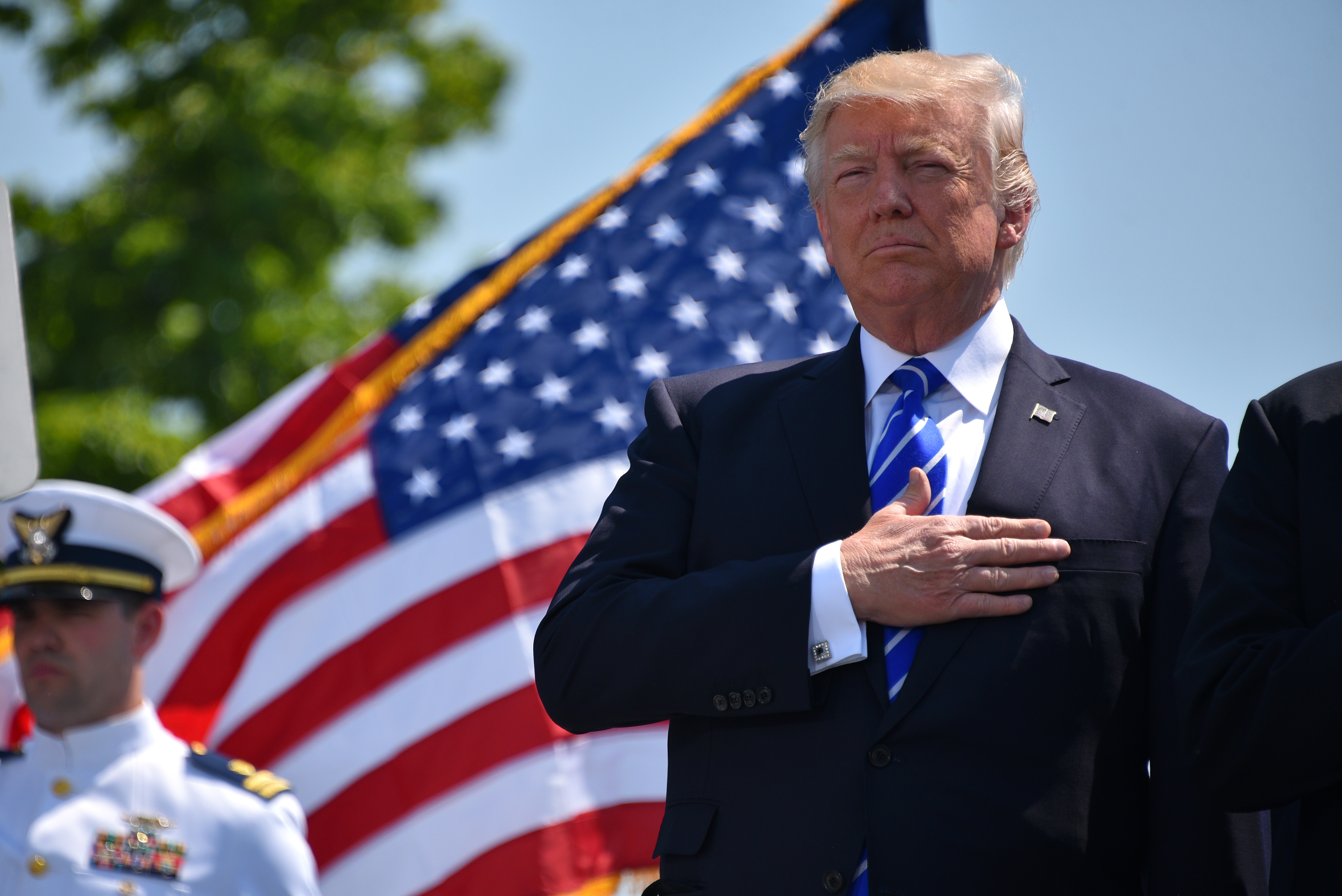
Over the past 24 hours, the Washington Post and dozens of other mainstream news sources have all run similar articles specifically attacking me for suggesting that a “category 6” should be created for storms such as Hurricane Irma.  Of course I never said that Hurricane Irma is a category 6 storm or that such a category was about to be established.  But what I did say is that the establishment of a “category 6” has been discussed for a long time, and that if you were to extrapolate the Saffir-Simpson scale, Hurricane Irma would potentially qualify as a category 6 storm.

The source that the Washington Post and other mainstream media sources are quoting in their hit pieces is Snopes.  Of course Snopes is well known to be a mouthpiece for the left, and just about everything on their site lines up with the progressive agenda of the radical left.  So it is no surprise that they would attack a Republican candidate for Congress

The idea that Irma is a Category 6 storm seems to have originated with a a blog post that implied that a new category, Category 6, would be created for Irma. While the post does not state this directly, its headline reads “Category 6? If Hurricane Irma Becomes The Strongest Hurricane In History, It Could Wipe Entire Cities Off The Map.” That story, written by end-time enthusiast and Republican candidate for Idaho’s first congressional district Michael Snyder, was first published on his blog “The Economic Collapse” before being aggregated by other clickbait websites.

As I noted above, the idea that we need to start looking at adding a “category 6” to the Saffir-Simpson scale is not controversial at all.  It has been discussed very widely for well over a decade, and if you do a search on Google you will find many, many articles.  The following are just three examples…

ABC News – May 21, 2006: There is no official Category 6 for hurricanes, but scientists say they’re pondering whether there should be as evidence mounts that hurricanes around the world have sharply worsened over the past 30 years — and all but a handful of hurricane experts now agree this worsening bears the fingerprints of man-made global warming.

In fact, say scientists, there have already been hurricanes strong enough to qualify as Category 6s. They’d define those as having sustained winds over 175 or 180 mph. A couple told me they’d measured close to 200 mph on a few occasions.

Weather.com – July 28, 2016: The results showed that three vulnerable areas of the world are at risk for a “high-end” Category 5 tropical cyclone by the end of the 21st century due to the Earth’s changing climate: Tampa, Florida; Cairns, Australia; and the Persian Gulf.

These potential Category 6 hurricanes may be up to 14 times more likely by 2100, according to the study.

Scientific American – August 23, 2011: Atmospheric researchers tend to agree that tropical cyclones of unusual ferocity are coming this century, but the strange fact is that there is no consensus to date on the five-point scale used to classify the power of these anticipated storms. In what may sound like a page from the script of the rock-band spoof Spinal Tap with its reference to a beyond-loud electric guitar amplifier volume 11, there is actually talk of adding a sixth level to the current Saffir-Simpson hurricane scale, on which category 5 intensity means sustained winds higher than 155 miles per hour (250 kilometers per hour) for at least one minute, with no speed cap.

Without a doubt, after this storm is over the academic community will again start having these sorts of debates, and the mainstream media will once again report on them.

And if a “category 6” is ever created, it is very likely that Hurricane Irma will fit that classification.  The following is from the article that I posted yesterday

I was criticized for suggesting that Irma could become so powerful that it could potentially be labeled a “category 6” storm if such a thing existed.  Well, now it has actually happened.  If you extrapolate the Saffir-Simpson scale, “category 6” would begin at 158 knots, which would be 181.8 miles per hour.  Since Irma has surpassed that mark, I believe that it is entirely reasonable if people want to refer to it as a “category 6” storm.

Hurricane Irma is not just another storm, and it would be useful to have a special designation for a storm that is so extraordinarily dangerous.  Wherever it makes landfall, it is going to wipe out virtually everything in its path

Irma strengthened to a Category 5 hurricane Tuesday with winds up to 185 mph. The storm is most powerful ever recorded in the Atlantic Ocean. It’s so strong it is even showing up on scales for measuring earthquakes.

“No way to sugarcoat it. Irma is the type of tropical cyclone that wipes everything, including all vegetation, clean from small islands,” wrote Anthony Sagliani, the Meteorological Operations Manager at weather data firm Earth Networks.

And the National Hurricane Center is specifically warning that “a high percentage of framed homes will be destroyed” by a storm of this magnitude.

The National Hurricane Center reports dryly that when a Category 5 hurricane hits land, “a high percentage of framed homes will be destroyed,” adding power could be lost in some areas for “weeks and possibly months.”

So I stand by everything that I have written, and I demand a retraction and an apology from every mainstream news outlet that has slandered me.

Just because I am a Republican candidate for Congress does not mean that you can write things that are untrue.  At one time the mainstream media at least attempted to be objective, and there is a reason so many are now referring to them as “the fake news”.

It amazes me what passes for “journalism” these days.  These jackals jump on anything that even smells like it could be a “scandal” for a Republican, and they seem to have no regard for the truth whatsoever.

Michael Snyder is a Republican candidate for Congress in Idaho’s First Congressional District, and you can learn how you can get involved in the campaign on his official website. His new book entitled “Living A Life That Really Matters” is available in paperback and for the Kindle on Amazon.com.

Hurricane Irma: If There Was Such A Thing As A Category 6 Hurricane, This Would Be It

Hurricane Irma has become even stronger than the most extreme forecasts were projecting.  According to the National Hurricane Center, Irma had sustained winds of 185 miles per hour at one point on Tuesday.  That makes it the strongest Atlantic hurricane in history “outside the Gulf of Mexico and Caribbean”.  I was criticized for suggesting that Irma could become so powerful that it could potentially be labeled a “category 6” storm if such a thing existed.  Well, now it has actually happened.  If you extrapolate the Saffir-Simpson scale, “category 6” would begin at 158 knots, which would be 181.8 miles per hour.  Since Irma has surpassed that mark, I believe that it is entirely reasonable if people want to refer to it as a “category 6” storm.

Of course some meteorologists will get very heated with you when you use the term “category 6” because no such category exists at this point.

But we need some way to describe an Atlantic hurricane with sustained winds of 185 miles per hour.  “Category 5” simply does not do such a storm justice, and yes, Hurricane Irma is the type of storm that could wipe entire cities off the map if it came ashore at this power.

We don’t know where this immensely powerful storm will make landfall in the U.S. yet, but you don’t want to be there when it does.  I don’t want to freak people out, but the truth is that the best thing you can do is to get as far away from this storm as you can.

Just remember what happened in Houston.  The people were told not to evacuate, and that turned out to be an absolutely disastrous decision.

This is not just another storm.  This is a history making event, and if Irma slams directly into one of our major cities as a category 5 storm, it could potentially make Hurricane Harvey look like a Sunday picnic.  The following are some of the key things that you need to know about Hurricane Irma…

#1 According to the Miami Herald, Hurricane Irma had sustained winds of 185 miles per hour on Tuesday afternoon…

Irma continued to explode into a powerful storm Tuesday afternoon, with winds increasing to 185 mph, National Hurricane Center forecasters said in a 2 p.m. advisory.

As the storm continued to track westward, islands in its path raced to complete last minute preparations. The Leeward Islands are expected to get hit with “catastrophic” winds tonight, forecasters said, with the Virgin Islands and Puerto Rico slammed tomorrow. In Puerto Rico, the governor asked President Donald Trump to declare a state of emergency, while the electric company warned Irma’s fierce winds could leave the island without power for four to six months.

#2 The NOAA is saying that Irma is “the strongest hurricane ever recorded in the Atlantic — outside the Caribbean, Gulf of Mexico.”

#3 As mentioned above, if you extrapolate the Saffir-Simpson scale, Irma could be considered a category 6 storm

While few are willing to admit it yet, according to meteorologist Ryan Maye, Hurricane Irma is still intensifying, with winds up to 155-knots (180 mph) and that extrapolating Saffir-Simpson scale, 158-knots would be Category 6.

Yes, I know that a “category 6” does not exist yet, but perhaps it is about time that scientists got together and updated the scale in light of the dangerous new realities that we are now facing.

#4 Hurricane Irma is so enormously powerful that it is even “showing up on seismometers”

Hurricane Irma is so strong it’s showing up on seismometers — equipment designed to measure earthquakes.

“What we’re seeing in the seismogram are low-pitched hums that gradually become stronger as the hurricane gets closer to the seismometer on the island of Guadeloupe,” said Stephen Hicks, a seismologist at the University of Southampton in the United Kingdom.

#5 In all of U.S. history, only three category 5 hurricanes have ever hit the United States – an unnamed storm in 1935, Hurricane Camille in 1969, and Hurricane Andrew in 1992.

#6 A state of emergency has already been declared for every single county in the state of Florida.

#7 If you are in the “danger zone” and you have not already stockpiled food, water and supplies, it is probably already too late.  Reports of “panic prepping” are coming in from all over Florida, and down in Puerto Rico many stores are already out of all the most important supplies

On Tuesday, the lines for fast-dwindling gas, food, water and hardware were interminable and anxiety mounted. One hardware store in San Juan had been nearly picked clean by afternoon.

“This has been like this for the last three days,” said Juan Carlos Ramirez, the store manager. “We’ve sold all of the most necessary items — flashlight, batteries, plywood.”

One of my readers made the point the other day that this isn’t the kind of storm that you can “prepare” for.

And my reader was precisely correct.  You can’t “get prepared” for a hurricane with sustained winds of 185 miles per hour.  Such a storm will snap homes like toothpicks.

If I was in Florida, I would be heading north immediately.  Those that wait could find themselves in absolutely nightmarish traffic jams.

And if I lived on the Gulf coast, I would be watching this storm very, very carefully.

Because the waters in the Gulf of Mexico are so warm, there is the possibility that Irma could get even stronger if it slides to the south of Florida.

Let us hope that it does not happen, but a scenario in which Irma makes landfall along the Gulf coast as a category 5 storm would probably be the worst of all potential possibilities.

If such a scenario plays out, please get out of the path of this storm.  Trying to “ride this storm out” would do you no good whatsoever.

Michael Snyder is a Republican candidate for Congress in Idaho’s First Congressional District, and you can learn how you can get involved in the campaign on his official website. His new book entitled “Living A Life That Really Matters” is available in paperback and for the Kindle on Amazon.com.

Hurricane Irma Projected To Reach Category 5 And Hit The East Coast – Panic Prepping Begins In Florida

On Monday, Hurricane Irma strengthened into a category 4 hurricane, and some meteorologists are projecting that it will eventually become a category 5 storm before it eventually makes landfall in the United States.  And since a “category 6” has not been created yet, category 5 is as high as the scale goes at the moment.  Over the past couple of days, the track of the storm has shifted “a lot further to the west”, and at this point it appears that Miami is the most likely to take the full force of the hurricane.  But as we have seen, trying to forecast the behavior of hurricanes is not an exact science.  Irma may never become a category 5 storm, and it may never hit the U.S. at all.  Or it may zip past Florida to the south and end up making landfall in the Gulf of Mexico.  The truth is that we just don’t know.

But for the moment things are not looking good for Florida, and a state of emergency has already been declared for every single county in the state

On Monday afternoon, Florida Gov. Rick Scott declared a state of emergency for every county in Florida in anticipation of Irma. A state of emergency was also declared in Puerto Rico earlier in the day.

Another scenario still on the table is that Irma curve northward and miss the East Coast entirely. This would still generate large surf and rip currents along the East Coast. However, this scenario is the least likely to occur at this point.

And as I mentioned above, many are projecting that Irma will become a category 5 storm just a few days from now.  The following comes from the Express

Many projections show the category storm strengtheing to a category 5 hurricane, capable of ripping roofs from houses and causing huge waves and storm surges.

Predictions from both the National Environmental Satellite data and Information Service (NESDIS) and international weather forecaster Ventusky suggest though Irma is currently a Category 3 storm by Thursday she is expected to strengthen to a Category 5.

A category 5 storm has winds of more than 157mph – enough to destroy whole buildings and cause devastating flooding.

But just because the experts are telling us that certain scenarios are likely to happen does not mean that they will actually take place.

In the end, it is entirely possible that Florida may not see a single drop of rain.  Hurricane Harvey certainly behaved in ways that nobody was expecting, and I have a feeling that the same will be true for Irma.

As Irma inches closer to Florida, “prepping fever” has hit the public.  Grocery stores and home improvement chains are already being flooded with traffic, and this is only going to get worse the closer that Irma gets.  The following comes from one local news report

As Hurricane Irma continues to make its way towards a possible strike on the Southeastern U.S., stores in South Florida are beginning to see a rush for supplies.

Several Publix supermarkets were full before noon Monday as residents grabbed water, non-perishable food and other items.

Another local news report noted that essential supplies were already running low at a Home Depot in south Florida

With Hurricane Irma churning west, many South Florida residents are taking precaution and stocking up on supplies on Labor Day.

A Home Depot in Royal Palm Beach on Monday morning posted a sign that said they were short of some hurricane supplies, including wing nuts, 5-gallon containers for gasoline and 5-gallon jugs of water.

Those that wait until the last minute are going to find that there is nothing left for them.  One resident of Palm Beach Gardens told reporters that the local Wal-Mart in her area is already completely out of water

“There was nothing at Walmart,” said Bianca Rodriguez of Palm Beach Gardens. “Not even like one thing of water.”

Of course those that have been preparing all along don’t have to run out to the store in a panic.

If Irma hits the United States as a category 4 or category 5 storm, it is going to make history.

Meteorologists are telling us that the United States has not been hit by two hurricanes of at least category 4 strength in the same year in more than a century.

And prior to Hurricane Harvey, a hurricane had not made landfall in this country in about 12 years.

There is still a possibility that Irma could miss us completely, but as CNN’s Tom Sater has noted, “that window is shutting quickly”…

Computer models show the system moving through the Caribbean, and by the end of week, it will turn right toward the north, said CNN meteorologist and weather anchor Tom Sater.

“There is a small window. If it turns sooner rather than later, we could maybe see the system slide by the East Coast into the ocean, but that window is shutting quickly,” Sater said. “It definitely looks like we will be impacted by a major hurricane that is a Category 3, 4 or 5.”

If Irma is indeed a category 5 storm when it hits the U.S., it would completely rip coastal communities to shreds.

There haven’t been too many category 5 hurricanes to make landfall in modern American history, and a direct strike on Miami would be catastrophic.  But if Irma bypasses Florida and ends up hitting New Orleans or Houston, we could be talking about a disaster that is absolutely unprecedented in our history.

Michael Snyder is a Republican candidate for Congress in Idaho’s First Congressional District, and you can learn how you can get involved in the campaign on his official website. His new book entitled “Living A Life That Really Matters” is available in paperback and for the Kindle on Amazon.com.

World War 3? The United States And North Korea Stand On The Brink Of A Nuclear War

After North Korea successfully tested a hydrogen bomb on Sunday, U.S. Secretary of Defense James Mattis warned that the United States is more than capable of “the total annihilation of a country”.  Unfortunately, the North Koreans may have already gotten to the point where they are capable of the same thing.  Just a handful of North Korean nukes could kill millions of people and render the largest cities in South Korea or Japan completely uninhabitable, and so a nuclear war with the North Koreans should be avoided at all costs.  Sadly, global events seem to be relentlessly pulling us in that direction.

According to the U.S. Geological Survey, a magnitude-6.3 earthquake was registered in North Korea at the same time that the North Koreans claim that they conducted a “perfect” test of a hydrogen bomb.  This test was reportedly 10 times more powerful than North Korea’s last nuclear test, and the North Koreans are also claiming that this bomb was small enough to be fitted on an inter-continental ballistic missile.

North Korea should have never been allowed to get to this point.  But the Clinton, Bush and Obama administrations just kept kicking the can down the road year after year, and now we are facing a crisis with no good solution.  Because it is absolutely unthinkable for us to allow North Korea to have an entire fleet of nuclear missiles capable of hitting targets in the United States, but it is also absolutely unthinkable to start a war in which potentially tens of millions of people could die.

North Korea is honeycombed with very deep underground tunnels.  Even if we knew exactly how many nukes North Korea has, and even if we knew where they all were, there is still no possible way that we could get them all with a first strike.

But even if we could, North Korea is entirely capable of killing millions in South Korea and Japan with chemical, biological and conventional weapons.  Before he left the White House, Steven Bannon had the following to say about the situation that we are facing on the Korean peninsula…

“Until somebody solves the part of the equation that shows me that ten million people in Seoul don’t die in the first 30 minutes from conventional weapons, I don’t know what you’re talking about, there’s no military solution here, they got us,” Bannon told the American Prospect.

In this case, Bannon is exactly correct, and any members of Congress that would suggest differently are simply lying to you.

At this moment, there is no military solution to the North Korean crisis, but our top military leaders continue to talk as if there is

US Defense Secretary James Mattis vowed “a massive military response” to any threat from North Korea against the United States or its allies in a statement outside the White House after a meeting with President Donald Trump, Vice President Mike Pence and top national security advisers Sunday.

Mattis said Trump wanted to be briefed on each of the “many military options” for dealing with the North Korean nuclear threat.

In fact, Mattis went so far as to suggest that the “total annihilation” of North Korea is a potential option

“We are not looking to the total annihilation of a country, namely North Korea, but as I said, we have many options to do so.”

As he was leaving church on Sunday, President Trump also suggested that a pre-emptive strike on North Korea is very much on the table

As he left church, Trump was asked, “Will you attack North Korea?”

Trump answered, “We’ll see.”

In addition, on Twitter Trump warned that he was considering “stopping all trade with any country doing business with North Korea”

The United States is considering, in addition to other options, stopping all trade with any country doing business with North Korea.

Of course China is North Korea’s biggest trade partner, and if we immediately tried to cut off all trade with China it would throw the global economy into a nightmare scenario.

But a trade war with China is not our only concern.  Last month, The Global Times (a Chinese state newspaper) threatened the United States with a shooting war if it attempted to bring about regime change in North Korea…

‘If the US and South Korea carry out strikes and try to overthrow the North Korean regime and change the political pattern of the Korean Peninsula, China will prevent them from doing so.’

This is the tensest that things have been on the Korean peninsula since the Korean War ended in 1953.

One false move and literally tens of millions of people could die.

Most Americans have absolutely no idea what a military conflict with North Korea would mean.  We are talking about death and destruction on a scale that would be absolutely unprecedented.  The following is an excerpt from one of my previous articles

Could you imagine what would happen if a North Korean nuke hit Tokyo or Seoul?

Even one nuke could kill millions in those densely populated cities, and financial markets all over the world would almost instantly implode.

And North Korea also has some of the largest chemical and biological weapons stockpiles on the entire planet. Within moments of an attack, thousands of North Korean artillery pieces and rockets would start raining fire on Seoul, and even just a few chemical or biological warheads would cause immense devastation in that city of about 10 million people.

In addition, North Korean forces are poised to invade South Korea at literally any moment, and the only way that South Korea could survive such an invasion would be direct intervention by U.S. forces.

On top of everything else, what if the North Koreans were able to successfully launch a nuke or two toward our major cities? Or what if they already have the technology to set off an EMP blast high in the atmosphere above the continental United States? Or what if their agents that are already embedded here start releasing biological agents in our major cities?

These are nightmare scenarios that most Americans never even consider, but they would be very real possibilities in the event that we go to war with North Korea.

Sometimes a military option is the best option, but this is not one of those cases.

There is no way that a military strike on North Korea would end well, and our top brass already knows this.

So let us hope that cooler heads prevail, because at this moment we are literally standing on the brink of World War 3.

Michael Snyder is a Republican candidate for Congress in Idaho’s First Congressional District, and you can learn how you can get involved in the campaign on his official website. His new book entitled “Living A Life That Really Matters” is available in paperback and for the Kindle on Amazon.com.