 Does your family have an economic disaster plan? If not, why not? By now, most people know that very hard economic times are coming. No, America is not going to turn into a post-apocalyptic war zone where motorcycle gangs ravage the populace next week, but the truth is that it doesn’t take a genius to understand that the U.S. economic system (and indeed the entire world economic system) is in the process of dying. For decades we have lived far beyond our means by borrowing insane amounts of money, but the party is ending and now many of us are going to get to experience what it means to live below our means. The golden days of the U.S. economic machine are gone, and now we are moving into a time when we are going to reap the fruit of the incredibly foolish economic policies of the past hundred years. Meanwhile, the two major political parties will continue to play the American people against each other. The Democrats will insist that everything will be great if we just give them control. The Republicans will insist that everything will be great if we just give them control. But the truth is that both political parties have had numerous chances over the past 50 years, and each of them have blown them badly. Both parties have had a hand in piling up the biggest mountain of debt in the history of the world, both parties have been complicit in shipping our jobs and our factories off to China and to dozens of third world nations, both parties have dramatically expanded the size of government and the welfare state when they were in control, and both parties have continually handed more power to the big banks and to the Federal Reserve. We built an entire economy based on paper money and a gigantic spiral of debt and now the wheels are starting to come off and people are starting to panic. We are truly going to pay the price for decades of foolish decisions.
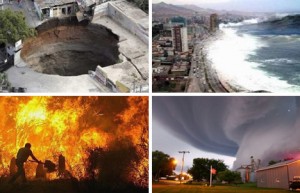
Not that an economic collapse is the only reason to have a family disaster plan. We live at a time when it seems like the whole world is going crazy. You never know when or where the next oil spill, hurricane, earthquake, volcano, pandemic or terror event is going to strike.
So the reality is that it is imperative that we all have a disaster plan that sets out exactly how we are going to provide food, water, shelter and security for our families in the event of a major disaster or emergency.
So exactly what should such a disaster plan entail?
If you have not done so already, please read the following two articles that we previously published on this theme….
1) 20 Things You Will Need To Survive When The Economy Collapses And The Next Great Depression Begins
2) What To Do
Both of those articles lay out some of the basic principles of emergency preparedness.
But there is so much to know about emergency preparation beyond just the basics.
Over the last couple of months, the readers of this column have shared some amazing information on this topic, and we have compiled some of the very best of those tips below….
Smuggler:
As a long time hiker and back country lover I have had a bit of experience in rustic living. From Tents in the Rockies and Sierras to the bottom of the Grand Canyon and an old trapper’s cabin in Alaska I have pretty much lived in that way most of my life.
Survival depends on a lot of things, not just how much grub you got or how many bottles of water are stashed away. If all roads are blocked your stocked RV is suddenly going to be a liability not an asset.With roads blocked by earthquake or check points the ability to travel cross country will be reduced to foot transportation, unless you plan to tote your pick-up over the mountains think lighter….
If it all goes up the first thing you must do is realize that this is not a camping trip, you come home from a camping trip, you won’t have a home to come to if it all goes up. You are going to have to find food and water as you go and in the case of food you will most likely have to kill it and clean it. Man bites dog will have a whole new meaning.
That is where the best survival tool will be most welcome. The nice thing about this tool is it takes up no room and it doesn’t weigh an oz. Become knowledgeable.learn about water and how to test it, find it and save it. learn how to preserve foods by drying or smoking. learn what plants in your area can be eaten or used for medicine.
You get the idea here, the more ya know the longer you will live. One of the places I have spent some time hiking is the Idaho and Utah boarder area and parts of the old Boozeman Trail. one of the remarkable things you see on the Trail is tons of cast Iron cook stoves, nickel trimmed Parlor stoves, furniture, house hold goods, sinks etc. that litter the ground. All tossed off overloaded wagons, from about the middle part of the Trail tapering off to just a few items the farther west they got. Take to much you have to throw it away.
A good make pro back pack, a good sleeping bag/ground pad, light tent, fire making items, [ I recommend a mag and steel striker. ]a good hand axe, a good hunting knife, a pro grade compass, [Learn how to use it.} Food, freeze dried is best very lite and can carry many days of food. Limit clothes as appropriate for the weather and how much you can carry. Water, what you can carry and treatment tablets for new sources if in doubt. Other wise boil it for ten mins.
Things like sewing kits are nice but won’t kill ya if you don’t have one. Judge your wants balanced against your needs, in the case of candles and radios and such, they are heavy hard to secure and take up lots of room. In the case of candles I’ve had them melt all over the inside of my back pack not a fun thing.
Keep it light and essential,you may have to relocate in a big hurry. Now, do you see why community is a good idea? You can survive one man alone, but in a group is easier, safer and more productive and more fun. Here’s hoping all your trips are camping trips and may you always come home.
RLTW:
Food: If you are about to go on a long “hike” like for a couple of weeks… seriously fatten up. Talk to anyone who has done ranger school. They lose 20-45lbs in only 63 days. Most fatten up just before going. If you only have one meal/ day, then eat in the morning and eat small amounts throughout the day (like a candy or cracker) and keep drinking water. Surprise salt is important, dont go low sodium in food especially if you are consuming a lot of water. On the move, Eat the most perishable first, eat based solely off the energy you are expending. If you open it consume it, or you will have unwanted pests/animals. In bear country, hang it from a high limb away from where you sleep. If you cant brush your teeth, chew gum, or chew soft twigs.
Gerber or Leatherman is better than a Swiss knife, and BTW Butch I pack heat, so good luck and don’t let the laser sight on your forehead deter you.
Gasoline doesnt store for very long, and know the difference between diesel and gas (I know this is basic, but some people cant tell except for what it says at the pump). And also know that Syphoning gas from new autos is impossible, so don’t try, remove it from the fuel line/filter under the car.
Have a small tool kit/box, with basic tools.
If you are on the move, the right Clothing is extremely important…. Get loose fitting clothing that you can easily layer, have about 3 layers or more (depending on your local climate). One layered set should be enough, but you NEED extra socks, 2-3 pair (or more) of heavy cushioned socks are ESSENTIAL if you are on the move. Change your socks every day, even if you cannot wash them. A week could turn into a month. Dont pack underwear, b/c after a week it will be gone anyway (Most infantry soldiers go without in the field) and is just extra weight. Think of going for a long hunting trip when packing this up, and remember its always colder than you think even in the summer especially when you cannot go indoors anywhere. Pack gloves and ski type hats. At a minimum, keep your feet and shoes dry. If they get wet, walk it out, & change socks more frequently. In the cold, Keep your shoes/boots next to you when you sleep to keep them warm and be ready if you need to move out quickly. Dont be unpacked, take out what you need and leave the rest packed. You may have to take off quickly. (Pack everything you want to keep dry in gallon-sized ziplocks)
Don’t rely on a store first aid kits, buy a medium sized tool bag and get a good first aid “trauma” list(most stuff you can get at walmart). But also consider learning how to start an IV and get a few. Also, address all knicks and cuts, even the small ones. Infections can put you under, ESPECIALLY ON YOUR FEET/LEGS.
Water: If you have bleach, you can use that to purify water. One drop per Quart. Be careful, if you use too much then you will have a bad case of buttmud.
Fire: can be started with 2 D-cell batteries and steel wool, but invest in a magnesium stick that you can use with a knife.
If Money is worthless, have things to bargin with & you will be better off. Consider gold coins, you can always cut off chucks to use as payment. CAUTION: To much of something valuable will make you a target, so consider things that are valuable other than Gold.
A NON-digital watch is helpful, and can be used for navigation… plz dont ask, google it or get a survival book (which is also good) – I use the SAS survival book
MAPS!!!!! Hello, a good map of your area where you intend on going is very helpful, especially of your immediate area (topographic) and will help you locate water. It is impossible to hand carry your water needs, know your sources along your route. Keep a good small atlas with your kit, may have to leave a contaminated area and may have to travel on the roads or beside the roads. You can easily use a good atlas to terrain navigate in lieu of a good topo map. Know the state evacuation routes, then plan an alternative b/c they will be packed.
Set up “rally” points that everyone knows and will link up or leave messages if safe and no communications exist.
Flashlight: invest in an efficient LED headlamp, that way you have both hands free.
The AXE is not required: You need only a good Knife, like a K-bar…dont buy a cheap hollow survival knife (they will break), buy a regular good 5-8in blade that is heavy and durable. You can use the knife with a piece of wood or log to hammer the knife like an axe for firewood….but your call. Remember, you may have to carry it.
If you have a friend in Spec ops or is a Ranger, Seal, etc… ask them for tips or advice… we train in this type of thing.
Elocutionist:
There are other things people can do; must do: Build up a network of support. Get to know your neighbors and be certain all of you support one another. I live in a small development of about 90 homes. We are closed off from the main highway and, even in these relatively ‘good’ times, we always rely on one another for various things (i.e. snow ploughing, lawn mowing, etc.). Make a plan with your family, if they’re not nearby, so that in tough times you’re not alone. Develop a skill. Learn how to make bread, for instance, from flour on a wood stove. Become an expert ‘handyman,’ the ability to repair things will be an important skill. Plan for the worst, hope for the best. In either case, you’ll be prepared.
Jim:
You’d be surprised at how little work it takes to have a seed turn into dinner. It’s almost as if that was what the seed was designed to do. Even people in apartments can cut their food down quite a bit with herbs, tomatoes, and the like in the windows. 1/4 acre can feed a family of more than four, and that’s worth spending a few minutes a day if you ask me.
Paul:
A couple of useful items: Clorox. Very cheap. Can purify water and also handy for sterilizing anything. Saving a pile of old newspapers is another good cheap item — useful for starting a fire and, hey— better than nothing, using as toilet paper. More expensive — a couple of handfuls of silver coins in case no one wants US paper dollars.
John:
Also, look at yard sales and thrift shops. If you really need a couple of cheap shirts, instead of buying cheap ones made in India, recycle what is already in your community, putting some money into your neighbors’ pockets.
Try to buy food locally. It’s more expensive, but if you are careful, you can find a few affordable items. If you live in the city, talk to your local council and try to get projects going that allow community vegetable patches on vacant land. In some areas this is already happening. Grow herbs in your kitchen. When you are down to beans and rice, it is amazing how a little bit of fresh herbs can spice up your life. YOu have a sunny window in your house? Start growing something easy like zucchini.
Learn how to repair – anything. You won’t get rich, but you might eventually make a decent living. Most of us are getting poorer and are going to want what we have to last longer. I remember as a kid in a small town there was a shoe repair shop, an electrical repair shop, a furniture repair shop, etc. Now they have all disappeared because most of us have gotten use to throwing things out and buying new. My guess is that the market for repairs is only going to grow.
Have you got a sewing machine? Buy up cheap clothing/fabrics from a thrift shop and turn them into quilts, stuffed animals, bags, interesting clothes for kids. This Xmas lots of people are going to be looking for cheap gifts for their children. You won’t be making much per hour, but at least you might be making something
Go dumpster diving. Especially if you live in a private college town, you will be amazed at how much perfectly good clothing and furniture gets dumped every year. In a small town that I visit every summer, one thrift shop fills a complete dumpster with clothes every week – almost all of it in near perfect condition. The dumpsters near dorms are overflowing at the end of terms.
Boycott. Don’t buy from/do business with companies that send all their jobs overseas.
If you live in a place with a community college and if you have a bit of money, learn a trade. Community colleges tend to be relatively cheap and they give you good skills. And if you have a kid of college age, ask them if they really want that degree in 18th century literature badly enough to starve.
Finally – get involved and become political. A lot of people know that they are not happy, but they are not sure what to do and are waiting around for other people to come up with the solutions. Start thinking about something that is important to you locally, regionally or nationally and figure out a way to be part of the solution. One reason we are in such a mess is because we all tuned out a bit and let the bigshots call all the shots – and they created a world that works great for them, but at our expense.
Michael:
Every once in a while, I see these “survivalist” cans of Costa Rican canned green coffee beans. Ok, so I pay about $80 bucks (not to mention some paying for some hefty shipping charges). I thought to myself-why can’t I do it (in the spirit of DIY). Ok, it can be easily done. First, purchase GREEN coffee beans. Second, seal them in a good container. I use a half gallon Ball canning jar WITH an oxygen absorber. A half gallon jar will hold about 2.5 pounds of beans and I use one or two 500CC oxygen absorbers-just to make sure no oxygen exists afterwards. Thrid, Seal the jar with a new canning jar lid. Keep out of light. No moisture (dry beans and glass sealed jar), no oxygen (absorber does that), no light, and keep in cool storage (room temp or cooler); and the coffee is good to go for years!
J.E. Chapman:
I will tell you that a swiss army knife wont cut it, you need a good beefy knife like a K-Bar fighting knife something you can use to pound, dig, chop, and even kill with if nessesary, a SOG is another good choice, remember you get what you pay for. Also read and study up time I believe is short a good manual is Emergency Preparedness and Survival Guide from Backwoods Home magazine is a very good book to have along with all the military survival manuals you can get your hands on, arm up with a Good rifle a good sidearm and plenty of ammo, enough food for a year and good luck. Praying Helps moreso than most would believe, God Bless.
Uncle Sam:
Knowledge is the store of value that “neither moth nor flame can corrupt or destoy” They can’t take that from you.
Store enough food to make it through a year from ANY point in the agricultural cycle. Start growing food now, so you can learn how it works. A farmer doesn’t become a farmer after one or two seasons, you must get everything wrong before you know how to do it right, and that takes time and experience. Start now, its July…plant greens in August and have salads through November just to get some experience.
Basically, you will find that it breaks down like this…If you can’t grow it, mine it, trade for it, or kill for it; you are not going to have it, and if you are not prepared to do all four of those, you are in danger.
There exists a critical tipping point, a point of mass despair and anger that will capitulate our way of life. This is NOT like the 30’s. In that era, we were set up to live autonomously, so long as we could keep the mortgator at bay (with a shotgun) we are not like that anymore. Americans especially are not prepared for what is coming. We are too integrated. Most have neither the means or opportunity to live autonomously, they only have fear as the motive when they run out of food or are kicked out of their homes. Very dangerous, they are forced to crime. In the 30’s, people were bummed that they had to return to the agrarian lifestyle of their ancestors on the family farm instead of “making it” in the city, we don’t have that option today. People will riot hard and more and more police are laid off every day.
One day, the power will go out and not return. The day that happens, the poles will be felled for the wood, and the copper stripped for trade. Then, the infrastructure is gone. Remember that sight, as the defining momonet of the descent.
Francis:
The two of us have a tiller, a grubbing hoe and some smaller hoes. Each spring we hire a tractor to prepare the garden. Get soil tested through gov’t. or ag school for knowledge of correct soil amendments (lime, fertilizer etc.) Bugs will take care of themselves for the most part, though some hand work may be necessary. Diseases will need to be worked around (different varieties of plants) We don’t use poisons.
We work about an hour a day in the spring, 4-5 days a week on about 1/2 acre, less as the year goes along. We grow two crops, the fall garden is usually small. Our biggest chore is weeds. The two of us could live off of this if we had to. We have about 20 fig trees and lots of other fruit trees. Yes, we are blessed. But there is something we can all do to supplement the bounty nature gives.
City folk, think small. You will be amazed at what some diligence and patience will do when joined to a willing hand and some knowledge. By the way, the sweetest meal you will ever eat is the one you grow yourself.
Lots of you talk about slavery. The best way out is to get rich. The best way to get rich is slowly. If you are profligate forget it. But if you save some of everything you get and through nothing away that has any possible worth, you will start finding ways to save a penny here and there.
And community is the long term key to subsistence. Even the hard-headedest persons I know take notice when the fruits of frugality are exposed. I can’t fix a motor and my mechanic neighbor can’t grow corn. I have gone out of my way to make him a friend.
We Americans are resourceful when not anesthetized by superfluity. Despise nothing. Make every object the subject of evaluation. A lot of something adds up to a little of anything.
Wake up.
Bearmaster:
Those of us who are preparing for what now seems to be at our door will be ready. Not only preparing with water, food, fuel, matches, seasonal clothing and whatever else is needed, we will be the few who do survive and will remember the rest of you who did not ‘believe’.
There is no shame in getting ready for any event, especially when it comes on suddenly. Those caught by surprise are the ones who will suffer the most. If you think because you have guns and ammo that you will come and take away what you feel you need and deserve, how?
Without water after two days you will be delirious to the point you can’t think straight. After five days of beans and bacon bits you’ll wish you had stocked up on toilet paper. When you come staggering up with gun in hand, do you really think you’ll be able to pull off this ‘robbery’ and take what you can, how?
Will you have a shopping cart or a little red wagon? Maybe the back of your pickup would work but where will you get the gas? How can you carry anything with guns in hand, don’t you think there will be others waiting who will then take advantage of you?
Those who think the ‘community’ idea won’t work are those who can’t get along with or won’t trust other people. How can you stay awake and alert for 24/7, you, the wife and kids against what odds? Think about it, trusting family, neighbors and friends in a small group will be the only way to get through this unless they bomb us into eternity.
A small group can provide many things, sharing in the expense of preparing and putting things away in the best, safest location you can find. Those living in a city, large town or even in a development, you need to have a plan of escape to quickly get to a safer location.
*****
So what do you think of the tips shared by the readers? Do you have any additional disaster plan tips to share? Please feel free to leave a comment with your thoughts below….
 Once upon a time in America, people became doctors and nurses because they wanted to help people, building hospitals was a labor of love, lawyers didn’t chase ambulances, health insurance companies did not openly abuse their customers and greedy pharmaceutical companies did not dominate the entire health care industry. But today all of that has changed. Why do most people choose a career in the health care industry today? It is because they want to make a lot of money and live a comfortable lifestyle. Why do most health facilities get built today? They get built because someone is hoping to make a huge profit. Why do so many lawyers specialize in medical malpractice? Here’s a hint – it is not because they want to make life better for people. Why do health insurance companies keep raising premiums even while they are making record profits? It is because they can and because they are greedy. Why are pharmaceutical corporations some of the most profitable companies on the face of the earth even though their products are harming tens of millions of people? It is because our health care system has become wildly corrupt and is now about making as much money as possible.